
Could Parkinson's start in the gut?
Traditionally, we think of Parkinson's as a movement disorder—defined by slowed movement, stiff muscles, and involuntary shaking.
But it turns out there are other symptoms that appear years or even decades before movement problems bring patients to the clinic: sleep disturbances, chronic constipation, and loss of smell.
For today's guest, these early symptoms represent an incredible opportunity to understand where Parkinson's begins and to identify patients much earlier in the disease.
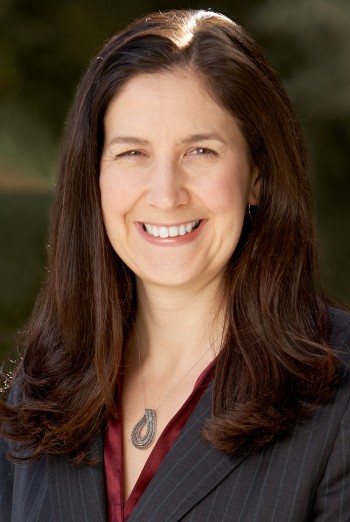
Kathleen Poston is a neurologist and division chief for movement disorders at Stanford Medicine. She's also a member of the steering committee for the Knight Initiative for Brain Resilience at Wu Tsai Neuro, and advises the Michael J. Fox Foundation and pharmaceutical companies on Parkinson's research.
We discuss why non-motor symptoms might hold the key to early diagnosis, how new biomarkers are redefining the disease, and whether Parkinson's might actually start in the gut.
SUBSCRIBE on Apple Podcasts, Spotify, Amazon Music and more.
Learn More
- Learn about Poston's research on her lab site
- Learn about the Stanford Lewy Body Dementia Research Center of Excellence
- Redefining Parkinson's Disease | Our previous conversation with Poston on From Our Neurons to Yours, in which we learned about a sea change in our understanding of Parkinson's Disease.
- Neuroscientists dive into the gut (Wu Tsai Neuro, 2025) | The 12th annual Wu Tsai Neurosciences Institute Symposium explored how our brains and bodies communicate—and what that means for our health and well-being
- Parkinson’s comes in many forms. New biomarkers may explain why (Knight Initiative, 2025) | Blood and cerebrospinal fluid markers tied to inflammation and metabolism sort some patients into subgroups, according to Knight Initiative researchers, a step toward predicting progression and tailoring care.
- Alzheimer’s and Parkinson’s biomarkers show promise for early diagnosis (Knight Initiative, 2025) | Two studies supported by the Knight Initiative highlight groundbreaking new early biomarkers for the diagnosis and treatment of neurodegenerative disease.
- A biological definition of neuronal α-synuclein disease: towards an integrated staging system for research (The Lancet - Neurology, 2024)
- International Working Group Proposes New Framework for Defining Parkinson Disease Based on Biology, Not Symptoms (Neurology Live article)
Episode credits
This episode was produced by Michael Osborne at 14th Street Studios, with sound design by Mark Bell . Social media strategy is by Julia Diaz, and additional editing by Nathan Collins. Our logo is by Aimee Garza. The show is hosted by Nicholas Weiler at Stanford's Wu Tsai Neurosciences Institute and supported in part by the Knight Initiative for Brain Resilience.
Share the show:
If you're enjoying our show, please take a moment to give us a review on your podcast app of choice and share this episode with your friends. That's how we grow as a show and bring the stories of the frontiers of neuroscience to a wider audience.
Get in touch:
We want to hear from YOUR neurons! Email us if you'd be willing to help out with some listener research, and we'll be in touch with some follow-up questions.
Episode Transcript
Nicholas Weiler (00:10):
This is From Our Neurons to Yours, a podcast from the Wu Tsai Neurosciences Institute at Stanford University, bringing you to the frontiers of brain science.
(00:24):
Today on the show, could Parkinson's disease start outside the brain? Traditionally, we think of Parkinson's as a movement disorder. It's defined by three classic movement symptoms, slowed movement, stiff muscles, and involuntary shaking. That's how it gets diagnosed, you're having trouble moving, you go to the neurologist. They say, "This looks like Parkinson's. I'm really sorry. We have some drugs that might help with symptoms. There are some clinical trials you might try. But at the moment, there's not a lot else we can do." But it turns out there are other symptoms that don't have to do with movement at all. Many Parkinson's patients also suffer from sleep problems, chronic constipation, and loss of smell. Importantly, these symptoms appear years or even decades before most patients come to the clinic with movement problems.
(01:16):
For today's guest, these early symptoms represent an incredible opportunity to understand where Parkinson's begins and to identify patients earlier on in the disease where there might be more we can do. Kathleen Poston is a neurologist and division chief for movement disorders at Stanford Medicine. She also advises the Michael J. Fox Foundation and many pharmaceutical companies. We had Kathleen on the show a couple of years ago where she told us about her efforts to use new biomarkers to redefine Parkinson's disease based on its biology rather than symptoms alone. It's one of my favorite episodes and I encourage you to check it out. One thing she told me in that conversation was that by the time patients get to her clinic and are diagnosed with Parkinson's, a lot of damage has already occurred in their brains. I began our conversation today by asking her, just how much damage are we talking about?
Kathleen Poston (02:12):
It's quite substantial. The estimation is that by the time somebody has changes in their movement such as tremor, at least 50% of the dopamine producing neurons in this one concentrated area of the brain called the Substantia nigra have already been damaged or are completely dead, so half.
Nicholas Weiler (02:33):
Wow. And estimates range... It could be even higher than that. That's a minimum number.
Kathleen Poston (02:37):
It could be even higher than that. It could be higher than that. Yeah.
Nicholas Weiler (02:39):
And I imagine that that's a big part of why you've been championing these biomarkers for earlier detection.
Kathleen Poston (02:46):
That's right. The fact is that by the time somebody has the clinical symptoms, the pathological progression is actually rather advanced.
Nicholas Weiler (02:56):
And I guess the question is, how do you catch people earlier? And I guess one answer which is germane to what we're mostly going to focus on today, is there are actually other symptoms it turns out that show up much earlier than these traditional movement symptoms.
Kathleen Poston (03:10):
That's right. And there are actually a lot of them because the pathologic processes that are occurring in the brain affect other systems outside of the motor system before they have this dramatic impact on the motor system. The challenge in the past has been that these are rather non-specific things that could also just occur with aging, changes in sleep, changes in blood pressure, heart rate, changes in your GI system. These happen for a lot of different reasons. And there was no way previous to biomarkers to distinguish when those non-specific changes were specific to Parkinson's disease versus just the normal aging process. It wasn't until the syndromic specific symptoms like tremor, slowness, stiffness, that were really hallmarks of Parkinson's specifically that we were able to call it that. And so that's been the challenge in the past but that is now evolving.
Nicholas Weiler (04:11):
There seems to be something going on in the GI tract, something going on in the gut that's linked to Parkinson's disease. And I think that you said that people can have GI issues, constipation, other issues 5, 10, 15 years before they come into the clinic with these movement disorders. How common is that in Parkinson's patients? Is that pretty widespread?
Kathleen Poston (04:35):
It's extremely common. When we first have someone in the clinic who might have tremor, slowness or stiffness, we do a broad review of their head to toe other symptoms and we always ask about constipation. And most patients, I would say definitely more than 60%, sometimes some numbers estimate as high as 90% at the time of the motor symptoms will say that they've experienced some change in their bowel habits prior to the beginning of their motor symptoms. And in some people, it's quite severe.
Nicholas Weiler (05:11):
I think I remember you saying, I think this may have been at the fireside chat you gave at the Neurosciences Institute Symposium back in October, that maybe NIH was proposing a study of let's look at Parkinson's patients with and without constipation. And the researchers were like, "We don't have any Parkinson's patients without constipation."
Kathleen Poston (05:31):
That's right. The way these requests for proposals are often written is to look at people with and without something. And it's actually a consortium of five different institutions that are part of this. We all independently applied and all came to the same conclusion that was not possible and that we needed to treat GI symptoms on a continuum from mild to very severe, but to say with and without was not practical.
Nicholas Weiler (05:59):
One thing that I think is interesting here, there's been a development over the last maybe 10 years. These symptoms, we don't always think of them with Parkinson's but we've known about them for a long time. They go back to the original description of Parkinson's by James Parkinson back 200 years ago. But it seems like they've long been treated as a side effect of what's happening in the brain. But it seems like that perception is changing and I want to talk to you about this idea that maybe Parkinson's doesn't start in the brain but actually starts in the gut. My understanding is this is still very much an open theory but I want to understand how we got to this moment. Where does this story start for you?
Kathleen Poston (06:42):
The observation that constipation would precede the diagnosis had been documented for a very long time through really expert clinical history taking and something that was just always said of patients often experience constipation 5 to 20 years before their motor symptoms. But not a lot was made of it from the perspective of, "Well, maybe that's where things begin." There are a couple of independent discoveries that have converged on this idea that possibly the GI system might be the gateway to developing Parkinson's. One of them was a huge discovery that was made about, gosh, almost 40 years ago by Dr. Bill Langston who is one of our faculty here. He was not a faculty here when he made this discovery. He identified a toxin that had been accidentally ingested by certain individuals that suddenly gave them Parkinson's. He then figured out what this toxin was and linked it to actually what is the first animal model of Parkinson's.
(07:55):
But this toxin actually looks very similar to certain pesticides. And so that was the beginning of this question of could there be environmental exposures that increase the risk? There were follow-up studies that looked at individuals who were exposed to different types of toxins throughout their lives and it does look like there are certain toxins that do in fact increase the risk of having Parkinson's. This tells us that there's something that we interact with in the environment that could increase the way our brain changes over time and increases that Parkinson's risk. And the way that those toxins get into our body is either through the nose or through the GI tract, it's less likely through the skin. And so that started to come into understanding of, "Well, gosh, maybe the GI tract is a beginning location to this evolution that ends up becoming Parkinson's disease."
Nicholas Weiler (08:55):
And one of those other early symptoms is loss of smell.
Kathleen Poston (08:58):
That is correct. And that's why that one has come also into question of whether the nasal system could be. And in fact, the olfactory bulb which is the part of the brain that sits right behind the nose where you have the first interaction with smell for your brain, that is the first location where we believe the pathology of Parkinson's actually starts before it gets to the motor system. That's also a very concerning area that might be the route in which Parkinson's develops in peoples through some sort of exposure through the nose.
Nicholas Weiler (09:37):
And there was another key experiment I was reading about, I'd love to hear your take on this. I think this is where this body-first hypothesis gets its name, it's sometimes called the Braak Hypothesis because Dr. Braak noticed that there was a change in risk for Parkinson's when people had their vagus nerve, which connects the gut to the brain, severed. When that connection was cut, it seemed like people were less likely to get Parkinson's.
Kathleen Poston (10:03):
There are some experiments that have looked at this particular connection. The vagus nerve is the one that connects the brain to the majority of the GI tract and it's a two-way nerve, things are coming from the brain to the GI tract and from the GI tract up to the brain. And the location in which the vagus nerve enters into the brain is also one of those super, super early areas where we see the pathologic changes of Parkinson's. It's right in that the motor nucleus of the vagus, you can sometimes even on pathology slides see it lined with these Lewy bodies which are quite striking to see in pathology.
Nicholas Weiler (10:43):
The Lewy bodies, they're these aggregates. They're like in Alzheimer's, we have the amyloid plaques and Tau tangles. In Parkinson's, we have the Lewy bodies.
Kathleen Poston (10:53):
That is correct. That's right.
Nicholas Weiler (10:54):
Protein gunk that builds up in neurons.
Kathleen Poston (10:56):
That's right. Protein gunk, that's a...
Nicholas Weiler (10:59):
Technical term.
Kathleen Poston (10:59):
Honestly, there's a lot of stuff in them and so that's a good description.
Nicholas Weiler (11:29):
You said it was in the motor nucleus of the vagus nerve. Is that the part that's responsible for moving things along in the gut?
Kathleen Poston (11:37):
Actually, it isn't necessarily the part that's controlling the movement of things through your gut. It controls a lot of different movements. It doesn't actually really explain the constipation experience that patients have.
Nicholas Weiler (11:52):
Is it related to the other motor areas, the dopamine areas that are affected in Parkinson's or no?
Kathleen Poston (11:58):
It's actually not.
Nicholas Weiler (11:59):
Interesting. Okay.
Kathleen Poston (12:00):
It's very interesting that you see these Lewy bodies there because that's not actually the bulk of the movement disorder is not from the changes in that particular nucleus.
Nicholas Weiler (12:11):
Okay. There's some early evidence that there are toxins or maybe pesticides when they get ingested that can increase risk for Parkinson's disease. We also see that there are things that can come in through the nose and the neurological damage, these Lewy bodies that define Parkinson's disease, start near the nose or near where the nerve connection from the gut is coming in. And if you cut that connection, it reduces risk of Parkinson's disease. We start seeing this picture, my understanding though is that this idea was not particularly well received at first.
Kathleen Poston (12:50):
That is correct, it was not well received at first. And it is still very unclear how much direct evidence we have in people. And this has come out of a couple of studies that have looked at autopsies across large groups of individuals where if you have a diagnosis of Parkinson's disease when you die, we see the Lewy bodies in the brain and we see these protein clumps. They look a little bit different than Lewy bodies but similar, we see these protein clumps of the Alpha-synuclein protein in the GI tract as well as in other places in the body. But if you look at individuals who don't have Parkinson's disease, we don't see them. And if it truly started in the gut or in that system, there should be some individuals who pass away with these changes in their GI tract but not yet in their brain.
(13:52):
And we know that because there are individuals who die without the diagnosis of Parkinson's disease where we see the Lewy bodies in the olfactory bulb only or in the brainstem only without any of them in the Substantia nigra. They used to be referred to as incidental Lewy body disease, they did not have Parkinson's but they had those early, early changes in the brain. But we don't see them in the GI tract so it could be a sampling error that the GI tract is just really, really big and it's hard to truly see this. It could be something else that maybe our detection techniques aren't quite sensitive enough for the changes that happen in the GI tract. But that has been the disconnect is if there isn't evidence from the pathology studies that show that individuals can just have this in their GI tract and not in their brain, but everyone who has it in their brain has it in their GI tract.
Nicholas Weiler (14:51):
Interesting. And so what would other explanations be for why constipation, why these GI and smell symptoms occur so much earlier than the motor symptoms that define Parkinson's?
Kathleen Poston (15:04):
It's a really great question. And it might be that we use Lewy bodies or these Alpha-synuclein protein clumps as our pathologic hallmark, but a lot has to happen biologically before you get to the point that there is a Lewy body. And those biologic processes are very poorly understood, I would go so far as to say not understood. And so there could be other changes that are occurring in the GI tract, such as inflammation changes. There could be changes in the way that the GI microbes are releasing different types of chemicals that then might go through the vagus and influence the brain. Even though it isn't that there are pathology or Lewy bodies in the GI tract, there could still be changes that are occurring that influence the brain which is another way of saying it starts in the GI tract, it just doesn't actually have the pathology of the Lewy bodies in the GI tract.
(16:10):
That's the question. Is it just changes in other biologic processes that just increase your risk in the brain? Or is the actual pathology of the disease starting in the gut and then traveling up the vagus nerve to the brain? And we have not figured that out. And there are people who can argue with pretty good science on both sides of that coin so I'm not convinced either way yet.
Nicholas Weiler (16:38):
Well, let's take the hypothesis seriously for a moment. If this is potentially happening that something is going on in the gut, whether it's from a viral infection or a toxin or pesticides or something in our food, we don't really know. What is the proposed mechanism? You mentioned microbiome, you mentioned inflammation, I think, or we will mention inflammation. What do we think might be happening? Lay this out for us.
Kathleen Poston (17:06):
The GI tract has a very well regulated barrier between what is happening inside the GI tract and what is happening in the bloodstream and the rest of the body. If certain things change in that barrier, there are exposures from the GI tract that can get into the rest of the body that can cause all sorts of problems. Whether or not there's something fundamental about that barrier that some people are just predisposed to having problems with or if that is caused by, let's say, a change in the microbiome and you have certain microbes that are releasing certain metabolites that damage that barrier, we're not sure but there are a lot of things that can happen to that barrier. And that's where we think all the action is happening is in that gut-blood barrier because if that allows for certain things that are not supposed to get into the bloodstream or supposed to get into the nerves to happen, then that's when you start the exposures.
(18:14):
Inflammation has come up as a potential driver of that. But to be clear, we don't know whether it is over inflammation or not the right reaction to certain microbes, exactly what's happening there that could be influencing the barrier. But we do see these higher levels of inflammation perhaps in some of the animal models that suggest that increased inflammation is one of the reactions that are happening.
Nicholas Weiler (18:45):
I think this is worth pausing on for a moment. This brings up a lot of really interesting science that came out at the Neurosciences Symposium back in October, which was all about gut-brain connections. And I'll definitely drop some links to the videos of those talks in the show notes because talk after talk was blowing my mind. One of the things that was so interesting was this idea that there are many ways in which the gut talks to the brain. I think it's easier to imagine the brain talks to the gut because the brain needs to control our eating schedule and all this other stuff. But the gut is actually talking to the brain as well, whether it's what nutrients we're getting, whether we should be full or not. And also some of these things like the microbiome, the microbes that everyone has been so fascinated by for the past couple of decades, they're creating things that are influencing the brain.
(19:38):
We mentioned inflammation. There's like a plumbing issue where toxins directly could be influencing nerves or getting into the nerves and causing problems. Are there ways where what's going on in the gut itself might be passing along up through the nerves?
Kathleen Poston (19:54):
It's a really great question. You used the word signal that I think is actually one that is very interesting and a possibility. These microbes in the GI tract do create these different metabolites but some of those metabolites actually can act as neural signaling molecules and can actually stimulate neurons directly. And that's a really interesting way in which the microbiome could directly be signaling the brain by having these changes in these metabolites, some of which are essentially neurotransmitters. And do you have this influence on the nerves in the GI tracts, possibly the vagus nerve, possibly others indirectly? And that could be one of the pathways independent of inflammation or possibly with inflammation that could be part of the communication between the GI tract and the brain.
Nicholas Weiler (20:56):
One of the things I remember Dr. Nguyen, who is your partner in this fireside chat back in October, saying that struck me as really important, is that we've been interested in the microbiome for some time now but most of what we know about the microbiome comes from the end of the process. We have access to samples of the microbiome from poop, to put it bluntly. The gut is a very long place and a lot of the action where the food is getting processed, maybe the toxins are coming into play, is way at the beginning in the small intestine and the upper intestine where we know very little about the microbiome. I think this is one of those other areas where we need some more science to be able to say, what are these microbes in the upper gut saying to the brain?
(21:39):
Okay. Just to recap a little, we see that there's a lot of inflammation. I think that you said that there is a lot of inflammation in the brain in people who have constipation early on in the course of Parkinson's. We've also talked about the vagus nerve which is this nerve that connects between the brain and the gut. And one of the questions that we started to touch on, and I just want to put a bow on this, is it's not clear whether there's some inflammation or some damage happening in the gut that causes something to happen in the vagus nerve that then triggers bad stuff up in the brain, or if there's actually the same pathology, the Alpha-synuclein misfolding into Lewy bodies in the gut that somehow gets transmitted through the vagus nerve. Are those two open hypotheses still?
Kathleen Poston (22:29):
Those are both open hypotheses and I don't think it necessarily even has to be one or the other. Different people with Parkinson's do have slightly different biologies that occur with the disease, and it could be that there are multiple roads that lead to what we call Parkinson's disease. And there are actually differences in the biologies, not just in what happens later on but actually in the roads that get in there. I am more of a believer that there are multiple ways for us to get there versus there is one way that we get there. Both actually could be true and there could be people where it doesn't start there at all, it's something fundamental to the brain that starts.
Nicholas Weiler (23:21):
You just had a study that I think just came out earlier this year. You've been using this biomarker so that you can identify who actually has this misfolding Alpha-synuclein, which is the biological hallmark of the disease. Because the symptoms are variable, it's hard to tell. Some people have some symptoms that look like Parkinson's and then you look at the brain and it turns out, "Well, they didn't have it at all." Other people never have the symptoms but after they die, you look at the brain and you say, "Wow, there are Lewy bodies in there. They must have had Parkinson's but with unusual symptoms." You were looking at some of the people in your cohorts who come up negative with this biomarker who don't have this signal of misfolding Lewy bodies. What did you see there and what does that say about these multiple pathways you were talking about, about whether it's coming through the nose or through the gut or starting in the brain?
Kathleen Poston (24:15):
Exactly. We looked at a large cohort of individuals who had been recruited into this Parkinson's progression biomarker initiative, PPMI, that had the classic motor findings of Parkinson's, they had also had a brain scan, a DaTscan which showed they had reduced dopamine at the time of enrollment. And they had all agreed to lumbar puncture which is how we get to the cerebral spinal fluid to test for the synuclein abnormality. And the majority of them did have this abnormal synuclein biomarker but a subset did not, and we found a couple of curious things about them. One of them is that they tended to be older, and so it is oftentimes in older individuals that it's a little harder to parse out exactly what is going on because there is sometimes multiple things going on. They might have arthritis is the reason for their slowness, not something coming from the brain, or there might be some other explanation that's overlapping.
(25:16):
When we looked at an age-matched group, we found that one of the biggest differences is these folks who are synuclein biomarker negative, almost all of them actually had normal smell. There were only a few that were in this very, very low smell range, that was the biggest clinical distinction between them. We also found that over time, different things happened to them and many of them actually had changes in their diagnoses over time. And then some of them though did continue on to look like classic Parkinson's and we don't know yet exactly why that is. We have a couple of hypotheses around why individuals are negative, one of them is that they don't have Parkinson's at all, it's just a flat out misdiagnosis. There could be some individuals where the biomarker wasn't sensitive enough, it was below the limits of detection and so the biomarker is wrong. We think that happens very rarely but it definitely could happen.
(26:09):
And then the third one is that there are some other forms of Parkinson's that actually don't have these Lewy bodies, some certain genetic forms. We know of one of them but there could be many other much, much rare genetic forms that have a lesser propensity for developing Lewy bodies but they do have the loss of dopamine neurons, and they have some other biologic changes that are very, very similar but they don't have the Lewy bodies in their brain.
(26:35):
It definitely tells us a little bit about these differences in the biologies of individuals who end up having what we call Parkinson's disease. It is not one disease and that's part of why I am very open to the idea that there could be... In fact, I would put my bet on that there is multiple different ways that someone can get to what we call Parkinson's disease. It could be completely in the brain first, probably more driven by genetic factors would be my hypothesis there. There could be other things through the GI tract, either direct Lewy bodies or just changes in the GI tract, and that could have an environment to gene interaction. Maybe someone is slightly more likely to have Parkinson's genetically but it's not a deterministic thing, they're not definitely going to get Parkinson's. But then this environmental exposure that happens through these different changes in the GI tract with the changes in the barrier, the changes in inflammation, maybe some toxic signaling that's happening from these microbes might increase their risk and lower that barrier for the brain changes.
(27:42):
There's a couple of different ways that we could get to this thing that we call Parkinson's disease.
Nicholas Weiler (27:46):
Yeah, that makes a lot of sense and I think it's something that comes up a lot. We talk about this in regards to autism, for example. Autism is a description of a set of symptoms but there could be many ways that the brain can get to that place, different kinds of genetics, different kinds of potential exposure, whatever it is. How are we going to resolve some of these questions? What do we need to know to figure out what are these different types of Parkinson's? Where are they beginning? And how can we start engaging more aggressively on prevention?
Kathleen Poston (28:19):
I think one of the first things we need to do is develop very strong partnerships between neurologists and non-neurologists, because a lot of what we've been talking about here today is quite frankly very far outside of my traditional training. I'm not the person who's going to discover necessarily the change in gut permeability based on what I study, but I can partner with experts in that area who might not know anything about Parkinson's and bring that together. I think this is a unsolvable field if we don't really lean into team science and cross-disciplinary approaches to answering these questions. The Parkinson's Disease Gut Brain Consortium is attempting to do that with partnerships between GI specialists and neurologists, and that's the only way we're going to be able to sample data from humans living with Parkinson's across the entire GI tract and not just from stool samples and looking at the microbes in there. That's part of the story but it's incomplete.
(29:25):
I've mentioned autopsies before. It is probably one of the most important sources of data in understanding neurodegenerative diseases, not just in people who are living with these certain diseases but also people who aren't living with them as both comparisons and identifying these changes that can happen in the human system prior to developing a named neurodegenerative disease like Parkinson's or Alzheimer's. And so these not just brain autopsy programs but whole body autopsy programs are absolutely critical to us being able to do this.
(30:00):
And then I think the final piece is now that we have the ability to pair early symptoms such as constipation with biomarkers that are predictive of whether someone has Lewy bodies in their brain, we can now start saying, "Okay, where can we find individuals who have this earlier version of Parkinson's that isn't yet affecting their motor systems, and find those individuals and think about how to sample things across their GI system and across the rest of their body so that we can directly study in humans folks who are at this earlier stage of the disease as a way of getting a window into that?" But we can only do that now that we have that combination of clinical symptoms and a biomarker because otherwise we'd have to study millions of people longitudinally and that's just not quite practical. But if we study everyone who has constipation and biomarker positive then okay, now we have something that we can actually study.
Nicholas Weiler (31:04):
Yeah. It's so interesting because constipation is so widespread. It's 10% of people experience constipation.
Kathleen Poston (31:13):
And it increases in frequency as we all get older. It is in and of itself a change in our normal aging process so it's very hard to tease this out.
Nicholas Weiler (31:24):
Right. And same with sleep, right? Disordered sleep, very common particularly as we age.
Kathleen Poston (31:29):
Same with sleep. That's right.
Nicholas Weiler (31:29):
Same with loss of smell. As we age, it's just-
Kathleen Poston (31:33):
These are all age related things.
Nicholas Weiler (31:35):
But it's this constellation where you can say, "Well, if you've got a few of these things..." And this new biomarker that we keep talking about is absolutely incredible, this is quite recent and a big deal and you've been championing this. But it does still require a spinal tap, right?
Kathleen Poston (31:50):
That's right.
Nicholas Weiler (31:51):
It's not yet something that you can just get a blood test and see, maybe one day that would be wonderful. Or just get a tissue sample and see. We're also not going to go around giving spinal taps to everyone.
Kathleen Poston (32:02):
No.
Nicholas Weiler (32:02):
But with the combination of these things where if you have these risk factors, then it's a good reason to do the spinal tap to see if you've got this other thing and then we can start enrolling people in trials, we can start trying prevention.
(32:25):
What do you see as some of the next steps for the field? What are some of the things you'd like to see in the next couple of years to move this forward?
Kathleen Poston (32:34):
Well, I think you mentioned one of the big ones is that moving biomarkers from these very difficult to access parts of the body, such as the cerebral spinal fluid to more easily accessible areas, blood in particular, would be and is a huge priority for the entire field. Even if it's not as good, even if it's just as a screening tool that shows individuals as being 90% sensitive, but they need a confirmatory test or it rules people out who don't have that. That's a possibility. And again, a lot of progress is being made in that direction. I think we also need to be able to have good markers of the clinical changes that happen during that timeframe. Because if we do get to the point, which I am very hopeful we will be able to, where we can enroll individuals who have very, again, non-specific things such as change in smell, constipation, sleep changes who are biomarker positive into clinical trials to prevent them from ever getting the motor symptoms, we do need to understand a little bit more about what changes happen there for regulatory reasons and for clinical trial reasons.
(33:48):
And so more of these observational trials right now where we are enrolling people with sleep or smell or GI changes to understand that and document what happens there will prepare us for actually being able to go into prevention trials. We need to understand the clinical changes that happen during that phase, even if they're very mild before going into clinical trials. We're actively doing that now both here at Stanford as well as other institutions. That's a really critical one.
(34:19):
And then I think the other one that also needs to evolve in parallel is that all of these things I've talked about, whether it is information from the blood, information from the cerebral spinal fluid, information from the GI tract, it's a lot of data. We can test now almost 10,000 proteins or more from these different biofluids, and that takes a lot of computing power and more sophisticated data analysis techniques to really sort through and find the true signal from a lot of noise. And so applying a lot of more advanced AI, machine learning, different approaches to the data need to happen in parallel to figure out what do we do with all of this data and what is it going to tell us about the individuals who actually have Parkinson's disease.
Nicholas Weiler (35:09):
I'm often struck, this is really fascinating frontier science, which is what we aim for on this show. Where is the science right now? What's the bleeding edge? But it also means that it can sometimes be hard for listeners, I imagine, to say, "Okay. Well, what do I do with this? How do I apply what I've just learned other than now I know a little more about what's going on in Parkinson's research, which is valuable?" What would you say, particularly for listeners maybe who are saying, "Oh, I have sleep problems and I've been suffering from constipation." Is there anything people can do right now or is this just a watch this space, we're making a lot of progress?
Kathleen Poston (35:46):
I think if somebody has some of these symptoms that I'm talking about or maybe they have a strong family history as well and so they're particularly concerned and they want to just be involved, I think that getting engaged in one of these observational clinical trials is oftentimes a good start. While we do ask a lot of clinical trial participants for these observational studies, I feel they get a lot out as well. First of all, there's regular interaction with some of the experts in the field as far as doing regular exams. We are trying to find as much data that we collect on people that is useful to give back to certain research participants. Sometimes we can give certain information and data back to them. And then of course, if there's any actionable changes that we see in their exam, then we can shift them over into more of a clinical patient realm of things to address those. And so I think that both from the learning more about things as well as having the interactions with the expert teams can be very helpful.
(36:57):
I think just also bringing up with your primary care provider that this is something that you're thinking about and something that you want to have them keep an eye on, and that's really a good role for your primary care physician to do.
Nicholas Weiler (37:10):
Fantastic. Just briefly, we've talked about a lot of different things, we've talked about a lot of exciting science and hopefully we'll have you on more frequently than two years. But let's say in two years we have you back on, what are you most excited about in the next couple of years? What should we be on the lookout for in this space in the next year or two?
Kathleen Poston (37:32):
I think in the immediate future, there are numerous interventional clinical trials that are happening in individuals with a diagnosis of Parkinson's disease that are trying to change the underlying biology to slow the symptom and the disease progression over time. And a lot of different approaches. This is quite different from the last 20 years where the majority of the clinical trials were just trying to alleviate some of the symptoms. Now, there still are some symptomatic based clinical trials happening but this new surgeons of ones that actually could slow the progression. And I think in two years, we'll have some signal to know whether or not these are having a big influence or whether or not we need to go in a different direction. That I think is very promising for people who are living with Parkinson's disease today.
(38:25):
I also hope that in two years, we will be embarking upon the first what I'm going to call secondary prevention trials, individuals with either sleep changes or smell changes or GI changes who are biomarker positive, enrolling in interventional studies that might prevent them or slow how quickly they get to those motor symptoms. Two years might be a bit optimistic but a lot of work is happening behind the scenes to make that happen and to make that a possibility. I think it's actually possible that we will be starting the first secondary prevention trials in the next two years.
Nicholas Weiler (39:08):
Well, Kathleen, thank you so much for joining us. You're at the forefront of so many of these things, validating these biomarkers, coordinating these trials. You're right in the thick of it. I really appreciate you taking the time to come and give us an update on what's going on in this field.
Kathleen Poston (39:23):
Thank you so much for having me. And I'm happy to come back as soon as we have some really exciting results to share with the audience. But this is a very, I think, pivotal time in the therapies for individuals with Parkinson's disease and hopefully we'll be able to make some major progress in the next few years.
Nicholas Weiler (39:44):
Thanks again so much to our guest, Kathleen Poston. She's the Edward F. and Irene Thiele Pimley professor in neurology and neurological sciences at Stanford Medicine. To read more about her work, check out the links in the show notes.
(39:58):
If you enjoyed this episode, be sure to subscribe for more conversations from the frontiers of brain science. We also love hearing from listeners. If you have thoughts about the show or questions about the brain you'd like to hear us discuss in a future episode, send us an email at neuronspodcast@stanford.edu, or leave us a comment on your favorite podcast platform. While you're at it, give us a rating and share the show with your friends. It may seem like a small thing and I know everyone asks this, but it is tremendously valuable for us to allow us to bring more listeners to the frontiers of brain science.
(40:36):
Next time on From Our Neurons to Yours.
Guosong Hong (40:40):
We can identify galaxies light years away, we can study particles more than an atom, but we still haven't unlocked the mystery of the three pounds of matter that exists between our ears.
Nicholas Weiler (40:55):
From Our Neurons to Yours is produced by Michael Osborne at 14th Street Studios, with sound designed by Mark Bell. Our social media strategy is by Julia Diaz. Additional editing by Nathan Collins. Our logo was designed by Aimee Garza. I'm Nicholas Weiler. Until next time.


