
The FDA's psychedelic sea-change: what it means for mental health and neuroscience research
Last month we saw a big shift in the federal government’s approach to psychedelic medicine.
Specifically, following an executive order by President Trump, the FDA announced it is fast-tracking its review of several clinical trials of psychedelic drugs for patients with mental health disorders. The executive order also directed more funds towards psychedelic research and a review of psychedelics’ status as highly restricted Schedule 1 substances.
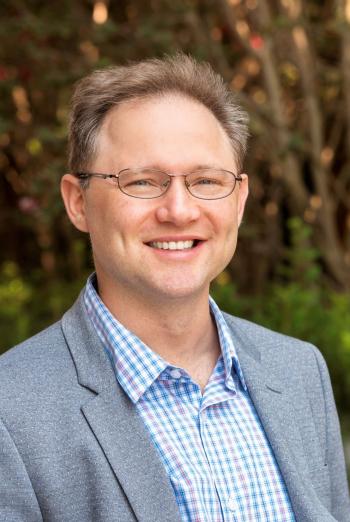
To help us understand what all this means for the future of psychedelic medicine and the neuroscience of psychedelics, we’re joined by Boris Heifets, an anesthesiologist at Stanford Medicine who runs a lab studying how psychedelics affect the nervous system and their impact on patients with psychiatric conditions.
SUBSCRIBE on Apple Podcasts, Spotify, Amazon Music and more.
Learn More
- The Heifets Lab at Stanford Medicine
- FDA plans ultra-fast review of three psychedelic drugs following Trump directive (Associated Press, 2026)
- Trump’s order on psychedelics could have far-reaching science consequences (Scientific American, 2026)
- Psychedelics, placebo, and anesthetic dreams (From Our Neurons to Yours, 2024)
- Pychedelics inside out — how do LSD and psilocybin alter perception? (From Our Neurons to Yours, 2024)
- The power of psychedelics meets the power of placebo (From Our Neurons to Yours, 2024)
- Magnesium–ibogaine therapy in veterans with traumatic brain injuries (Nature, 2024)
- Magnesium–ibogaine therapy effects on cortical oscillations and neural complexity in veterans with traumatic brain injury (Nature Mental Health, 2025)
Episode credits
This episode was produced by Michael Osborne at 14th Street Studios, with sound design by Mark Bell . Social media strategy is by Julia Diaz, and additional editing by Nathan Collins. Our logo is by Aimee Garza. The show is hosted by Nicholas Weiler at Stanford's Wu Tsai Neurosciences Institute and supported in part by the Knight Initiative for Brain Resilience.
Share the show:
If you're enjoying our show, please take a moment to give us a review on your podcast app of choice and share this episode with your friends. That's how we grow as a show and bring the stories of the frontiers of neuroscience to a wider audience.
Get in touch:
We want to hear from YOUR neurons! Email us if you'd be willing to help out with some listener research, and we'll be in touch with some follow-up questions.
Transcript
Nicholas Weiler (00:10):
This is From Our Neurons to Yours, a podcast from the Wu Tsai Neurosciences Institute at Stanford University, bringing you to the frontiers of brain science. I'm your host, Nicholas Weiler. Last month, we saw a big shift in the federal government's approach to psychedelic medicine. Specifically, following an executive order by President Trump, the FDA announced its fast tracking its review of several clinical trials of psychedelic drugs for patients with mental health disorders. These include psilocybin, which is of course the active ingredient in magic mushrooms, methylone, which is a compound sort of similar to MDMA, and a derivative of the hallucinogen ibogaine. The executive order also directed more funds towards psychedelic research and a review of psychedelic status as highly restricted Schedule I substances.
(01:01):
There's been a growing conversation about psychedelics over the past several years, and it seems important to place this news into context. I personally wanted to know what all this means for the landscape of psychedelic medicine and for neuroscience researchers who are still trying to figure out exactly what these mind-altering substances do in the brain. So this week, I'm glad to be joined again by Boris Heifets, who's an anesthesiologist at Stanford Medicine, who also runs a lab studying how psychedelics affect the nervous system and their impact on patients with psychiatric conditions.
(01:35):
So Boris, welcome to From Our Neurons to Yours.
Boris Heifets (01:39):
Nick, it is always a pleasure.
Nicholas Weiler (01:41):
I'd love to just jump straight in and talk about what's happened over the past few weeks. We talked about this FDA accelerated review process. What do they mean when they say accelerated?
Boris Heifets (01:53):
Let me start by saying this is big and it's worth talking about what does this do and what does this not do? Accelerated is a little bit in the eye of the beholder, but there is a lot of delay associated with getting things through the FDA. Just as an example of what a company would have to do to get a drug approved, let's say psilocybin, for example. Compass, who is one of the companies named in the priority voucher program, they would have to file a new drug application. That application would be reviewed. That review could take many, many months, maybe more than a year. And then in the case of psilocybin, which is still Schedule I, which means it is illegal to sell it would have to be taken out of Schedule I.
(02:44):
So even though the FDA says, "Okay, this meets the bar for it's safe and effective as a medicine for treatment resistant depression," which is what we anticipate will happen, even after they make that determination, it still hasn't changed its legal status. Then the DEA, the drug enforcement agency comes in and then they have to reschedule, take it out of Schedule I, which is no accepted medical use, highly addictive. All these things are with big asterisks, but that's what the statute says. And then it would be placed into another schedule. So for example, Schedule III, where ketamine is.
Nicholas Weiler (03:27):
And ketamine's in that in part because it's an anesthetic. Schedule I means that a substance has a high potential for abuse and no accepted medical use. So obviously, if these trials move forward, if these get approved by the FDA, then it does have an accepted medical use. But there's still, am I understanding correctly, these things have to happen almost in sequence that if it is approved by the FDA, then the DEA needs to change the schedule?
Boris Heifets (03:56):
So that is my understanding. These are usually sequential processes, not parallel. So as you can imagine at the rate that things move through any large bureaucracy, without a little bit of pressure, encouragement, enthusiasm, top down, these things, it could be a year and a half, two years from the time that Compass or Usona or Transcend, these are the companies that were named in the priority voucher program, they could submit all of their paperwork and still face a massive delay. So what this executive order does, the real significance in my view is it's first of all an acknowledgement that mental health is a priority. We have a mental health crisis. It's been ongoing for many years, and we need new solutions. We need new thinking around this. We need to try new things. And there has been a tremendous grassroots-based groundswell of enthusiasm for psychedelics and psychedelic adjacent treatments that has just been gaining steam, I would say, over the last 10 years, a little bit more. But it's been just about 10 years since the first big academic studies really started to make an impact.
(05:15):
So we've actually been at this for a while, and this is a culmination of a very long effort.
Nicholas Weiler (05:19):
So I mean, these psychedelics were a topic of a lot of research back in the '50s and '60s, but then it was when they became Schedule I substances, when the federal government basically came in and said, "Hey, you guys, stop using these drugs, stop researching these drugs. These are off limits." And that was in the mid '60s? I didn't look at this number.
Boris Heifets (05:42):
1970, Nixon's Controlled Substance Act that created these schedules, so no accepted medical use. Essentially, this was a response to a massive countercultural movement that focused in part around psychedelics, folks like Timothy Leary, anti-war protests were all bound up with this. And this was, I would say, a heavy-handed attempt to reign in some of that culture. The main provisions of the act were to put drugs into different categories according to their abuse liability. LSD, marijuana, they were put into Schedule I, heroin, no accepted medical use, high potential for abuse. It's worth noting right now that this is not a medical determination, as in this was not made by scientists. Most people now would agree that LSD, whatever problems it has, abuse is not really one of them. It's not on par with alcohol, nicotine, or opioids for sure. So it's really a political designation.
(06:47):
And to me, it is a revisitation. We're reevaluating our approach to consciousness altering substances and reconsidering whether they might have a role in mental healthcare and in medicine more broadly. To me, that is a real move forward. And to hear it said from the Oval Office is a major change that really does signal a major change in what I think will be the acceptability of psychedelics and psychedelic class therapeutics for all manner of neurological and psychiatric conditions.
Nicholas Weiler (07:24):
One of the things that I was heartened to see a lot of commentators say is this is just opening the door to actually doing the studies, getting the scientific data, determining the safety and efficacy without some of the delays, some of the paperwork, some of the challenges that are put in place by the federal government's traditional stance towards psychedelics. The idea anyway is not that this is supposed to overturn the regular scientific review of whether these drugs are actually effective or safe.
Boris Heifets (07:56):
So let's talk about that for a minute. There's things that they did do and things that they didn't do.
Nicholas Weiler (08:02):
Yeah. Take me through that. That would be really helpful.
Boris Heifets (08:04):
This has been coming for a while. I want to start with what it does not do. It does not legislate into existence a new medicine or change the category that existing drugs are put into. Those are things they could have done. They could have created a new schedule that was dedicated to research. They could have decided, "We are just single-handedly going to say MDMA is no longer Schedule I. It is now Schedule III. Deal with it." Thank God, I would say, because that's the amount of chaos that would've caused and the further blurring of the lines between politics and I would say sober scientific evaluation of efficacy and safety, I'm glad that that's not the direction they took. And there were certainly advocates for that kind of what I'll call extreme action.
(08:59):
What I heard and read in this executive order is much more reasonable, actually. The first thing, which we started talking about right off is the delay. By prioritizing review, the drugs still go through the same process, the same, what should be a rigorous evaluation by the FDA for safety and efficacy in large trials, or at least appropriately sized trials. Drugs still have to pass through that gauntlet. So psilocybin is at phase three. Phase three is definitive efficacy in safety trials in a large population. That's the last phase that a company typically has to complete before submitting a new drug application. Okay. So they made that review faster. They've accelerated to just a couple months. That changes the timeline for Compass, which is the furthest ahead in this group to potentially get approval from the FDA in 2026. Their estimate had previously been 2027. This moves up that timeline a little bit more.
(10:05):
The second part is the DEA review. So the executive order puts into place accelerated review by the DEA for rescheduling. So those are two key barriers that need to be surmounted before you can market a drug in the United States. So I know that Compass and other companies have been laying the groundwork for clinics. How are they going to distribute? What is the plan going to be? There's a lot of unknowns about how this is going to play out, who's going to pay for it. That's always... I think probably the biggest looming question is, "Great. Now that we have these medicines, how are we going to get them to anyone? How are we going to decide who it's safe to give these treatments to?" All those questions for-
Nicholas Weiler (10:52):
Insurance is going to pay for. Yeah.
Boris Heifets (10:54):
Yeah. All that's still on the table. The other thing I want to say about what does this executive order do is accelerating research. This is lightning fast compared to most typical programs to study psychedelics. We found out about it in November. We're hoping to get started on it in May. So that's-
Nicholas Weiler (11:13):
And that seems pretty typical for the approach that ARPA-H is trying to take. It's trying to be the health equivalent of the Defense Advanced Research Projects Administration, I think it is, which is famously, "Let's move quick and do things that work and not do things that don't work and just figure it out."
Boris Heifets (11:31):
Yeah. These are, I would say, high risk, exciting projects that we will get an answer within a couple years. So they made the executive order put money into those programs, into federal state partnerships. And the other thing that we haven't talked about a little bit, elephant in the room, is ibogaine. You heard Joe Rogan talking about ibogaine. Marcus and Amber Capone, who are leaders of a program called VETS, which is a veteran advocacy group that helps get people, veterans to Mexico for ibogaine treatment. Ibogaine is not legal in the United States. So folks have been going to Mexico and treating PTSD, substance use, traumatic brain injury, any number of different disorders. And there has been very little data on those things. Those are things that really ought to be studied carefully and at scale, both safety and efficacy. So it's worth saying a couple words about this.
(12:30):
And I want to acknowledge right up front that some of the biggest impact work in this field with ibogaine was done led by Nolan Williams, who passed away by suicide last year, and really captured the attention of the press and the lay public in a way that had not been done before. It really helped to educate people about what the possibilities are. And this study was mentioned in the press conference that really showed remarkable recovery from all across the board. Whatever these folks had, it got better. Really, truly impressive results. I have to say though, this was not a controlled trial. These were folks that were self-selected, did not receive treatment in the US. They received treatment at a, say like a resort type facility. Hard to say exactly how quite to describe it, but this was a single arm study. There was no comparison group. And there's a lot we don't know about what contributed to the efficacy.
Nicholas Weiler (13:35):
So there's been, I think in part, because of the severity with which the federal government treats these drugs, and I think, as you say, ibogaine really hasn't been studied very much in the US at all, if at all, that now some of the consequence of the new FDA action and the executive order is, let's take a look at these, let's study them closely. Let's actually see in a careful scientific way what benefits they might have and whether the benefits outweigh the risks. Because some of these compounds do have risks. There are risks as with any medication and making sure we understand that calculus clearly.
(14:35):
What I'd love to do now, you've given us a nice overview of several of the different pieces of what's going on. I'd love to dive into a few of these specific cases, just so that we understand where are we at with these different compounds. So there are three main ones that were included in this executive order and the FDA fast tracking update. Why don't we start with psilocybin? As you said, I think that's maybe the furthest along. And there are two phase three trials currently with psilocybin for depression. Can you give us just an update on what we know about this? What has the science said so far? And what do you know about these clinical trials that are ongoing?
Boris Heifets (15:14):
I'll start with what many people may... The last impressions they've had about encounters of psychedelics with the US regulatory apparatus. That was MDMA two years ago that did not get FDA approval. That was a very big upset and a step back in a lot of people's minds. So-
Nicholas Weiler (15:34):
People expected that to go through, you're saying?
Boris Heifets (15:36):
It was a long effort and people really did expect it to go through. And in the last few months, it became very clear that it would not.
Nicholas Weiler (15:45):
Interesting. Okay.
Boris Heifets (15:46):
And there are a lot of reasons for that, but that's not what we're talking about today. Psilocybin is a different beast, really. It's a different drug. It is what we call a classical psychedelic. It is profoundly psychoactive. I can refer you to many episodes of Simpsons or Family Guy or any movie from the 60s if you want to get a little bit more of a visceral feel for what they might be like. So these drugs ought to be given in a controlled setting. So these are profoundly psychoactive and you wouldn't want to be operating heavy machinery or walking in traffic or making major life decisions on drug.
(16:26):
So Compass, which is a for-profit company, is really modeled on classic pharmaceutical companies. It's your basic biotech. What they did that was different, what is different this time around and why Compass, in my view, is going so much further is they designed studies that look a lot like what you expect to see from a biotech submitting a new drug application. They took all of the FDA's advice it looks like. They received breakthrough therapy designation in 2017 or 2018 for psilocybin, which means that the FDA had input into how they designed their studies. They took that advice. And the result is a pretty clean, nicely powered, interpretable, with some caveats, interpretable study that shows that a single dose of psilocybin, COMP360, improved symptoms in patients with treatment-resistant depression compared to a control condition.
(17:28):
That's the bar. That is the bar that the FDA set ahead of time. They agreed to it. They met it in two trials. That is a better job than Spravato did, which was approved in 2019. That's esketamine, which had a much more mixed set of studies to support it. So here we have a company that is producing appropriately sized clean standard trials for psilocybin in a particular indication, treatment resistant depression. I think we will see the same thing from Usona who's very close behind. Usona is a nonprofit company advancing psilocybin for not treatment resistant depression, but major depressive disorder.
Nicholas Weiler (18:13):
But yeah, with psilocybin, I mean, we've talked about this before, there's this question of, can you just give someone this drug and expect them to get better or do you need the support of a trained therapist and so on, which becomes much more complicated. That is not how healthcare has traditionally worked, and it's more difficult to test, it's more difficult to regulate and so on. But what you're saying here is that mainly we're talking about the drug itself. Can you tell me a little bit about that?
Boris Heifets (18:39):
Yes. So this is, I would say, the bleeding edge of clinical science around psychedelics. Does it matter if you just get the drug or does it matter what happens on the drug? Does it matter if you have any kind of trip? These are-
Nicholas Weiler (18:59):
Is it the experience or is there some chemical thing that you maybe don't need to experience that's changing?
Boris Heifets (19:04):
Yeah. I'm happy to tell you we have no idea still. It's been a little while since I've been on your show and we're still...
Nicholas Weiler (19:12):
Still working on it.
Boris Heifets (19:12):
We have some more groups. We're still in the dark. But this is really the difference between mechanistic science that we would do at Stanford to understand precisely how a drug works with clean causal attribution. That's how you develop the next generation of therapeutics. If you can rebuild something, that means you understand it, or if you can deconstruct it in a way that's predictable. That's not what's happening with this clinical science. This is a drug approval study and the FDA has been aware of these issues about we don't quite know what's involved in the therapeutic effect. So show us something and we'll review it. And there's, I think, some leeway around things like functional unblinding, everyone's favorite dirty word. You can't blind a psychedelic study.
Nicholas Weiler (20:02):
People notice. People notice if they've taken mushrooms.
Boris Heifets (20:05):
People notice, and of course it's an issue and it will continue to be an issue. And we have a very exciting trial in the works to address that very question. But for the purposes of this, for getting psilocybin into broad commercial use or even just any commercial use, that's not what the FDA is focused on. And I think that's a very... Purists may argue otherwise, but I think it is very much worth pointing out that no drug has been held to this standard in the FDA's history as far as I know.
Nicholas Weiler (20:42):
Sorry, to which standard, to understanding how it works?
Boris Heifets (20:44):
No, or even to blinding. No one ever measures blinding. So of course, psychedelics force the question. Are you giving answers because of subtle or not subtle social pressure to answer in a certain way because you're in a psychedelic trial? It's possible. It is certainly possible and it is worth addressing, but that has not been the focus of the FDA, at least according to the tea leaves I'm reading, which is, for example, the letter that they sent to Lykos, which advanced MDMA as a new drug application. When the letter from the FDA was released explaining all of the deficiencies in Lykos's application, functional unblinding really was not top of the list. What they were worried about actually was that they included too many people who had taken MDMA before, 40%, which is not really representative of people with PTSD. So if you've taken it before and you've benefited, well, you may have a conditioned response about what you think is supposed to happen the next time you do it, except this time in a clinical trial.
(21:49):
So all of this is to say that the main concern is efficacy in a simulacrum of real world conditions, which is what they tried to recreate in this study with some psychological support, and safety. So are people, are they developing psychosis? Are they having higher rates of suicide? Things like that. Those are important signals to pay attention to. So for all those reasons, psilocybin, these trials that Compass did, these phase three trials, they look good. The safety signals are relatively clean. The efficacy signal, it's not that big. That's a different discussion, but it's there. And it has surpassed the last big first in class treatment we've had in esketamine.
Nicholas Weiler (22:41):
Do you know how long-lasting that benefit was? I mean, I'd love to hear a little bit about what the patient experience is said to be. They do one dose of psilocybin, they have the experience, I think you said there's some psychological support, but not full psychotherapy. And then over the next week or two, they report less depression symptoms?
Boris Heifets (23:06):
So the primary endpoint... So you're right about... The thing, again, that's so captivating about this class of treatments is that it's a single dose. That puts it in a different category than drugs you take every day like SSRIs.
Nicholas Weiler (23:20):
And SSRIs, as I think we've probably mentioned before, it actually takes a few months often before you get any benefit at all.
Boris Heifets (23:26):
Weeks to months. And I want to remind all of our listeners-
Nicholas Weiler (23:28):
Weeks to months. I apologize.
Boris Heifets (23:29):
... I'm not a psychiatrist, but I'm friends with several, but that I think I'm qualified to say is SSRIs typically take a few weeks to kick in. So this is a single dose. And what they were measuring in these studies was week six. So there's two ways to look at this. One is, oh my gosh, six weeks is a pretty long time to have an effect from a single dosing experience. So that's good. And it's worth saying that everybody got better in these studies, both the placebo group and the psilocybin group. The ones who got psilocybin got a bit better than the ones who didn't.
Nicholas Weiler (24:09):
Interesting.
Boris Heifets (24:10):
One of the live questions in this field is how often do you need to retreat? If somebody relapses after getting better, how soon can you retreat them? And this gets into healthcare economics. If you are going to charge $15,000 per treatment, which is one estimate I've heard of how much it would cost to get this, then it really does make a difference how often you need to be treated. The early studies on this were just blue sky. You can see it in the titles and abstracts as months and years of improvement after single doses. That is certainly possible for some people. There are some people that just respond in a way that it changes their life and they never go back. But on average, as we can see in these trials, effects last out to six weeks, maybe a little bit longer, maybe a little bit shorter.
(25:05):
And the question is, at what point do you need to go back? And does it work if you get retreated? Is it a one and done sort of deal? The emerging evidence suggests that actually getting retreated does still work, that you can get the benefit from getting a second dose. That is still, I think, out in the realm of press release. There's not that much data yet to go on.
Nicholas Weiler (25:29):
It sounds like we're still very much in process of trying to understand how this works. I mean, psilocybin, like most classical psychedelics is affecting the serotonin system directly, but the question of why does it improve depression, if I understand correctly, is still a pretty open one. Does that seem fair?
Boris Heifets (25:50):
Yes, that is absolutely fair. Some people would argue that it is a big perspective shift that is seeing the world from a different point of view, seeing yourself from a different point of view. Some people would say that it's having a profound mystical experience just in and of itself, that specific type of experience that one has on psychedelics, that very characteristic experience. Some people would say that psilocybin is wandering into your brain and making every dendrite bloom. And whether you're there or not for it, you've encoded resilience into every neuron in your prefrontal cortex. We don't know. These are actually answerable questions. I think they're very interesting and exciting questions, and that's what at least our network of collaborators here at Stanford are very keen to find out.
Nicholas Weiler (26:53):
Let's talk about the next clinical trial that's affected by this. This is for something called methylone, which is not to be confused with methadone. If I understand this correctly, this has been in the news for years as people call it bath salts sometimes, people who have used this recreationally, but it's related to MDMA, to cocaine, other methamphetamine style drugs. Can you tell us a little bit about what this compound is and what the clinical trials are showing?
Boris Heifets (27:27):
Sure. So methylone has been around for a long time. It is similar to MDMA. Both of these drugs, MDMA and methylone have structural similarity to amphetamines. So you can call them serotonergic amphetamines. That's really what distinguishes the class of drugs is that amphetamine is typically speedy, associated with dopamine release. All of the issues that are associated with dopamine release, like addiction, higher abuse potential. Methylone and MDMA, they also have these other actions. They release serotonin, norepinephrine, oxytocin, a host of other neuromodulators. The work we've done, this is with Rob Malenka and other folks at Stanford, really I think have shown that serotonin is what is responsible for its pro social therapeutic effects. So that special thing that MDMA and methylone have, this ability to approach difficult trauma both in your mind and in your memories, that's what's special about these drugs. And that's really, we think makes them different from garden variety amphetamines.
Nicholas Weiler (28:39):
And that's why this is being approached for post-traumatic stress disorder as one of the main targets of this.
Boris Heifets (28:47):
So interestingly, this is where methylone, it is in that class. It is what some people call entactogens, touching within, where it makes it possible for you to touch those painful memories and to move past them. The way that it was used in... So Transcend is the company they're founded from folks at Yale. The way that Transcend was used in this trial is it was one dose a week for four weeks. And according to the press releases, because that's what we have to go on, there was no adjunctive psychotherapy. This is a big difference from what MAPS Lykos did with MDMA. MDMA, which had dominated news for, I'd say, for about 10 years in this space, what they were testing was MDMA with this inner healing intelligence, really supportive, not just supportive actually, but almost a more of a proactive psychotherapeutic approach. That was one of the problems that the FDA pointed to, that nobody had done this before, they don't really understand it.
(29:51):
So that had a big impact on the industry, and you can see it in all of these trials from these companies that are racing to the finish line, is they have stripped away, if not the actual therapy, certainly the language that they use to describe what is happening when they give the drug. So remember, the way that these are going to be deployed is you are going to go to a place. You're not going to get these at home. You're going to go to a clinic, maybe an interventional psychiatry clinic, maybe in a nicely appointed room with soft lighting and soft couches. You are going to be there for a number of hours. You're going to be there probably all day. And one of the open question is, well, what do you do while you're under the influence? MDMA and methylone, that speediness really makes people want to talk. So I'm very curious as to who was on the receiving end of all of the speech in these studies. We don't know a lot about that, but-
Nicholas Weiler (30:45):
And this is for patients with post-traumatic stress disorder, right?
Boris Heifets (30:48):
And PTSD. If as advertised, I have to say those are pretty impressive results.
Nicholas Weiler (30:57):
So basically they showed pretty significant improvements in their... What do they measure for PTSD?
Boris Heifets (31:04):
So for PTSD, the gold standard is the clinician-administered PTSD scale. And this goes through a number of symptoms about nightmares, about triggering events, but basically all the symptoms that one, hyper arousal, fear, anxiety, these are all aspects of PTSD. And I want to give a big shout-out to my colleagues in psychiatry who've taught me a lot about this as we were doing our own PTSD trials.
Nicholas Weiler (31:30):
So this is sort of clinician ratings, the clinician's assessment based on this standard rating scale of how the symptoms of PTSD are looking. And so they're showing, I think you said weekly for six weeks. Is that right?
Boris Heifets (31:42):
So you get four doses, one a week.
Nicholas Weiler (31:45):
Okay, four weeks. One of the things that I have read about methylone, and I don't know how much of this is hype, is that this drug as a recreational drug is associated with some pretty significant negative side effects. So I'm curious what the approach was to assessing that and what they've reported from these trials.
Boris Heifets (32:05):
So the FDA was made it pretty clear for MDMA that they want to assess everything, things like euphoria, all the abuse signals. Methylone, a lot of it ... First of all, I think it's worth disambiguating methylone and bath salts. There are a lot of things that count as bath salts, and that could really mean a lot of different drugs that are sold that way, so the face-eating zombies from Florida from a few years ago. Methylone is very similar to MDMA, maybe a bit milder and it's been used underground in therapeutic settings. And this is a really important reminder that the context in which drugs are given is very important to how these drugs manifest in terms of what symptoms and signs they produce. At least according to what Transcend has put out there, the safety profile is quite benign.
Nicholas Weiler (33:02):
Okay. So the other trial that I wanted to ask you about is this trial for ibogaine, which is something some people may have heard about. It's been in the news, but not everyone. It's certainly less well known than MDMA or psilocybin. So if I understand right, this is a phase one safety trial of a sort of derivative of this compound ibogaine. As you mentioned earlier, I think this is the first ever clinical trial of ibogaine in the States. Can you tell us a little bit about this? You mentioned that some of the top science around ibogaine came from the lab of Nolan Williams here at Stanford, who we sadly lost last year. What is ibogaine? What are those studies? What were those studies finding?
Boris Heifets (33:50):
So ibogaine is derived from a Bush in Western Africa and Gabon. It's a drug that really defies clean description. It's not exactly a psychedelic. It is a hallucinogen. Some people have called it an oneirogen, which is producing a dream-like quality, a dream state. It is very long-lasting. 18, 24, 72 hours, a whole range. And people talk about this. It's not pleasant. Actually, that's the other thing worth saying. People don't ever or rarely seem to come back and say, "I want to do that again." It's very difficult. It can be challenging experience. And people describe things like replaying bits of their lives, scenes from their lives from different perspectives and in this very dream-like state. And that's a pretty unique profile. That's not characteristic of other classic psychedelics.
Nicholas Weiler (34:52):
And so given this sort of, as you say, a sort of negative experience that people report, or at least not a rainbows and sunshine kind of experience, what was driving people to go down to these clinics in Mexico to have this experience?
Boris Heifets (35:07):
Just the total lack of any other option. So one of the earliest uses I've been hearing from ibogaine since I was 30 years, actually, as long as I've been studying psychedelics in any form for opioid use disorder, for addiction. People who had intractable addiction, they've tried everything, they've tried detox, they relapse, methadone doesn't work. They want to be off and they're highly motivated and they go to Mexico and they do a dose of ibogaine and they're done. They don't have the withdrawal. They don't have the craving. They're basically, they have a visionary experience and they no longer need to take opioids. Those are remarkable stories. And when you listen to people who talk about these experiences, it's really, it's hard to ignore. How can you ignore people who have tried everything and this is the thing that works and saves their lives?
Nicholas Weiler (36:08):
Right. We often dismiss anecdotal evidence because it's not scientific, but it is human, right? These are the stories we hear from real people. And the question is, how generalizable is this? Is this the best way to do this? How does it work?
Boris Heifets (36:24):
There are two important questions to ask here. And you hit on one of them is how generalizable is it? Is it everybody? Does everybody get better? How do you know who to send? This trial that was done from Stanford was very much a self-selected group. People that were recruited into this and it's not necessarily people that walk in looking for help from their opioid use or their PTSD or traumatic brain injury that you would then be able to say, "You should get ibogaine." We're not even close to that yet.
(37:01):
The other question is safety. Ibogaine has a major issue in cardiac safety. And this is not our first run with ibogaine. In 1993, Deborah Mash, who is the head of, or at least deeply involved in the company that now got this investigational new drug application moving for noribogaine. In 1993, she got FDA approval for ibogaine for a clinical trial. And it was killed by NIDA just a couple years later. There's deaths reported. There are still deaths in the news from clinics that look reasonably well regarded. So it's not a rare event. And when you think about who is seeking these things out, these are people who have a lot of medical comorbidity. If you have a lifetime of substance use issues, PTSD, you accumulate a lot of other issues as well, heart problems, lung problems, et cetera. Those are really the big unknowns.
(38:03):
I think it's telling, it has been very difficult. This is a little bit rumor mill, but very difficult for any company to get the FDA to approve even a study of ibogaine because of these safety concerns, that the things that they want from companies doing this are prohibitive in terms of cost and time. Starting at these baby doses and moving up an inch at a time, these things take a long time. And when you put it in an ICU-like setting where patients are monitored that closely, this is not ready for prime time quite yet.
Nicholas Weiler (38:43):
Yeah. And so what's been fast tracked now is a phase one safety trial, yes?
Boris Heifets (38:50):
Yes. So that's for noribogaine, which is a derivative. And there's been a lot of excitement in the basic science space around developing derivatives of ibogaine. So one of the first big papers on this topic came from a lead author was Lindsay Cameron, who's a postdoc now with Rob Malenka and Karl Deisseroth where they basically tried to redesign the molecule into something that didn't have the hallucinogenic component, didn't have the cardiotoxic profile, and would still produce some of the same beneficial effects. So all of that's to say there's been a lot of interest in developing derivatives because it seems to have so much promise, but there's this clearly this cardiotoxicity issue that needs to be solved. So that is what this is all about, is let's get that data. You can do these studies. They take a while, they take investment, all of this investment from the executive order, $50 million towards state, federal partnerships, the Texas move to appropriate, I think it was 50 or $100 million to ibogaine research. That's the commitment that we need. That's how we move this forward and to get that basic data on safety and preliminary efficacy.
Nicholas Weiler (40:06):
The thing that's so interesting about this is that it goes beyond the specific examples, as important as those are, and we'll be interested to see, but it also seems to represent a thaw in general, in our willingness to study and take seriously the potential that these psychedelic molecules might be helpful for people. So what does that do to this field that you, as you said, you've been thinking about this for 30 years and it's been a bit of an uphill battle? What do you see this doing for the field on the clinical end and on the research end?
Boris Heifets (40:40):
Well, first of all, it brings legitimacy. We're in a bubble here a little bit in Silicon Valley where I think by everyone is microdosing just to get through the day, maybe. I don't know. I don't know if that's true, but there's-
Nicholas Weiler (40:52):
Not on this side of the microphone.
Boris Heifets (40:53):
Not here, not me, but just I hear people do these things. But anyway, we're a little bit in a bubble in terms of psychedelic exceptionalism, but there's a broad swath of America that I don't think is really that well acquainted. And it is getting that voice of support from the highest level from not the place that you would typically expect. It's bipartisan support. It's vocal endorsement that not necessarily to go out and use drugs, although it came a little bit close to that for my comfort in the press conference from the talking head class, but it was a call for serious study and serious consideration. That's what changes. And that means that drug companies, why have drug companies, they've divested from CNS drugs for a couple decades now, and they're opening shop again because the risk signals are getting much more manageable. They're seeing that, "Oh, these things do have a shot. Maybe the FDA will be open to these applications."
(42:03):
Science is moving forward. It is a snail's pace because of the paperwork. Getting-
Nicholas Weiler (42:09):
Just getting those compounds.
Boris Heifets (42:10):
Just getting the compounds. As soon as psilocybin is taken out of Schedule I, I think we're going to see a flood of research on this because the barrier to entry of just doing a study with psilocybin, it takes a lot of time and money just to get to step one. So those are, in my view, totally unnecessary prohibitive barriers to entry that this shift is making go away to a large extent.
Nicholas Weiler (42:39):
Well, I think we need to close. This has been a fantastic just whirlwind overview. This is pretty hot off the presses. This just happened a couple of weeks ago, and so I'm sure there's a lot more we'll be learning over the next few weeks and months. Just to close out, give us a preview. Next time we have you on the show, what are you going to be excited to talk with us about?
Boris Heifets (43:00):
Oh yeah. Advancing how to make clinical trials with psychedelics interpretable. How do we know what we know about anything about psychedelics? That, to me, is where the real edge of research is. What does psilocybin actually do to human brain? Is it the experience? Is it believing you about psilocybin? Is it having a visionary journey? Those things are tractable. They're experimentally tractable. I'm working with a great team of collaborators around the country to answer those questions, to look at other states of altered consciousness like dreaming, and look at the overlap. And I think this is really an exciting... It's opening up some very exciting doors about what people are willing to accept into conventional mental health treatment.
Nicholas Weiler (43:49):
Excellent. All right. Thank you so much, Boris, for coming on the show.
Boris Heifets (43:52):
All right. Thank you.
Nicholas Weiler (43:55):
Thanks again so much to our guest, Boris Heifets. He's an associate professor of anesthesiology, perioperative and pain medicine at Stanford Medicine, and an affiliate here at the Wu Tsai Neurosciences Institute. To read more about his work and the latest news, check out the links in the show notes.
(44:12):
If you enjoyed this episode, be sure to subscribe for more conversations from the frontiers of brain science. We also love hearing from listeners. If you have thoughts about the show or questions about the brain you'd like to hear us discuss on a future episode, send us an email at neuronspodcast@stanford.edu, or leave us a comment on your favorite podcast platform. And while you're at it, we'd love it if you could give us a rating and share the show with your friends. It may seem like a small thing, but it's tremendously valuable for us to be able to bring more listeners to the frontiers of neuroscience.
(44:47):
Next time on From Our Neurons to Yours.
Cory Shain (44:51):
What we are looking at when we look, for example, at an fMRI image, is something like a Monet painting where we've stepped far enough back to see this kind of a big picture structure, but when we zoom in, things look quite different.
Nicholas Weiler (45:09):
From Our Neurons to Yours is produced by Michael Osborne at 14th Street Studios with sound designed by Mark Bell. Our social media strategy is by Julia Diaz, additional editing by Nathan Collins. Our logo was designed by Aimee Garza. I'm Nicholas Weiler. Until next time.
