
MBCT Seminar: Laura Driscoll - How are dynamical systems composed for complex behavior?
Continue the conversation: Join the speaker for a complimentary dinner in the Theory Center (second floor of the neurosciences building) after the seminar
How are dynamical systems composed for complex behavior?
Abstract
Computational processes in neural systems emerge through learning across multiple timescales; from evolution and development to immediate, in-context adaptation. Yet fundamental questions remain: Which neural architectures confer evolutionary advantages? How do experiences shape circuit dynamics? What principles govern how specific computations arise during training? My group addresses these questions using data-driven models, simulations, and analytical methods. Building on a decade of research across multiple labs, we focus on fixed point structures, termed "dynamical motifs”, that serve as computational primitives. We've discovered that these motifs can be flexibly composed to solve diverse tasks, with rapid learning often involving novel recombination of existing motifs rather than construction of entirely new dynamics. However, the principles governing motif composition remain poorly understood, motivating our simulation-based approach. I will present two ongoing projects that illustrate this framework: Dynamical motifs underlying foraging behavior: How fundamental dynamical motifs support naturalistic decision-making and navigation. How task structure shapes computational dynamics: The relationship between problem structure and the organization of dynamical systems that solve it.
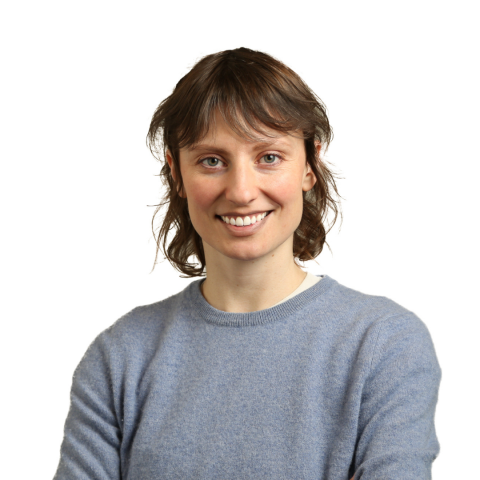
Laura Driscoll
Allen Institute
Very little is known about how humans and other animals compose elements of past learning to solve similar problems in new situations. To explore these and related questions, I recently joined the Allen Institute for Neural Dynamics. My group will utilize data-driven models, simulations, and analytical methods, with close ties to experimental groups collecting behavioral and neural data. We will examine how previous learning shapes behavior in novel environments.
This work is informed by my postdoctoral training with Krishna V. Shenoy and David Sussillo in the Neural Prosthetic Systems Laboratory (NPSL) at Stanford University, where I reverse-engineered recurrently connected neural networks to uncover shared dynamical motifs across multiple related computations.
My graduate training with Chris Harvey at Harvard University shapes my thinking about structures of knowledge in the brain. We discovered that neural activity patterns, correlated with sensation and action, often aren’t stable. Instead, they undergo large-scale changes over days and weeks — a phenomenon now called representational drift.
Hosted by Alice Tor (Stanford Profile)
About the Mind, Brain, Computation, and Technology (MBCT) Seminar Series
The Stanford Center for Mind, Brain, Computation and Technology (MBCT) Seminars explore ways in which computational and technical approaches are being used to advance the frontiers of neuroscience.
The series features speakers from other institutions, Stanford faculty, and senior training program trainees. Seminars occur about every other week, and are held at 4:00 pm on Mondays at the Cynthia Fry Gunn Rotunda - Stanford Neurosciences E-241.
Questions? Contact neuroscience@stanford.edu
Sign up to hear about all our upcoming events