
Neurosciences Seminar: Andres Bendesky, MD, PhD - Genetic, molecular, and cellular mechanisms of hormonal variation and its influence on behavior
Join the speaker for coffee, cookies, and conversation before the talk, starting at 11:45am.
Genetic, molecular, and cellular mechanisms of hormonal variation and its influence on behavior
Abstract
The Red Queen paradigm describes how systems of interacting elements with conflicting interests often evolve: changes in one element lead to compensatory changes in another element, establishing a (fragile) equilibrium. Red Queen interactions have been described in several contexts — between pathogens and their hosts, between transposable elements and their host genome, and between paternally-silenced and maternally-silenced genes in the case of genomic imprinting. I will describe how the evolution of the hypothalamic-pituitary-adrenal (HPA) axis of Peromyscus mice has many features of Red Queen interactions. We discovered multiple evolutionary changes in the HPA axes of closely-related Peromyscus species that have large individual effects, but that in aggregate neutralize each other to achieve similar HPA axis states. This highlights a potential role for Red Queen dynamics in the evolution of endocrine systems and suggests the presence of underlying conflicts.
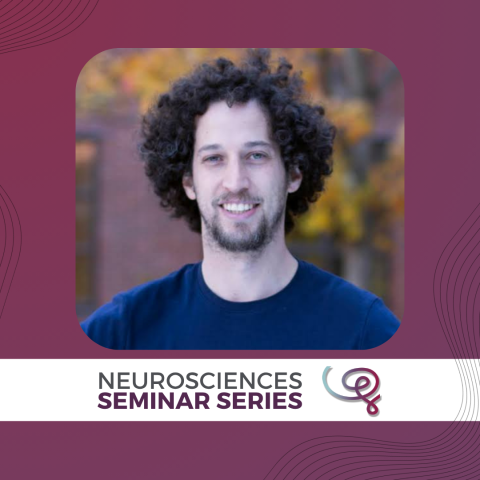
Andres Bendesky, MD, PhD
Associate Professor of Ecology, Evolution and Environmental Biology; Principal Investigator at Columbia's Zuckerman Institute (he/him)
Andrés grew up in Mexico City, where he attended medical school at the Universidad Nacional Autónoma de México (UNAM). Dr. Bendesky pursued his Ph.D at The Rockefeller University and proceeded to do postdoctoral work at Harvard University. There, he focused on studying the genetic basis of why monogamous rodents are more dedicated fathers than fathers from promiscuous species. In 2017 Dr. Bendesky joined the faculty of Columbia, where he continues to focus on discovering genetic, molecular, and neuronal mechanisms leading to diversity of social behaviors within species and across species—the study of how behavior evolves.
Hosted by Nick Manfred (Abu-Remaileh Lab)
Sign up for Speaker Meet-ups
Engagement with our seminar speakers extends beyond the lecture. On seminar days, invited speakers meet one-on-one with faculty members, have lunch with a small group of trainees, and enjoy dinner with a small group of faculty and the speaker's host.
If you’re a Stanford faculty member or trainee interested in participating in these Speaker Meet-up opportunities, click the button below to express your interest. Depending on availability, you may be invited to join the speaker for one of these enriching experiences.
Speaker Meet-ups Interest Form
About the Wu Tsai Neurosciences Seminar Series
The Wu Tsai Neurosciences Institute seminar series brings together the Stanford neuroscience community to discuss cutting-edge, cross-disciplinary brain research, from biochemistry to behavior and beyond.
Topics include new discoveries in fundamental neurobiology; advances in human and translational neuroscience; insights from computational and theoretical neuroscience; and the development of novel research technologies and neuro-engineering breakthroughs.
Unless otherwise noted, seminars are held Thursdays at 12:00 noon PT.