
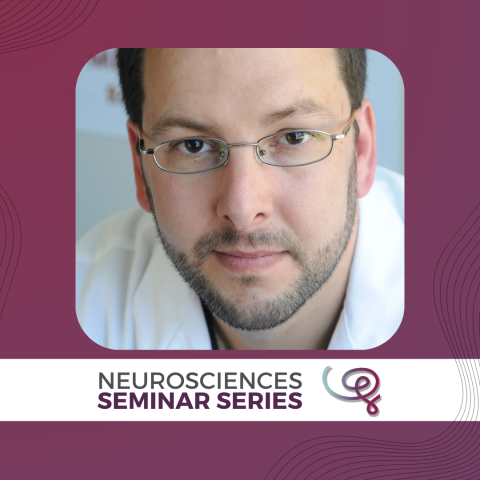
Neurosciences Seminar: Randy Buckner - Precision estimation of large-scale network organization in the human brain
Join the speaker for coffee, cookies, and conversation before the talk, starting at 11:45am.
Precision estimation of large-scale network organization in the human brain
Abstract
Human association cortex is populated by a series of large-scale networks. In terms of organization, the multiple networks form an orderly progression that radiates outwards from sensory-motor networks to transmodal association networks that underlie advanced forms of human cognition. In-depth analysis within individuals reveals anatomical details including that functionally distinct networks are intertwined throughout multiple zones of association cortex, raising questions about how they evolved and how they differentiate during development. Interestingly, it was found quite recently that monkeys, including the genetically accessible marmoset, possess association networks that recapitulate many of the human features. These parallels provide an opportunity to connect experiments in animal models of large-scale circuits to clinical interventions in the human. Recent work has translated these discoveries to optimization of clinical care. Precision estimates of networks within individual patients are possible and provide opportunities to monitor dysfunction and to target specific networks via neuromodulation.
Randy Buckner, PhD
Sosland Family Professor of Psychology and Neuroscience, Harvard University
Dr. Buckner is Sosland Family Professor of Psychology and Neuroscience at Harvard University and affiliated with the Center for Brain Science. He is also Professor at the Harvard Medical School and the Director for Psychiatric Neuroimaging Research at the Massachusetts General Hospital, where he is faculty within the Athinoula A. Martinos Center for Biomedical Imaging. He received his Ph.D. degree in neuroscience from Washington University, under the direction of Steven Petersen and Marcus Raichle. He trained with Bruce Rosen as a postdoctoral fellow and then Instructor of Radiology at Harvard Medical School, where he pioneered new functional MRI methods to study human memory. His work then expanded to include studies of Alzheimer's disease and neuropsychiatric illness with a focus on developing biomarkers for disease detection and progression. He also developed widely used neuroinformatics tools to facilitate open data sharing across the neuroimaging community. Professor Buckner’s awards include the Wiley Young Investigator Award from the Organization of Human Brain Mapping, the Young Investigator Award from the Cognitive Neuroscience Society, the 2007 Troland Research Award from the National Academy of Sciences, and the 2010 Award for Medical Research in Alzheimer’s Disease from the MetLife Foundation. He is a fellow of the American Academy of Arts and Sciences.
Hosted by Zaki Alaoui (Baccus Lab)
This seminar is co-presented by Psychiatry Grand Rounds | Department of Psychiatry and Behavioral Sciences
Sign up for Speaker Meet-ups
Engagement with our seminar speakers extends beyond the lecture. On seminar days, invited speakers meet one-on-one with faculty members, have lunch with a small group of trainees, and enjoy dinner with a small group of faculty and the speaker's host.
If you’re a Stanford faculty member or trainee interested in participating in these Speaker Meet-up opportunities, click the button below to express your interest. Depending on availability, you may be invited to join the speaker for one of these enriching experiences.
Speaker Meet-ups Interest Form
About the Wu Tsai Neurosciences Seminar Series
The Wu Tsai Neurosciences Institute seminar series brings together the Stanford neuroscience community to discuss cutting-edge, cross-disciplinary brain research, from biochemistry to behavior and beyond.
Topics include new discoveries in fundamental neurobiology; advances in human and translational neuroscience; insights from computational and theoretical neuroscience; and the development of novel research technologies and neuro-engineering breakthroughs.
Unless otherwise noted, seminars are held Thursdays at 12:00 noon PT.