
‘A celebration’ of the gut and the brain
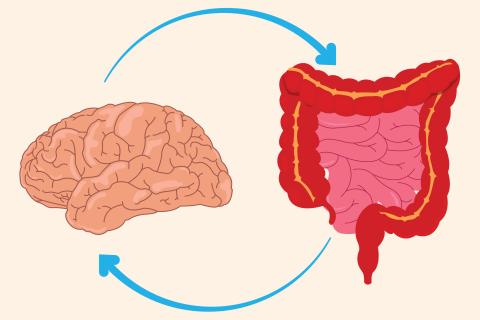
Ask someone about the nervous system in the gut, and chances are you’ll get a blank stare—or maybe, “There’s a nervous system in the gut?”
Indeed there is. The enteric nervous system, as it’s known, is an independent mesh of neurons running the length of our digestive tracts. It’s responsible for moving things along through our guts, but growing evidence shows it plays a larger and still underappreciated role in in our daily lives. Over the last ten or twelve years, there’s been an explosion of interest in the connections between the brain and the gut, and researchers have uncovered surprising clinical implications, including links to psychiatric and neurological disease.
The Wu Tsai Neurosciences Institute’s Annual Symposium, to be held October 30th, 2025, will convene experts from around the world to share insights from the frontiers of the field and celebrate the progress that’s been made on the gut-brain axis and other brain-body connections, say Wu Tsai Neurosciences Institute Faculty Scholars Julia Kaltschmidt and Todd Coleman, who organized this year’s event.
We spoke with Kaltschmidt and Coleman about how they got into the gut, where the field is going, and what they’re looking forward to at the symposium.
Wu Tsai Neurosciences Institute Faculty Scholars are hired by the Institute in collaboration with their home departments for the mix of cutting-edge science and collaborative approach to research they bring to our community. Kaltschmidt is an associate professor of neurosurgery at Stanford Medicine, and Coleman is an associate professor of bioengineering, a joint department of Stanford Medicine and Stanford Engineering. Coleman is also a deputy director on the Wu Tsai Neurosciences Institute’s Executive Committee.
How did you get interested in the gut-brain axis?
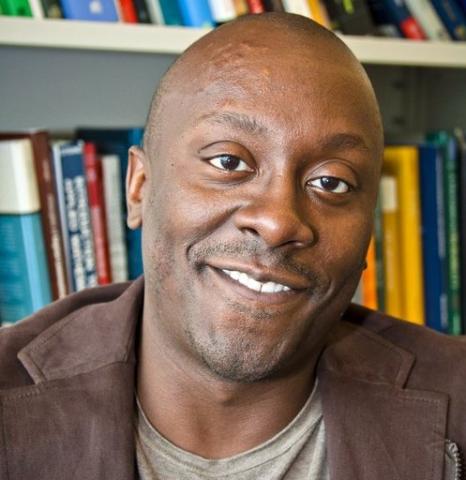
Todd Coleman: As I was finishing my electrical engineering PhD, my advisor gave me the best piece of advice of my career. I had a faculty position lined up at the University of Illinois, and she told me to delay my start date and “go do a postdoc in something wildly different”. I ended up doing a postdoc in neuroscience.
How I got interested in the gut and the brain is very direct. I was being recruited to University of California, San Diego, and while that was occurring, my dad was dying of pancreatic cancer. The last day he could speak was the day I called him when I got the verbal offer, and the day he died was the same day I received the offer in writing. I thought there was something about him I needed to take with me to San Diego, and I didn't know what it was.
Pancreatic cancer is a disease of the digestive system, so I told myself when I moved to San Diego, “I'm not only going to pursue all this brain stuff, but I'm also going to study the digestive system."

Julia Kaltschmidt: I studied spinal cord circuitry in my first lab at the Sloan Kettering Cancer Center in New York. It was then that I became interested in the enteric nervous system. I was on a thesis committee for Faranak Fattahi, now a faculty member at UCSF. Her project was on Hirschsprung's disease, in which newborn babies have no neurons in the last part of the colon, which means they can’t press out feces. It's a really serious illness. I learned about the enteric nervous system through that interaction, and I got hooked immediately. I just wanted to know everything about it: where these neurons come from, how they interconnect, what they do, how they function. Spinal cord injury is accompanied by severe constipation, which provided a natural link from this new interest to my previous work.
When I applied for a faculty position at the Stanford Wu Tsai Neurosciences Institute, I applied with a plan to investigate the organization and function of the enteric nervous system while in parallel continuing our studies of the spinal cord. It was one of these situations where you're jumping into something that is completely new, but also fascinating.
What was the genesis of this field—the idea that somehow the enteric nervous system and the brain are linked?
TC: It was always there, but we were not always paying attention. If you think about more primitive organisms and their motivations, what would Darwin say? Well, we need to eat so we can stay alive, and we need to reproduce to pass on our DNA to our offspring. So a lot of behaviors were tied either to avoiding your predator, trying to eat your prey, or reproduction.
Another example is emotional feelings of disgust. Those are strongly tied to gastrointestinal feelings, say if you were to eat something that caused you to vomit. In much more primitive organisms, if they eat something that's poisonous to them, the first time that occurs, they will remember it strongly. So the gastrointestinal feeling of disgust from eating something poisonous is tied to memory formation, and the emotional feeling of disgust is strongly tied to gastrointestinal feelings of nausea. It’s an example of how evolution points to this link between brain and the gut.
JK: I agree with Todd, the notion that the gut and the brain are linked has always been there. An example is the link between anxiety and the feeling of nausea—this link is pretty clear and was made a long time ago. The connection is also right there in the language we use, when we talk of “gut feelings” or say there are “butterflies in my stomach.”
So people probably had a hunch for centuries that there was a link. What happened that got researchers more interested in the details?
TC: I think it was around 2012, and the microbiome became this hot topic. The idea was the microbiome differs in healthy cohorts versus a group of people with pretty much every type of disease you can think of, and when some of those diseases were brain diseases, this naturally led to increased popularity of the gut-brain axis.
One very direct connection is the observation that most of the serotonin that we typically think about being in the brain is primarily made in the gut, and that production is heavily influenced by gut microbes.
Wait, what?
TC: That's bonkers, right? One of our symposium speakers, Elaine Hsiao, played an important role in that. She did her postdoctoral training with Sarkis Mazmanian at Caltech, and they developed novel “germ free” approaches to control the microbiome in rodents so that then one can causally manipulate the microbiome and probe its effect on downstream bodily functions.
JK: Diego Bohórquez also will be here. Very early on, he started visualizing with electron microscopy and antibody stains the actual neural pathways that connect the brain and the gut. As with many other research topics, lots of different avenues or research directions develop in parallel, and then accumulate to form a new field, in this case that of the gut-brain axis.
TC: I totally agree with Julia. This symposium is also a celebration of that. There were so many people that were working on their niche areas, but they had no idea that it was going to blow up the way that it did.
What are some of the things that you're most excited about with this symposium coming up?
TC: I’m super excited about using this meeting as a catalyst to bring these different minds together. One thing I'm doing is helping to organize meetings with some of our external speakers and with people that they might want to collaborate with in the future.
And I’m really excited about just hearing from the speakers. We mentioned Elaine Hsiao and Diego Bohórquez. We’ve also got Kara Margolis, who works on the role that the gut plays in mood and neurological disorders and also pain, and Quifu Ma, who’s working on finding objective measures of pain and testing whether a traditional approach like acupuncture is effective for that.
JK: I agree with Todd. The symposium provides an opportunity to learn from so many experts around this theme of the gut, the body, and the brain.
KC Huang from Stanford is going to be talking about mapping out how the microbiome varies along the gut, which could be important for treating gastrointestinal diseases. And Christopher Thaiss, also from Stanford and the Arc Institute, will talk about how a lot of different factors—environment, lifestyle, diet, social interactions even—affect our guts, brains and bodies.
We hope that this symposium will provide an opportunity for new ideas and collaborations.
Let's go totally blue sky. Where do you think this field is going?
TC: Here’s an example. One of the people that I am enthusiastic about here at Stanford for instance is Dany Lamothe. He is a board-certified psychiatrist and spends about a third of his time in the Stanford GI clinic working with patients whose symptoms can’t be fully explained by standard GI testing. He works with people who have experienced trauma, many of whom have very severe gastrointestinal symptoms—things like pain, cramps, gas, constipation. Dany is one of only a few people in the country with the expertise to help these patients by drawing on his psychiatric training and the insight that emotional processes are central to the brain-body connection and interoception.
I think what we're seeing with psychiatry, GI disease, and neurology is that these disorders often represent disruptions in brain-body communication. I think we’ll see more clinicians following this model—treating conditions like irritable bowel syndrome through integrated psychiatric care.
JK: I was just thinking about that. We have put a spotlight on the brain, and we can put a spotlight on the gut, but it's important to illuminate not just one or the other, but to widen the beam so we’re seeing both gut and brain. Understanding the nervous system of the gut has great potential for advancing treatments and cures for human diseases, but if we widen our spotlights, and really consider the interconnections between gut, body and brain, we can increase that potential even more.