
Is neurodegeneration a waste-management problem?
Scientists are on the hunt for a better theory of neurodegeneration.
For decades, the field focused on the plaques and tangles of misfolded proteins that show up in the brains of patients with Alzheimer’s, Parkinson’s and other disorders. The natural assumption was that if you could design a drug to clear out that gunk, you could save the brain. But so far, that bet hasn't paid off.
Now, researchers are taking a big step back and asking whether the plaques aren't a culprit, but rather a clue pointing to something more fundamental going wrong in our brain cells as we age? Put another way, why do our brains get jammed up with these junk proteins in the first place?
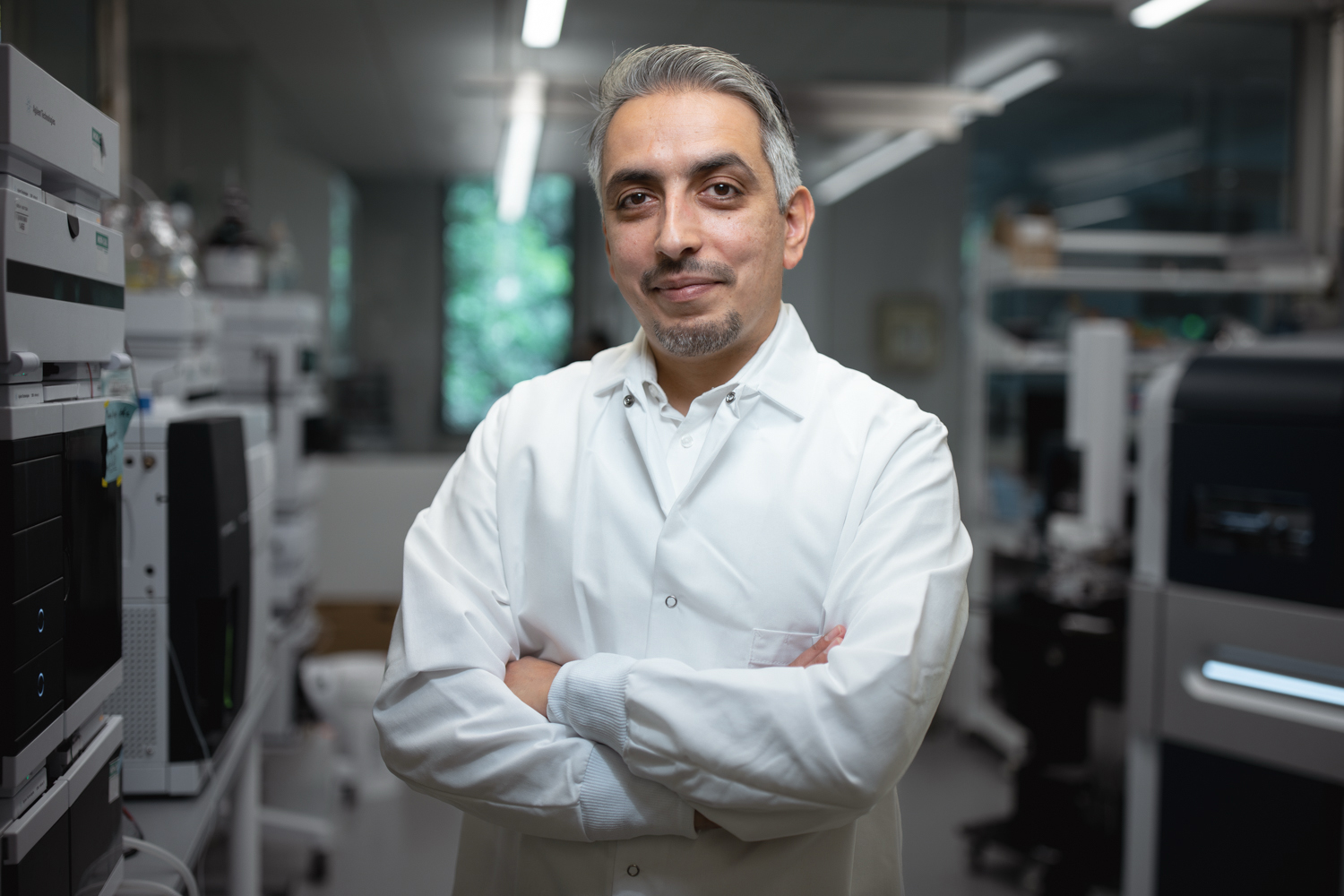
Today’s guest, chemical engineer and geneticist Monther Abu-Remaileh, is one of the researchers working hard to answer that question. His research goes deep on a tiny cellular structure called the lysosome, little sacs filled with acid and enzymes that break down worn-out proteins and cellular debris. The lysosome is like a sustainable recycling center for a major city, managing waste streams, recycling raw materials, and coordinating with the rest of the cell to keep things running – and when it breaks down, the whole cell starts to fail.
Among other accomplishments, Abu-Remaileh, a member of the Knight Initiative for Brain Resilience Steering Committee, has developed clever techniques for probing the lysosome that have put him at the frontier of a transformation in how we think about the lysosome, a transformation that could point the way to slow all manner of neurodegeneration – or even prevent it from happening in the first place.
Abu-Remaileh is an assistant professor of chemical engineering at Stanford Engineering and of genetics at Stanford Medicine and a Faculty Fellow of Sarafan ChEM-H.
SUBSCRIBE on Apple Podcasts, Spotify, Amazon Music and more.
Learn More
From humble beginnings to unlocking lysosomal secrets (ASBMB Today, 2026)
‘You can literally lose who you are’ (Stanford Report, 2025)
Driver of neurodegenerative diseases revealed (Stanford Engineering, 2023)
New atlas could help researchers studying neurological disease (Knight Initiative for Brain Resilience, 2026)
Sifting through cellular recycling centers (Stanford Engineering, 2022)
Lysosomal metabolomics reveals V-ATPase- and mTOR-dependent regulation of amino acid efflux from lysosomes (Science, 2017)
CLN3 is required for the clearance of glycerophosphodiesters from lysosomes (Nature, 2022)
The Batten disease gene product CLN5 is the lysosomal bis(monoacylglycero)phosphate synthase (Science, 2023)
The Bis(monoacylglycero)-phosphate Hypothesis: From Lysosomal Function to Therapeutic Avenues (Annual Review of Biochemistry, 2024)
PLA2G15 is a BMP hydrolase and its targeting ameliorates lysosomal disease (Nature, 2025)
Cell-type resolved protein atlas of brain lysosomes identifies SLC45A1-associated disease as a lysosomal disorder (Cell, 2026)
Episode credits
This episode was produced by Michael Osborne at 14th Street Studios, with sound design by Mark Bell. Social media strategy is by Julia Diaz, and additional editing by Nathan Collins. Our logo is by Aimee Garza. The show is hosted by Nicholas Weiler at Stanford's Wu Tsai Neurosciences Institute and supported in part by the Knight Initiative for Brain Resilience.
Share the show:
If you're enjoying our show, please take a moment to give us a review on your podcast app of choice and share this episode with your friends. That's how we grow as a show and bring the stories of the frontiers of neuroscience to a wider audience.
Get in touch:
We want to hear from YOUR neurons! Email us if you'd be willing to help out with some listener research, and we'll be in touch with some follow-up questions.
Transcript
Nicholas Weiler (00:10):
This is From Our Neurons to Yours, a podcast from the Wu Tsai Neurosciences Institute at Stanford University bringing you to the frontiers of brain science. I'm your host, Nicholas Weiler.
(00:24):
Scientists are on the hunt for a better theory of neurodegeneration. To put this in context, the field has spent decades focused on the plaques and tangles of misfolded proteins that show up in the brains of patients with Alzheimer's, Parkinson's and other disorders surrounded by dead or dying neurons. The natural assumption was that, if you could design a drug to clear out that gunk, you could save the brain but so far that bet hasn't really paid off. So, researchers are now taking a big step back to ask what if the plaques aren't the culprit, what if they're a clue, a sign pointing to something more fundamental going on in our brain cells as we age? Put another way, why do our brains start getting jammed up with these junk proteins in the first place?
(01:14):
To understand this question, we are going to go deep today on a tiny cellular structure called the lysosome. So, within each of your cells, there are dozens, maybe hundreds of lysosomes, they are little sacks filled with acids and enzymes that break down worn out proteins and cellular debris. For a long time, scientists thought of them as, basically, the cell's trash can. Throw stuff in, forget about it, that's certainly what I pictured back in biology class even when I was in graduate school. But just in the past decade, that picture has changed dramatically. It turns out the lysosome is more like a sustainable recycling center for a major city actively managing waste streams, recycling the raw materials and coordinating with the rest of the cell to keep the whole operation running. And when the system breaks down, well, waste piles up, essential building blocks stop getting made, the cell starts to fail.
(02:11):
This is the analogy that was painted for me by today's guest, Monther Abu-Remaileh. Monther is a chemical engineer and geneticist at Stanford and a steering committee member at the Knight Initiative for Brain Resilience here at Wu Tsai Neuro. Among other accomplishments, he has developed clever techniques for probing the lysosome that have put him at the frontier of this transformation in how we think about cellular recycling and which have suggested some promising new approaches to slow or prevent all manner of neurodegeneration in the first place. I started off by asking Monther to paint a picture of what lysosomes look like inside our cells, let's get to it.
Monther Abu-Remaileh (02:56):
Just to give people perspective of what this lysosome looked like, we have almost 100 to 500 in each cell, they're really small, they overall represent between 0.5 to 3% of the total cell volume so very small compartment in the cell. But what's really interesting about this system, if you think about it, you need to be able to bring things in a compartment that is encapsulated by a pile layer, that's one thing. The second thing, you need to regulate the degradation of the material that comes in and, once you degrade this material by sophisticated as well as very well controlled enzymes, you need to get rid of the components that are products of the degradation because they cannot stay in this small compartment, otherwise, they will jam the whole trafficking system. So, you need to have control system which is, in most cases, very specialized transporters on the surface of the lysosome to allow those components to go back to where they need to be used.
Nicholas Weiler (04:03):
I love your metaphor of the city because you can think about you need the trash pickup at the houses, you need the trucks to get them to the recycling plant, you need the processing systems to get stuff into the recycling plant to process stuff, to break it down and then what do you do with all those raw materials, they have to go back out and be reused somehow and all these parts of this pathway need to keep working or else the whole thing can get jammed up.
Monther Abu-Remaileh (04:27):
Exactly. And what's really interesting to me as a cell biologist here ... So, I do have many hats, one of them is cell biologist and, for full disclosure, I'm not really neuroscientist even being on your show here but I think that the really interesting part is the controller of this whole process. Because, as you said, you have those trucks, they should go in certain times, bring in the trash to the lysosome, it needs to get in, you need now to execute and degrade the material, you need to send it back to the cell once it's degraded. Now the question is where are these going, it's really a huge question in this field. Are these material being sent to a very specific fate in the cell being used in specific places? If we don't send them to the right place, do we have problems?
(05:19):
Indeed, it seems like this is the case, they need to go to very specialized places. And all this system is regulated by the lysosome itself because one of the major regulators of all these processes is called the mTOR pathway and the components of this pathway are actually sitting on the lysosomal membrane. And this is probably why, if we go back to your question, why the lysosome nowadays is not viewed as a simple passive trash can that is sitting in the corner of the cell but rather a very sophisticated management system that is playing major role not only in degradation but also in signalling and maintaining cellular homeostasis.
(05:58):
Now, the question is how this relates to disease. I think, if you just think about this system as a whole, you can easily appreciate that any problem with such a system would definitely cause cellular problems and, at the organismal level, the cellular problem will manifest as disease. It turns out many of these diseases are affecting the brain which is something we can discuss. So, among the first to be described in even the medical literature are these lysosomal diseases of different types. One of them called Batten disease, it's neuropathological disease in the brain or you can call it early onset neurodegeneration. The other one is Gaucher disease, it's been described for many, many years at the histological level and clinical level. So, Gaucher is actually a disease where we have only one faulty enzyme out of the many enzymes in the lysosome called glucocerebrosidase encoded by a gene called GBA which is the term I'll be using during this conversation.
Nicholas Weiler (07:03):
Okay. So, there's some mutation in GBA that means that enzyme is not working properly?
Monther Abu-Remaileh (07:08):
Exactly. There are different types of mutations, some make the enzyme unable to make its way to the lysosome, others might affect the function or the enzyme activity of the GCase or the glucocerebrosidase. So, the enzyme is simply doing one function and that function is to degrade a lipid that we call glucosylceramide, so one of the many lipids that we have in our cells. And what's interesting, there is a cascade upstream of this lipid, that lipid component or fat component is part of different types of lipids that are together, we call them glycosphingolipids. So, what happens when you have a problem with GCase, the glucocerebrosidase or mutations in the GBA gene, what you will get is accumulation of the upstream lipids. Now you have a traffic jam, the lipid substrate itself or the fat that needs to be degraded will accumulate and you have accumulation of some other apparent lipids that come as a result of this accumulation.
(08:13):
Now we have a very severe disease that can manifest either in childhood or adulthood and you have different types of this disease depending on the severity of the phenotype. We have three of them, one is mostly metabolic and can be treated nowadays by what we call enzyme replacement therapy, we can give back the enzyme to the patients but these enzymes cannot make their way to the brain. So, type two and type three which have also neuropathology, very severe neuropathological disease, cannot be really treated by these ways, they're not optimal treatments but they are treatments that do exist.
Nicholas Weiler (08:53):
So, we had these diseases, some of them caused by a single gene mutations that are causing this backup in the cellular waste processing, recycling system, it's giving me this image of that buildup in your garbage disposal or something, you can imagine that it's really going to gum things up and so people were working on this. But these diseases are quite rare mutations but it wasn't until the ... I think it was in the late '90s and early 2000s that there was this realization that those are rare single gene mutations that cause this backup in the lysosome and they can lead to neurological dysfunction and, as you said, early onset neurodegeneration but, actually, many of the same pieces of the system also appear to be implicated in Parkinson's disease. Can you tell us just a little bit, and we don't have to go into too much detail about this, but what was the crucial discovery there that linked these rare childhood diseases to Parkinson's?
Monther Abu-Remaileh (09:57):
Yeah, that's a great point. I think GBA is really the most interesting story here. So, as we said, GBA mutations do exist in the population as monoallelic mutations so, in that case, you have mutation only on one allele, it's more prevalent than other lysosomal disease gene mutations. As we said also that Gaucher disease is a biallelic disease, so autosomal recessive disease in which case that you will have mutations from both parents, the kids or maybe in adulthood there will be this manifestation of Gaucher disease.
Nicholas Weiler (10:35):
Right. So, you need to have both copies of the gene mutated, yeah.
Monther Abu-Remaileh (10:40):
But what's really interesting is the observation by Professor Ellen Sidransky in NIH in the early 2000s. So, what she observed in one of her patients of GBA or Gaucher Disease that they developed early onset Parkinson's disease and Parkinson's disease is one of the common neurodegenerative diseases in, of course, aging population. This disease was an earlier onset than the regular Parkinson's disease and then, when she made that observation, she started to look around and she realized that, in Gaucher disease families, sometimes you will have increased risk of developing Parkinson's disease. So, it turns out, if you have a mutation in GBA, you have much higher risk, almost 20 folds increase over the general population, of developing Parkinson's disease. So, again, these are two different diseases and this is really one of the most important things to keep in mind.
(11:42):
But the most important point from this study that Ellen Sidransky did over the years and, again, it was repeated now so many times is the fact that she linked lysosomal dysfunction because the lack of GBA or mutations in GBA, either in one allele or two, would affect the glucocerebrosidase. And then what happens, you have some lysosomal dysfunction, sometimes it's mild that it takes so many years until you develop a disease and that disease would be Parkinson's disease. Not everyone with GBA mutations will develop Parkinson's disease but, as I mentioned, there is a much higher risk to develop Parkinson's disease. And this link was really important for the whole field, now instead of just studying these rare diseases for the sake of helping the kids with these diseases, now you are trying to help the kids as well as the larger population because the lysosomal implication in neurodegeneration is really important because now we need to focus on the lysosome to start to understand neurodegeneration.
(12:50):
But this was not the only line of evidence that lysosomal dysfunction is key to neurodegeneration, genetics is telling us that lysosome is important in neurodegeneration. Actually, the fact that lysosomal dysfunction is existent in neurodegeneration has been much before. So, in the '80s and '90s, there were lots of reports saying that, if you look at postmortem brains of neurodegenerative disease patients especially Alzheimer disease, you would actually observe massive disruption of the endolysosomal system, in the early endosomes as well as the lysosomes.
Nicholas Weiler (13:31):
If you look at Alzheimer's brain tissue under the microscope, you look at the cells, you can literally see that the lysosomal system seems to be disrupted.
Monther Abu-Remaileh (13:38):
Exactly. And it was very clear, it was reported but people did not know is this driver, is this just a readout of a dysfunction in the brain cells. But, as you might imagine, if you have that evidence out there and now you come and say, "Oh, genetics is actually telling us that the lysosome is implicated," then it becomes very easy in retrospective to say lysosomal dysfunction is really important for the development of neurodegeneration. So, this is the second line of evidence and the third one that I want to just mention here, many of the other neurodegenerative disease genes that are really strictly lysosomal genes. So, they don't encode proteins that sit inside the lysosome but they are known to be risk factors for development of different types of neurodegeneration, it turns out that many of those are regulator of lysosomal function.
(14:38):
So, if you take all these lines of evidence, you understand that lysosome is really key for the maintenance of brain homeostasis. Disruption of lysosomal function is, for sure, major cause most probably of neurodegeneration.
Nicholas Weiler (14:55):
One of the things I find, there are a couple of things this is making me think of. One is on the genetics side, on the, again, comparing these very extreme childhood diseases with the diseases that develop over many years as a consequence of aging and possibly environmental impacts is you could think ... Going back to our city metaphor of, yes, if there is a fundamental breakdown at the recycling center, it's going to throw everything off, it's going to lead to really major ramifications throughout the city of the cell. But you can also imagine that there are a couple things that can go wrong with the garbage trucks, it doesn't break everything but, over time, things could start accumulating, trash could pile up around the city, you might not notice it at first but gradually it would become a problem. Or if there's a problem with transportation of the final recycling products and no one is buying them, that's going to start backing things up too and it might not be obvious exactly what's causing it because it's a complex system.
(16:09):
And so, thinking of these age-related disorders and saying we can actually link those back to this fundamental cellular process of taking in proteins that are not working anymore or you don't need anymore, recycling them, turning them into things, recycling them into things that the cell needs, you can start to point to all different ways where, over time, this system starts to break down and lead to neurodegeneration. And then the second thing that you were making me think of is, of course one, of the key pathologies, the key signatures of all of these neurodegenerative disorders is there's a buildup of misfolded proteins. In Alzheimer's, there's the amyloid plaques and tau tangles. In Parkinson's disease, there are the Lewy bodies that are made up of misfolded alpha synuclein.
(16:55):
So, we know that these disorders have to do with a buildup of bad proteins and so making the connection to the lysosome really makes a lot of sense that there's probably something going wrong there that is leading to this buildup of proteins whether that's the cause or just a sign that something is going wrong.
Monther Abu-Remaileh (17:15):
Yeah. I think on that point, Nick, it's really interesting point from also historical perspective of how we look at neurodegeneration. So, if you think about the protein aggregation hypothesis as the major cause of neurodegeneration as you mentioned. So, in Parkinson's disease, I think we've been chasing this hypothesis for the last 40, 45 years and we know that, more recently, we've developed drugs targeting these exact pathways including antibodies targeting the plaques in AD. And we know that we can clear them with these antibodies but the major problem that we have is that the benefit we are gaining is very, very minimal if any. And there is a huge debate out there about whether these antibodies are really working in AD patients. And I think-
Nicholas Weiler (18:06):
Right. Is it too late or is it the wrong target or what, right.
Monther Abu-Remaileh (18:09):
Or whether we were chasing the readout of another underlying dysfunction in the cell. And I think this is what gave, really, this boost to study lysosomal dysfunction in neurodegeneration. And as you might imagine, it's all of us are driven by the fact that we want to find therapies for these nasty diseases and I think, at the moment, we are unfortunately really lacking even targets that we can go after to be able to treat those diseases including AD, PD and frontotemporal dementia. And especially on this day, it's we've been hearing about a lot of failures by going after many of those targets that we thought will work and that's why I believe lysosomal biology, understanding that biology and disease is so key, so important.
Nicholas Weiler (19:02):
Yeah. And you said something so interesting to me the other day that the historical idea of the lysosome is just a place you throw stuff and it gets broken down, this autophagy process. People, when we started recognizing that the lysosome might be important in some of these disorders, started saying, "Great, well, why don't we just boost autophagy, why don't we just boost the ability of cells to break stuff down, that'll fix everything." There's stuff like metformin, rapamycin have that kind of effect and maybe that will work but you made the point that you don't necessarily just want to route more power to the central waste processing plant, if something is wrong there, just routing more power there could cause more problems potentially. But what you really need to do is you need to understand all the parts of the system and how they're working together and which pieces go wrong and how they affect each other and your work seems like it's so centered on that question.
(19:54):
Let's go back to what is the fundamental biology. You created these techniques for fishing out lysosomes from cells so that you could study them so that you could look at them in the context of health and disease. I think of it a little ... Tell me if this metaphor works for you. I was imagining it a little bit like this childhood game called Let's Go Fishing where you've got these little fish and a little magnetic fishing rod and you've got to pull the fish out with this magnetic fishing rod. And you've done something like that at a cellular and molecular level where you've tagged the lysosomes with little magnets and you can fish them out which is such a cool technique.
(20:31):
But the big picture question I guess I wanted to ask was, as you've started doing that over the past 10 years and as other people are taking on these techniques, what are some of the big picture things we are learning about the biology of the lysosome that can help us understand it as more than just a simple trash compactor and that might lead to some insights about where we do have good targets for treating some of these disorders?
Monther Abu-Remaileh (20:59):
Yeah, thanks for the metaphor, I really love it. First of all, I think it seems like that game is universal because I did play the same one in my home country in Palestine. So, I think going back to the idea of autophagy versus the lysosome, as you said, if you really traffic things to a damaged organelle or damaged lysosome, you don't really help, you actually overwhelm that lysosome even more and that's where the idea of enhancing lysosomal function came into play. But when you ask that question unlike in the autophagy field where we had very nice molecular players that we can target and activate autophagy, in the lysosome, the lysosome enhancement idea at the molecular level is really vague. You don't really have a very clear one target that you can say, "Oh, if I push that pattern down, this lysosomal system will start to work in a very active way," and I think this is where we need to understand lysosome biology better.
(21:59):
And one of the things we use, and many other people have different tools, is that this tool that I made called lysosomal immunopurification that you mentioned and the idea of this tool is really simple. It came as part of developing a toolkit for different organelles when I was a postdoc in the Sabatini Lab at the Whitehead, at MIT. So, the idea was can we tag the lysosome in a way in the cell where we can pull it down quickly from the cells but keep that lysosome intact. And this is really the major point because people purified the lysosomes in the past in a biochemical way but, the problem, you lose most of these monomers or degradation products that we talk about or we talked about earlier so you cannot capture what's happening to the lysosome in different disease and healthy states.
Nicholas Weiler (22:53):
You're popping the balloon and then you lose one of the pieces.
Monther Abu-Remaileh (22:54):
Exactly, exactly. So, in this case, we can pull them down, keep them intact and also use very simple buffers that would allow you to take these lysosomes for any type of analysis. So, we developed this method in 2017 but then, when we put the method out there and I scratched my head what to do in my own lab because that was my goal after finishing the postdoc, I realized that the main group that adopted the method or got excited about the method are actually people working in the neurobiology space. And the reason is exactly what we talked about, this is around the time where we had this boost in understanding the role of lysosome or appreciating the importance of lysosome in neurodegeneration but we need tools to ask the question what exactly is happening in these lysosomes from patient samples or models that represent these different neurodegenerative diseases so we can define the pathways that can go bad.
(23:59):
And this is where I decided, okay, I will shift starting to understand the role of lysosome in the brain, the role of lysosome in neurodegeneration. Since then, I realized that we actually know very little about the disease pathology, the molecular pathology in these diseases despite knowing a lot about the genetics. And that really strike me and made me think, as you said, we have many of those rare diseases that some of them represent neurodegeneration or neurodegenerative diseases that come later in age but they are happening in kids. One of these groups is called Batten disease, it's a family of diseases that are caused by mutations in 14 different genes, many of them are lysosomal genes or regulate lysosomal function. These kids suffer from neurodegeneration when they are five years old.
(24:55):
So, I said maybe if we look at the lysosomes from models of these diseases, we can learn something about what's disrupted and then we can take this understanding and study more advanced or more common neurodegenerative diseases, the age related ones, Parkinson's, Alzheimer and frontotemporal dementia. And it turns out many, again, many of those genes are actually risk factors for these different common neurodegenerative diseases so we started to apply the tool.
Nicholas Weiler (25:27):
Right. Give them those same mutations that you see in the kids with this disorder in those cells and then you can say, okay, what is that doing in this model?
Monther Abu-Remaileh (25:36):
Exactly. And then we simply fish out the lysosome and now study what pathways are perturbed because we can analyze the content of that lysosome and that was very rewarding in multiple ways. One is really directly affecting the kids' disease community because it turns out these people actually are lacking biomarkers. And by doing these simple experiments, we were able to define what pathways perturbed in some of these diseases and provide this immediate biomarker to the clinicians to be used to monitor disease progression, to be used to evaluate therapeutic modalities that they've been using and that was really important for this patient group. But then we also started to realize that these disease-related genes are encoding for proteins that do functions that are very important for the lysosomal integrity and lysosomal function.
(26:32):
So, I've been saying and you've been saying that lysosome degrades thing, lysosome is a recycled bin but it turns out that lysosome can build things as well. So, it turns out this protein is building, it's an enzyme that builds this fat called bismonoacylglycerophosphate, we can call it BMP here. This fat actually makes a docking platform for all these other lipid degrading enzymes to come and sit on it and then do their function properly and, guess what, those lipid degrading enzymes are the risk factors for all these different neurodegenerative diseases. So, if this enzyme is not there, then, as you might imagine, there is a collapse in the system, these enzymes are not doing their functions properly and then you cause a severe neurodegenerative disease in kids, what I called Batten disease. But it turns out that now we can think the other way around, can we activate this enzyme and now increase this lipid or fat that makes the platform. You can think of it as the grease that you can add to the lysosome to really get the machine to work properly in the more common neurodegenerative diseases.
(27:46):
And this is a hypothesis that we've been now following, trying to develop activators but also using proof of concept experiments by which we can prove that this idea of greasing the lysosome, enhancing lysosome lipid degradation function can benefit different types of neurodegenerative diseases. While we were doing that work, again, using this LysoIP approach, we realized that there is also a hydrolase or, in simple terms, an enzyme that degrade those same lipids that make the platform called PLA2G15. And it turns out, if you block this enzyme, you have another way to increase these fatty platforms in the lysosome.
Nicholas Weiler (28:35):
So, you can either make more of the BMP, the grease for the system, or you can stop it from getting broken down and then it'll last a little bit longer, okay.
Monther Abu-Remaileh (28:45):
Exactly. And with this system, we actually showed nicely that a very severe disease called Niemann-Pick type C, people like to call it juvenile Alzheimer's disease, a problem with trafficking cholesterol from the lysosome, we can reverse many of the phenotypes or the symptoms of this disease in animal models by simply blocking this hydrolase, this degrader of the BMP and increasing the BMP levels which is super exciting for us because this is really one of the first, I would say, molecular targets in the lysosome that are now shown in animal models to benefit a very severe neurodegenerative disease. And now we are trying to apply it again to these common neurodegenerative diseases that share the same exact molecular biology as these rare diseases.
(29:38):
So, this idea of using rare diseases that are really ultra rare to understand lysosome biology in the brain started with the GBA examples or example that we mentioned earlier but I think it's now continuing to become, I would say, treasure trove to understand the biology but also identify drug targets for a neurodegeneration.
Nicholas Weiler (30:12):
Well, there's so many interesting just facets of biology that you're discovering and we'll link to a bunch of these papers and some of the coverage of them in the show notes. I have one more piece of biology I wanted to ask you about and then I just want to get your thoughts on what the path forward looks like in continuing to apply some of these insights clinically, both to the childhood disorders and to the more common age-related neurodegenerative disorders.
(30:39):
So, the one more piece of biology I wanted to ask about was, earlier this year, you published this big brainwide cellular atlas of lysosome function and the idea here seemed to be we can think about lysosome function broadly, we have been as how does lysosome work in all of our cells but lysosomes might also work differently and have different functions and their dysfunction might have different consequences in different kinds of cells like what's going on in the neurons, what's going on in the microglia which is this other cell type in the brain that we've talked about before on the show and it also plays a big role in, you might say, garbage processing at a more macro level in the organ of the brain rather than within the cells.
(31:24):
So, I just wanted to quickly ask what would you say stood out to you as some of the main things that you're starting to observe now that you're looking at lysosome function not just as a whole but starting to look at it more cell by cell?
Monther Abu-Remaileh (31:38):
Yeah, thanks for asking about this, Nick. I think this goes back to the idea that, even if you work on the brain and try to understand neurodegeneration which by definition means the death of neurons, it turns out this is not a disease of neurons only. It turns out that you have the glia involved in different neurodegenerative diseases and I think the evidence from genetics also refer to this because many of these lysosomal genes are more expressed in these different cell types in the brain. So, when you have neurodegeneration, people now believe it's not about the neuron become dysfunctional but it could be that there is other glia cell type that is actually affected and now these cells are either not doing their functions or they're activated in a way that they will kill the neurons.
Nicholas Weiler (32:29):
Eating the synapses that we need for memory and learning and so on.
Monther Abu-Remaileh (32:33):
Yeah, exactly. And now when we go to this lysosome-centric idea, lysosome exists in all cells but the question is why we are seeing different diseases, different types of diseases with the mutations that are different in different enzymes related or lysosome-related genes. It turns out that these lysosome genes are not expressed in the same way between different brain cell types and the goal from this work was to use this LysoIP technique to fish lysosomes from the four major brain cell types, the microglia, oligodendrocytes, astrocytes and neurons, to better understand what is the composition of these lysosomes in these different cell types. And what's interesting just by doing this really simple experiment, it turns out we know very little about the lysosome in the brain. We discovered dozens of new lysosomal proteins that were never reported before to be lysosomal and many of those are actually disease causing genes.
(33:45):
So, it turns out we have other lysosomal storage diseases that we were not aware that they are lysosomal storage diseases by simply defining the fact that the gene causing this type of disease which is already reported in the literature is actually a lysosomal gene. That's one thing. The second thing we realized that we have lysosomal proteins that are produced in one cell but they are more abundant in another cell. And I think this is very important because it tells you that lysosomal dysfunction might be initiated in one place but it's causing the disease in another place in the brain or in another cell in the brain. Another example of what we really uncovered from just doing this experiment that it seems like there are specialized functions between different cell types and that makes sense if you think about this in retrospective.
(34:44):
For example, we clearly see lots of unique cathepsins and these are proteins or enzymes that chew and degrade proteins, we found many of those to be very abundant and uniquely expressed in the microglia. And when you think about the role of microglia in the brain, these cells, their job is to go around, as you mentioned, they brune the synapse but they also take up all the debris that should exist or would exist in the interstitial space of the brain. So, it's really important that their lysosomes be able to degrade efficiently mostly the proteins that might accumulate. And now you can think about the plaques, plaques are actually proteins that aggregate. If the lysosomal proteins or lysosomal enzymes in the microglia are not functioning properly, maybe these plaques will accumulate and spread. And this is something very important because now you have a different idea about what you need to target and where you need to target if you want to try to activate the lysosomal pathways depending on what you exactly want to achieve.
(36:00):
So, these are among the very few lessons we actually learned from just doing this experiment in basal condition in healthy mouse brain and now we are trying to repeat the same experiment in different disease states to see exactly where the disease starts at the molecular level and what are the culprit cells among these different cell types that exist in the brain.
Nicholas Weiler (36:23):
So, clearly, there's a huge amount of biology that remains to be discovered and you're hot on the trail of a lot of this. What do you see as the path forward on applying some of this to disease? Can we even say yet that what will be the first thing to start affecting patients or are we looking five, 10, 15, 20 years down the line?
Monther Abu-Remaileh (36:47):
No, I think we are closer than this at least for testing because we already have multiple targets from the lysosome. Again, lysosomal proteins including a channel on the lysosome called TRPML1, another one called TMEM175, these are actually actively studied now or investigated as drug targets in different neurodegenerative diseases including AD and Parkinson's disease. For example, I think very recently we had the first dosing of an agonist that would activate the channel for calcium called TRPML1 on the lysosome in AD, in Alzheimer's disease. And the idea there is that, when you activate those channels, you are activating the lysosomal machinery to do its function. Now, the challenge with those, we don't really know what that means. So, we are changing the physiology of the lysosome but we don't really have a very good handle of what these channels would do once they are activated.
(37:51):
But there are enough data from mouse models as well as from cell culture saying that the lysosome is activated and I'm really very hopeful that some of these will turn into beneficial drugs in patients but I do still believe that we need a much more targeted approach and we need to identify targets that we know exactly what they do within the pathological cascade of the disease and then we will be able to activate specifically what we need to activate. And that's why I'm very excited about this idea of being able to grease the lysosome to do its function by enhancing the BMP fats that I just talked about and hoping that we can get a drug candidate that we can test in animal models and later in patients of different neurodegenerative diseases.
(38:42):
But definitely the goal of everyone right now is to increase the toolbox to understand lysosomal biology in neurodegeneration and, hopefully, identify more drug targets that can ameliorate the disease by enhancing the lysosomal activity in neurodegeneration. Because I think the first part is now well-established that lysosomal dysfunction is key in neurodegenerative diseases, we still need to do more about the details of this dysfunction and define it at the molecular level but I think the next step is definitely to target and reactivate some of these dysfunctional pathways.
Nicholas Weiler (39:23):
Monther, this has been fascinating and I'm so excited, I'm with you, this is such an exciting area of biology, I'd love to have you back and hear more about all of these studies as they come out. Thank you so much for joining us on the show today.
Monther Abu-Remaileh (39:37):
Thank you very much for the invitation. It's been really a pleasure preparing for this but also talking to you about the lysosome. I love your metaphors and analogies, I think they fit really well with how we think about the lysosome as a community as well.
Nicholas Weiler (39:52):
Thanks again so much to our guest Monther Abu-Remaileh. He's an assistant professor of chemical engineering and genetics at Stanford and a faculty fellow at Sarafan ChEM-H, our sister interdisciplinary institute here at Stanford. He's also a member of the faculty steering committee of the Knight Initiative for Brain Resilience here at Wu Tsai Neuro. Just as an aside, Monther's work is exactly what the Knight Initiative is all about, stepping back from the assumptions about the causes of neurodegeneration to understand the biology of the aging brain and how we could make the brain more resilient against disorders like Alzheimer's, Parkinson's and the rest. To read more about Monther's work, check out the links in the show notes.
(40:30):
If you enjoyed the episode, be sure to subscribe for more conversations about the frontiers of brain science. We also love hearing from listeners, if you have thoughts about the show or questions about the brain you'd like to hear us discuss on a future episode, send us an email, we're at neuronspodcast@stanford.edu or leave us a comment on your favorite podcast platform. While you're at it, please give us a rating and share the show with your friends, it may seem like a small thing and I know everyone asks this but it is tremendously valuable for us to be able to bring more listeners to the frontiers of neuroscience. Next time on From Our Neurons to Yours.
(41:27):
From Our Neurons to Yours is produced by Michael Osborne at 14th Street Studios with sound designed by Mark Bell. Our social media strategy is by Julia Diaz, additional editing by Nathan Collins. Our logo was designed by Aimee Garza. I'm Nicholas Weiler, until next time.


