
MBCT Seminar: Adam Dede - Minimally invasive intranasal recordings reveal breathing-entrained rhythms in the human olfactory bulb
Continue the conversation: Join the speaker for a complimentary dinner in the Theory Center (second floor of the neurosciences building) after the seminar
Minimally invasive intranasal recordings reveal breathing-entrained rhythms in the human olfactory bulb
Abstract
Olfaction is the phylogenetically oldest sensory system and the olfactory bulb (OB) sits at a unique interface between peripheral sensory input and limbic and memory-related circuitry. Despite its potential role in respiratory-linked emotion and memory processes, OB physiology has been difficult to measure noninvasively because the structure is small and poorly accessible to scalp EEG or fMRI. Here we present a minimally invasive, high-precision recording approach that leverages the thin, porous cribriform plate separating the nasal cavity from the OB. Using a stereo-electrode lead inserted transnasally and positioned inside the nose, against the cribriform plate, we obtain robust OB-proximal field recordings in awake, healthy human participants without surgery. We will describe the method, safety/tolerability considerations, and validation steps, and then present initial observations from recordings in a cohort of chronic rhinosinusitis patients participating in a clinical trial (n=7) alongside healthy control participants. Across tasks involving paced breathing and olfactory stimulation, OB-band activity shows clear respiration-phase structure and spectral features broadly consistent with invasive rodent OB recordings. We also observe coordinated dynamics across OB signals, scalp EEG, ECG-derived heart-rate variability, and spirometry during deliberate breathing, suggesting a tractable pathway for studying how respiration couples sensory, cortical, and autonomic physiology in humans. Implications for anxiety and emotion regulation will be discussed.
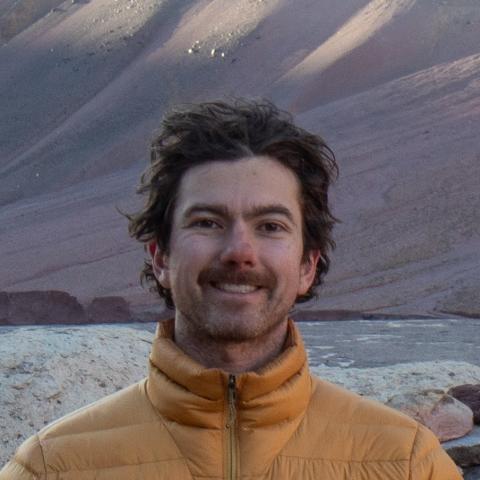
Adam Dede
Northwestern University
Adam Dede received his PhD in experimental psychology at UC San Diego, working with Larry Squire and John Wixted on the role of the hippocampus in human autobiographical memory. He then completed a postdoctoral fellowship at the University of Washington, conducting electrophysiological recordings in medial temporal and prefrontal circuitry in rhesus macaques. He later served as a research advisor at the University of Phayao, where he was ordained as a Buddhist monk and developed a research interest in links between respiration and emotion regulation. In subsequent postdoctoral work at the University of Sheffield, he studied electrophysiological biomarkers of autism, and later at Northwestern University he investigated interactions between low- and high-frequency neural oscillations in intracranial recordings during human memory tasks. He is now a Research Assistant Professor in the Neurology department at Northwestern University, focusing on how respiratory dynamics relate to emotional regulation and cortical oscillations.
Hosted by Sabrina Liu (Coleman Lab)
About the Mind, Brain, Computation, and Technology (MBCT) Seminar Series
The Stanford Center for Mind, Brain, Computation and Technology (MBCT) Seminars explore ways in which computational and technical approaches are being used to advance the frontiers of neuroscience.
The series features speakers from other institutions, Stanford faculty, and senior training program trainees. Seminars occur about every other week, and are held at 4:00 pm on Mondays at the Cynthia Fry Gunn Rotunda - Stanford Neurosciences E-241.
Questions? Contact neuroscience@stanford.edu
Sign up to hear about all our upcoming events