
MBCT Seminar: Steven Siegelbaum - The encoding social experience
Continue the conversation: Join the speaker for a complimentary dinner in the Theory Center (second floor of the neurosciences building) after the seminar
The encoding social experience
Abstract
Since the studies by Brenda Milner of patient H.M., the hippocampus has been known to play a crucial role in the encoding of social memory, the repository of information about past encounters with members of one's own species. However, how hippocampal activity encodes social experience is only beginning to be appreciated. Our laboratory focuses on the hippocampal CA2 subregion. Although first identified by Lorenté de Nò in 1934, the small size and location of CA2 has limited our knowledge of its function. Using transgenic mice that express Cre recombinase selectively in CA2 principal neurons, we initially found that CA2 is required for social novelty recognition memory, the ability to distinguish a novel from familiar conspecific. Our more recent studies indicate that CA2 is also important for the assignment of positive and negative valence to social experience. In vivo recordings reveal that the geometry of CA2 representations in neural activity space allows for the encoding of both the specific social identities of different conspecifics as well as more general representations of social novelty and valence, independent of identity. In this manner, CA2 provides both a low-dimensional coding of social experience into abstract categories while enabling the storage of high-dimensional information about the details of a specific social encounter.
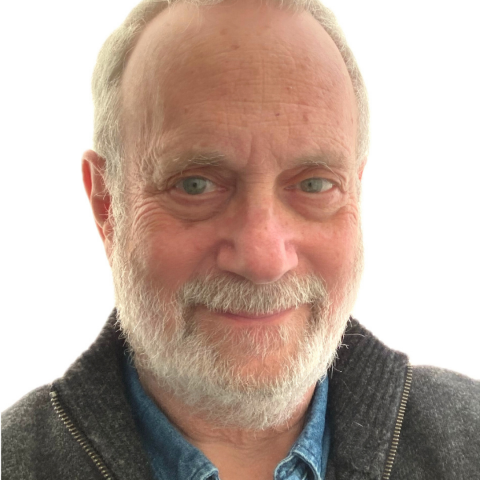
Steven Siegelbaum
Columbia University
Steven Siegelbaum is a professor of neuroscience and pharmacology at the Vagelos College of Physicians and Surgeons and the Zuckerman Mind Brain Behavior Institute of Columbia University. He obtained his Ph.D. in Pharmacology at Yale University, working in the lab of Richard Tsien, examining calcium-dependent regulation of cardiac electrical activity. He then did postdoctoral research on the nicotinic acetylcholine receptor in the laboratories of David Colquhoun at University College London and Philippe Ascher at the Ecole Normale Superiure in Paris. In 1981 he joined the faculty of Columbia. During the past 45 years, his laboratory has examined how electrical and synaptic activity in defined neural circuits contributes to distinct forms of learning and memory, from simple reflexes in the marine snail Aplysia californica to more complex cognitive function in the mammalian brain. Siegelbaum was Chair of the Department of Neuroscience from 2009 to 2025.
Hosted by Sabrina Liu (Coleman Lab)
About the Mind, Brain, Computation, and Technology (MBCT) Seminar Series
The Stanford Center for Mind, Brain, Computation and Technology (MBCT) Seminars explore ways in which computational and technical approaches are being used to advance the frontiers of neuroscience.
The series features speakers from other institutions, Stanford faculty, and senior training program trainees. Seminars occur about every other week, and are held at 4:00 pm on Mondays at the Cynthia Fry Gunn Rotunda - Stanford Neurosciences E-241.
Questions? Contact neuroscience@stanford.edu
Sign up to hear about all our upcoming events