
How childhood (and Pokémon) shape how we see the world
Today's episode is all about how childhood literally shapes the brain.
Our most important experiences – from learning to read, to the growing complexity of our social lives at school, and even the video games we play – leave physical traces in how our brains get organized that shape how we see the world as adults.
But how does the brain actually know what parts of our lives are actually important enough to reorganize around? How do particular experiences get under the hood to leave their mark on the developing brain?
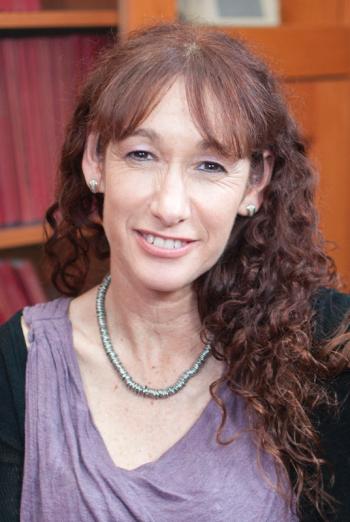
Today's guest, Stanford psychology professor Kalanit Grill-Spector, has spent her career trying to answer these questions. She's has been imaging children's brains – from infants to teenagers – to watch this reorganization unfold. Her work focuses on how our visual experience as children shapes our brains and how we see the world – what she and her team have found is not always what they expected.
SUBSCRIBE on Apple Podcasts, Spotify, Amazon Music and more.
Learn More
- The Vision and Perception Neuroscience Lab at Stanford Humanities and Sciences
- Brain's face recognition area grows much bigger as we get older (New Scientist, 2017)
- Neuroscientists use AI to simulate how the brain makes sense of the visual world (Wu Tsai Neurosciences Institute, 2025)
- Bridging nature and nurture: The brain's flexible foundation from birth (Wu Tsai Neurosciences Institute, 2025)
- Extensive childhood experience with Pokémon suggests eccentricity drives organization of visual cortex (Nature Human Behavior, 2019)
- Cortical recycling in high-level visual cortex during childhood development (Nature Human Behaviour, 2021)
- A unifying framework for functional organization in early and higher ventral visual cortex (Neuron, 2024)
- The emergence of visual category representations in infants' brains (eLife, 2024)
- White matter connections of human ventral temporal cortex are organized by cytoarchitecture, eccentricity and category-selectivity from birth (Nature Human Behaviour, 2025)
Episode credits
This episode was produced by Michael Osborne at 14th Street Studios, with sound design by Mark Bell. Social media strategy is by Julia Diaz, and additional editing by Nathan Collins. Our logo is by Aimee Garza. The show is hosted by Nicholas Weiler at Stanford's Wu Tsai Neurosciences Institute and supported in part by the Knight Initiative for Brain Resilience.
Share the show:
If you're enjoying our show, please take a moment to give us a review on your podcast app of choice and share this episode with your friends. That's how we grow as a show and bring the stories of the frontiers of neuroscience to a wider audience.
Get in touch:
We want to hear from YOUR neurons! Email us if you'd be willing to help out with some listener research, and we'll be in touch with some follow-up questions.
Transcript
Nicholas Weiler (00:11):
This is From Our Neurons to Yours, a podcast from the Wu Tsai Neurosciences Institute at Stanford University, bringing you to the frontiers of brain science. I'm your host, Nicholas Weiler.
(00:26):
An occupational hazard of being a neuroscientist is looking at your children and knowing maybe a little too much about what's going on inside their skulls. It's a little bit weird and I try not to think about it too much or I freak myself out, but I have been thinking about it recently because today's episode is all about how childhood literally shapes the brain. Our most important experiences, from learning to read to the growing complexity of our social lives at school, even the video games we play, these experiences leave physical traces on how our brains get organized that quite literally shape how we see the world as adults, which is either a wonderful or a terrifying thing to contemplate depending on the day.
(01:10):
One question this raises is how the brain actually knows what parts of our experience are important enough to reorganize around. How do particular experiences get under the hood to leave their mark on the developing brain? Today's guest, Stanford Psychology Professor Kalanit Grill-Spector, has spent her career trying to understand this question. Kalanit has been imaging children's brains from infants to teenagers to watch this reorganization unfold. Her work focuses on how our visual experience as children shapes our brains and how we see the world. And what she and her team have found is not always what they expected. Let's get right to it.
(01:49):
Kalanit Grill-Spector, welcome to From Our Neurons to Yours. It's so great to have you here.
Kalanit Grill-Spector (02:00):
It's such a pleasure to talk to you, Nick.
Nicholas Weiler (02:03):
I'm so excited to talk about your research about how we recognize things in the world and how we learn to recognize things in the world as our brains develop during childhood. But before we get into the science, I'd love to hear a little bit about where some of this research comes from. A lot of your work has to do with doing brain imaging in kids in the lab. I mean, you image people from infants in arms to kids to teenagers and adults as well. What's it like doing brain imaging in little kids?
Kalanit Grill-Spector (02:37):
Very challenging.
Nicholas Weiler (02:38):
I imagine.
Kalanit Grill-Spector (02:39):
You might have been and seen an MRI scanner. It's kind of like a long tube. It has a strong magnetic field. And so we have people laying down in the scanner and we present them, since we study vision, present them pictures on a screen like you'd be looking at a computer or a TV screen at home. The environment is noisy so we put noise protection, but the real challenge is that we want to get a really crisp picture of the brain. So we are looking at things that are really tiny because we really want to get spatial precision and tiny means a couple of millimeters, so it's just really, really small. So the real challenge in scanning children is getting them to be relaxed and stay still for a long period of time. An MRI scan can last between 15 minutes to 30 minutes. And the bigger challenge with babies is that they don't understand instructions.
Nicholas Weiler (03:27):
Right. You can't ask them to please sit still. I mean, I don't know. I've got much older kids and it's still challenging to get them to sit still, so my heart goes out to you.
Kalanit Grill-Spector (03:36):
I say it's challenging until about age eight or nine, whereas then they really follow instruction and can physically stay still comfortably for a very long time.
Nicholas Weiler (03:44):
Well, that's just about the age of my older son. And you mentioned that maybe we could get my kids down there for a study. I'd love to take you up on that.
Kalanit Grill-Spector (03:54):
Oh, we'd love that. You're invited right now. I'm inviting you.
Nicholas Weiler (03:57):
Official. Okay.
Kalanit Grill-Spector (03:58):
At the end of this conversation, we'll set a time.
Nicholas Weiler (04:01):
So what's the big question about how a child's brain works or changes that you're particularly interested in answering?
Kalanit Grill-Spector (04:11):
I think the big picture question that we're interested in answering in our research is figuring out how much of the brain is kind of wired up and ready to go when you're born. After all, we're not really born tabula rasas. We already know which part of the eye is wired to which part of the cortex. That's already set up in utero during fetal development. But then there's a lot of things that you have to learn through your experience. You probably cannot recognize your mom or dad till you've seen them for the first time. The infant's vision is very blurry. They don't see very well. They only see nearby to maybe 30 centimeters from you. This is why you kind of stick your head into a baby for them to notice you.
(04:59):
And then there are also things that you only maybe learn later in childhood. For example, the kids that I know, they don't know how to read when they're born, and typically you learn how to read either by having an instructor like a parent or a teacher teach you how to read. So we're really interested in understanding how does your visual experience kind of shape your brain and its function.
Nicholas Weiler (05:22):
I find this so interesting because one of the things that's so unique and special about humans is how long our childhood is. We have this very long period, unlike many other animals, which at least my understanding is that the thinking is this is a chance for us to really adapt to almost any environment you can think of. I mean, people live all over the world in part because we can adapt. We can speak different languages. We can live in different environments. We can develop different cultural norms. And so it feels like your research is really speaking to that question.
Kalanit Grill-Spector (05:59):
Really thank you for surfacing this because I think it's a really important question. A lot of science is based on animal models and there's a lot of stuff that we can gain from animal models that we can use for humans, like for medicine development and things like that. There are a lot of visual regions that are preserved across species. For example, the primary visual cortex that receives input from the eyes might be preserved across a human, a primate, and a mouse. But as you mentioned, there are things that are very human unique. Having this really prolonged development that lets you adapt, maybe childhood is 18 years, it gives you a lot of flexibility to learn a lot of things. For me, that is important in my research because this is why I study humans and not animal models.
(06:46):
And it also, in a way, it goes to both a benefit, but also a limitation because you cannot do invasive experiments in humans, like you could do in an animal model, hence you need to use experimental setups like an fMRI machine that's not invasive. It's not dangerous. It doesn't have x-rays or any radiations. It doesn't involve any injection of any materials. Its only risk is really about being able to stay still and hearing some loud noises, which means that we can follow a child over the course of their development. We can scan the same person over and over time, and that gives us really interesting lens doing this longitudinal research across an infant, across a child, to see how their brain is developing over the lifespan. So that gives us a really strong experimental lens.
Nicholas Weiler (07:38):
Much of your work, in fact, focuses on vision. How does our ability to recognize specific things in the world develop as we get older? Presumably this is applicable to many areas of the brain, but we're focusing in on vision. And one of the things you look at a lot is, well, what parts of the brain are responding to particular kinds of vision? What things are responding to faces or to words as children learn to read or to other body parts and so on? And you can see that MRI is showing you in the outer cortical layer of the brain, okay, this region over here seems to be really active when we show kids a face. This region over here seems to be really active when we do something else. And so the work I want to focus on today is sort of asking this question of how does the brain sort of get organized to do that?
(08:35):
We could talk about it in terms of expertise. We can talk about it in terms of organization of the brain. But somehow over the course of development, our brains get organized so that we've got particular groups of neurons that care about the things that matter most to us. And so I'd love to walk through just a few studies that you and your team have done over the past few years that I think bring out some of the really interesting discoveries and observations that you've made. I want to ask about three in particular. One is this question of how much real estate gets devoted to a particular function, like a particular thing that we're trying to see, and your team has observed that the part of our brain that is responsible for recognizing faces grows a lot as we age. What does it mean that the brain area that responds to faces gets bigger as we get older?
Kalanit Grill-Spector (09:35):
It's really an interesting question and it was kind of like a surprising finding from our research. So just to give a little bit of a preview, the ways that the visual system works is a little bit kind of like a deep neural network. There are many stages of processing. So as information gets from your eyes to primary visual cortex, it does some kind of localized processing, like edges or local colors, and then it goes through a series of transformation until it gets to the bottom of the brain where you find, what like you mentioned, these higher-level visual areas. So one finding in the mid-'90s is that these are clustered regions that seem to be specialized for processing ecologically-relevant categories like faces, body parts, maybe hands.
Nicholas Weiler (10:23):
And I'm sorry, what part of the brain did you say we're in at this point?
Kalanit Grill-Spector (10:27):
Vision start in the occipital lobe, which is the back of your brain, and it goes ... the system that I'm studying goes down to the temporal lobe and this is regions that are going to be more high-level, that they're on the interface between vision and cognition, right? Because for you to recognize something, it has to have a meaning for you. For you to take a word and to read it, you have to transform some visual input to some semantic meaning, phonological representation. Well, this is why we call them higher-level areas [inaudible 00:10:56] meaning.
Nicholas Weiler (10:57):
Right, this is where we're taking shapes and shades and all of the fundamentals and saying, "Oh, that's a face. That's an animal. That's a body part."
Kalanit Grill-Spector (11:03):
Yeah. Yeah, exactly. So there are a couple of mysteries. One is why do we find clustering from some categories and not for other categories? So for example, there's a region that's maybe specialized for faces, but there isn't a shoe region. So you might be fond of shoes and maybe you have a closet full of sneakers, I don't know, maybe you don't, but probably you don't have a shoe area in your brain. I haven't yet found some such a person.
Nicholas Weiler (11:31):
We'll come back to that.
Kalanit Grill-Spector (11:32):
So the question is why do some categories get these kind of clusters?
Nicholas Weiler (11:35):
When you say cluster, you're talking about like a little patch of the cortex that lights up in the MRI scanner when someone is looking at a picture of that thing?
Kalanit Grill-Spector (11:44):
Yeah. And the reason we think it's like that, so it's because there are many neurons that seem to be processing that categories and they're not random. The temporal lobe, the region that I'm studying, is about like five centimeters long, maybe two inches long and one inch wide. So you could have face neurons all over this, like talking about 10 millions of neurons, right? They don't have to be physically clustered, meaning next to each other on the brain. It turns out that they are. So the first question is why are they physically next to each other? Second of all, why do you have a lot of neurons that process faces or words? And the third is, why are they in consistent anatomical locations in people's brains and is it always like that? So if I scan you and your son, I think you said you have a son, would it pop up in the same place in the fusiform gyrus? It's five centimeters. There's a lot of wiggle room. And what we found, it's really consistent across people. And I'm pretty sure you've seen faces that your child hasn't seen and your child has seen faces that you haven't seen.
Nicholas Weiler (12:50):
So for some reason these patches end up in roughly the same place in different people even though they have different life experience?
Kalanit Grill-Spector (12:56):
Yeah. So that's kind of interesting, right? Why would that be?
Nicholas Weiler (13:02):
So coming to this face area, everyone has a face area, presumably, at least everyone who's sighted and we don't have to necessarily get into how the visual brain is different if you're not sighted, do babies have this area and what happens to it as we get older?
Kalanit Grill-Spector (13:19):
So this is a question of very intense debate, if babies have this area or not. Some people hypothesize that babies are born with a face area and some researchers hypothesize that you need experience for this area to develop. We've done some EEG studies in infants. So EEG is basically measuring electrical currents on the scalp while babies are looking at pictures. And we found that very young babies, like less than four months old, don't really show selectivity for faces. They don't have a unique signature for faces. But after four months old, you could see this really strong response for faces in baby's brain emerging.
(14:06):
There's other research from an MIT group led by Rebecca Saxe and Heather Kosakowski, and they can see these face areas in babies from two to 10 months. So we haven't really seen it in any baby younger than four months, so this is where our results diverge, but we definitely see it relatively early in infancy. So from my point of view, it takes about four months.
Nicholas Weiler (14:30):
But then once it emerges, your research and others has suggested that there's this idea that we're born with all the connections we're going to have and we just prune away to focus on the associations, the things that we need to know in the world that matter. But you've shown that the area that's responding to faces actually, I think it was, doubles in size by the time we get to adulthood. What does that mean? When we say "doubles in size", that means the space it's taking up in the brain, the space on the surface of the brain there that's responding to faces, the volume or the area doubles. What do you take that to mean? I mean, what can we infer about the functional importance of that area as we get older?
Kalanit Grill-Spector (15:17):
So I think there are several things that are happening. So even though faces are emerging early, first of all, it doesn't stop developing. It really develops across a very long time and we've seen changes all the way through adolescence. So it's a really very prolonged development. And this development is associated with a couple of things. First of all, more cortex is devoted to processing faces and what kind of information about faces that you can extract from it is also improving over the lifespan. So we think it's because maybe you learn more faces over your lifespans. Also, maybe from a baby's point of view, the face of the mom and the grandma and brother are very, very different. Our faces also change over the lifespan. It's very easy to distinguish them. But maybe by the time you go to elementary schools, there are a lot more kids your age, so they're kind of more similar, and maybe by the time you've gone to high school, there are a thousand kids in your high school and they all dress differently but exactly the same and really you have to pay attention to a lot of details. So the information that you're extracting from the faces and the way how good people are discriminating and remembering faces is really changing through the lifespan. So this is one thing that is changing.
Nicholas Weiler (16:35):
I mean, it seems like a simple thing when you say it. As you get older, you need to know more faces and so the area of your brain responsible for faces grows, but it's actually really remarkable. What it says is that the brain is devoting space based on how important something is to you, how much time you spend looking at faces, how much of a expert you need to be in distinguishing different people. And I could imagine that maybe you might be able to tell something about how good people are at recognizing one another, how big someone's social circle is, by looking at this area of the brain. I don't know if there's good data on that, but that would sort of be the implication.
Kalanit Grill-Spector (17:14):
Yeah. We don't really know that and that is a hypothesis. What we're really interested in doing, and we're actually doing it right now in the lab, we have this idea that experience shapes the brain, but we don't really know what experience and how it shapes the brain. So the question is, how could you measure somebody's visual experience? Because it's going to be very subject specific.
(17:39):
So there's this new technology called mobile eye tracking, which looks kind of like glasses. It's about a normal frame size, but it's on the nose bridge, there's a little camera that takes ... it's kind of like a GoPro, takes a scene image, and on the sides, on the frames, are two cameras that track your eye movements and also there are two sensors that track your head movements. We're really trying to understand what do children look at, and so one is, so do they look a lot at faces? Which faces do they look at? How many people are in their environment? So we could start taking these questions and actually quantifying them.
(18:16):
But also probably it's not just what's in your environment, but what are you doing might change with age. For example, you're short when you're three and you're tall when you're 13, your vantage points changes, the amount of friends in your group might change, and also the activities might change. For example, when you're three or four, most kids do not read so they might flip books, but look at the pictures and not at the words, but by the time they're six or seven and gone to school, they might read the text. So we're interested in also measuring what people are looking at as children and also understanding what activities they are doing. Because I think I'm trying to unpack the word important into something that as a scientist I could measure.
Nicholas Weiler (19:03):
Well, you mentioned learning to read. So I love this is what you described is like, well, we want to actually know what is driving this change in how much brain real estate is devoted to something like faces or words as we learn to read and other things that we might end up needing to pay a lot of attention to, but what drives that? Is it because we're looking at words, at faces more? Is it something else that's driving that sort of decision, that allocation of brain space?
(19:33):
And I think the other important point, and this brings us to this sort of second study that I wanted to ask about, is that there's limited space in the brain, right? This is why we've got this wrinkly cortex. One of my favorite brain factoids is if you think of like a table napkin, that the size of this cortex, this newfangled associational stuff that we as humans and mammals have in the outer layer of our brains, how would you get a table napkin into a bowl? You'd crumple it up. And that's exactly what's happened to our brains to get as much surface area as we possibly can into this limited skull space. And so what that means is that it's competitive in there, right? You can't just expand anything you want. And some of your research has suggested when [inaudible 00:20:22] the expansion of the face region and the expansion of word recognition as we learn to read, that comes at the expense of areas that used to be devoted to other things. Can you tell us a little bit about that? Like what are we losing if we're losing something as the face area and the word area expand?
Kalanit Grill-Spector (20:44):
This is actually a very unexpected finding. And so basically what we did is that we put children from age five to 12 inside an MRI scanner where we showed them different stimuli like faces and words and hands and places and everyday objects, like musical instruments and stuff like that. And basically we scan their brains over a span of four years to see if we can find these clusters for these different categories. And in a serendipitous way, society generates a cultural experience, it's called school. It's mandatory in the United States, so you have to go to school. And basically what that means, that everybody between the age of five and six starts to go to school and what school does is teach you to read, among other things. But that's like the heavy curriculum around first grade basically is just getting kids to read. So this really gives us a cultural experience to see how the brain changes before knowing how to read and after learning how to read.
(21:47):
And as I told you, the region that we're studying, it's a big territory, it's about five by two or three, it's like about 15 square centimeters just on the surface area. That contains a lot of neurons. So we anticipated that we would have an increase in the number of neurons that would respond to words because you're learning to read more efficiently and maybe before you learn how to read, you wouldn't have representation in that part of the brain for words.
Nicholas Weiler (22:15):
You wouldn't expect to have a representation of words when you're born. That doesn't ... Yeah.
Kalanit Grill-Spector (22:19):
Yeah. And maybe before school neither, right?
Nicholas Weiler (22:22):
Right.
Kalanit Grill-Spector (22:22):
And then also we know that proficiency with faces increases, so we hypothesized that there would be more selectivity and maybe more neurons that learned to distinguish between the multitude of new faces that you'd have to be. We also were interested, maybe you go to new environment like a new place, maybe regions that encode places. There's also selectivity for places would also grow during development. And since there were like millions and hundred millions of neurons, we really didn't think that it had to be of a cost to anything. So coming to the project, we kind of thought, oh, the brain is kind of like a landscape that's not fully chiseled and experience kind of chisels this representational landscape.
(23:04):
But that's not what we found. And that was what we found instead is that, yes, we do get an expansion of these face-selective regions as you described. We also get an expansion of these word-selective regions. There's more expansion for faces in the right hemisphere and for words in the left hemisphere. This is thought to be because the language network is left-lateralized in humans. But the unexpected finding is that this expansion happened at the expense of regions that were previously in young kids, like five, six year old, selective to limbs, and we think its hands got recycled. Basically we get a recycling of cortical territory from territory that is processing hands and limbs in five to six-year-old that's processing words and faces in 15-year-olds. So we call this cortical recycling. We did not predict that that's what we're going to find.
Nicholas Weiler (24:01):
So it's literally taking areas that used to care about body parts and once you learn to read and as you meet more people, those areas stop caring about body parts and start to care about faces on the right side or words on the left side of the brain?
Kalanit Grill-Spector (24:16):
Yeah.
Nicholas Weiler (24:17):
So what do you think that means? I mean, do you think we get worse at recognizing body parts?
Kalanit Grill-Spector (24:21):
I'm not sure that this region just about recognizing body parts. I think hands especially, you can see I'm from Mediterranean region, I talk a lot with my hands. They convey a lot of social and communicative information. So one hypothesis is that in early ages you use a lot of communicative gestures with hands. Also, you're not in fully control of your body, so you might not need, as you learn, let's say how to write, you're looking at your hand as you're writing A, B, Cs in your workbook, but after, as you become an expert and you learn how to blindly type, for example, and also at some age it's probably becomes socially unacceptable to use big, bodily gestures, like it would be unacceptable to point to people or something like that, you're changing to more subtle social cues in the face.
(25:18):
So this is part of what's triggered us to actually record or start looking into what children see, because we hypothesize that it's the changing visual experience and also the changing visual demands, like what you're doing in the world is changing and that changes what you called in the beginning importance. So we think that this recycling is driven by experiences and we're trying to see if that hypothesis is supported by evidence.
Nicholas Weiler (25:46):
Interesting. Right. Do kids start paying more attention to just looking at people's faces and we're not looking at each other's hands, we're not looking at each other's bodies as much because it's not socially acceptable or we learn that we can learn more by watching someone's face than by watching their hands potentially? I also love the idea that could some of this learning to read or developing literacy develop in some way from how we perceive body language? Like you were talking about some of us, some cultures, some people communicate a lot with our hands, and so it's interesting that literacy, that learning words and letters, would use some of the same space. That's evocative anyway.
(26:52):
Okay. So we see that the areas of the cortex that are responsible for things like faces or letters grow, literally take up more space, as those things become more salient to us. And as you've pointed out, what makes them more salient? How does the brain know that they're important? That's a good question. And that also that they're competing with each other in a sense, that if something becomes more important, it might take over space that used to be devoted to some other recognition task. And so now I want to bring up another aspect of this, which is this isn't just sort of everyday things, like faces and body parts and learning to read, but other kinds of expertise, other kinds of visual recognition that we spend a lot of time with.
(27:36):
And so I'd love to talk about your study from, I think it was 2019. You got a lot of press for this, showing that there's a brain region in adults who spent a lot of time playing Pokémon, that there's a brain region that still responds specifically to images of these Pokémon characters. So I want to talk about what that means and what that means for the persistence of these changes in the brain that happen when we're children. But I guess first, why Pokémon? Why did you focus on Pokémon in this study?
Kalanit Grill-Spector (28:10):
No, first of all, it's definitely that my student started it as a Kandelstein experiment. That is true.
Nicholas Weiler (28:16):
A what experiment?
Kalanit Grill-Spector (28:19):
Kandelstein experiment. That he started doing it before asking me if we could do the experiment.
Nicholas Weiler (28:24):
Oh, clandestine. Okay. Yes. Got it.
Kalanit Grill-Spector (28:26):
Clandestine. Sorry. Sorry. This is me not being a native English speaker.
Nicholas Weiler (28:29):
Okay. Clandestine experiments with Pokémon. I love it.
Kalanit Grill-Spector (28:32):
Yeah, yeah. That's how it started. Jesse Gomez was a graduate student in the neuroscience program. He's now a professor at Princeton. You use the word "important" a lot and if we go to the nitty-gritty scientific version of importance, in the visual system, what makes something important is that you look at it. And the reason is, we call it fixation, that's basically where you put the center of your gaze. And why we know it's important for the visual system is because you can see things better when you look at them and you can't see things in your periphery. So if I tell you, "Without moving, you have to keep looking at me. No, no, can't move your eyes. Can you read something in the periphery?" You can't do that.
Nicholas Weiler (29:12):
No.
Kalanit Grill-Spector (29:13):
You can't even tell a face in the periphery. So one of the things that we think it's really unique about the face regions and the word regions is that in order to recognize somebody, you have to look at their face. If you want to read a word, you have to look at the word. And what might be also similar in Pokémons is that Jesse, when he was a kid, he had a device that's called the Pokédex and it was really small, it was handheld, it had really crummy graphics. It was like 1996 I think when Pokémon were invented and the Pokémons were really small, really pixelated, and only showing up in black and white in a corner of the screen. So it made it actually a pretty nice visual experiment because, in a way, even though everybody looked at it in a different way, it was kind of controlled because it requires your foveal vision, it had pixelated and it was black and white, which is good news for vision scientists.
(30:14):
And kids spent many, many, many hours looking and really doing these fine-grain discriminations between these Pokémons, kind of like you do it with faces and words, because after all, the difference between a B and a D visually is not that big. So it let us test the hypothesis of is a particular way of looking at things, like with your foveal vision, would it predict, one, where it would land on the brain, and, two, if you become an expert at something, would you kind of emerge as clustered representation?
Nicholas Weiler (30:51):
So I was going to say 30 years ago we engaged in a massive natural experiment where we had millions of children look at these small screens with Pokémon on them and become experts in the difference between a Bulbosaur and a Charmander and so on. But you were looking at adults primarily, right? You were looking at adults who had spent a lot of time, including Jesse, he was a subject of this experiment. I love the self-experimentation in fMRI research. It's great. Well, you just have to get in the scanner. Okay. So you're looking at adults who'd spent a lot of time with these Gameboys and looking at their Pokédex, looking at Pokémon. What did you see? What did you see in the brain of someone who was a Pokémon expert at one time?
Kalanit Grill-Spector (31:33):
So we had two groups of people and it included more than just Jesse because you could think that Jesse might be biased. So we had about 15 people who were Pokémon novices, which are people like me who know one Pokémon and that's called Pikachu.
Nicholas Weiler (31:48):
Exactly. Everyone knows Pikachu.
Kalanit Grill-Spector (31:51):
And then there were 15 people, one of them was Jesse, that actually spent a lot of hours in childhood looking and being really an expert. So he can discriminate between more than 200 different Pokémons. And the question was, do we find some differences in the brain representation between the Pokémon experts and non-Pokémon experts? As you say, does your experience in childhood have profound effect that persists to your adulthood? And third, different Pokémon expert, if they develop this clustered representation, is it better to discriminate different Pokémon? Does that predict that and does it show up in the same part of the brain? And basically we had these on all of these points. The Pokémon experts do develop this kind of territory, it's very near this face area. You see this clustered region that goes on, it's very strongly activated when people look at Pokémon compared to other stimuli. It gets a distinct pattern on the brain. So you could just look at people's brain and Pokémon experts and can tell if they're looking at a face or a cartoon that's not a Pokémon or a Pokémon.
(33:02):
Whereas in novices, you can tell if they're looking at a face or a cartoon, but you can't really see that their brain differentiates between cartoons and Pokémons. So you get this kind of additional representation. But it's a really interesting thing that in the Pokémon expert, it always emerges in the same region. It partially overlaps a face region because Pokémons do have faces, but it extends more laterally to it. And this is a region that's associated with foveal vision. And then that was telling us in a way, it's giving this clue how your experience, your specific experience, generates a representation and why it is, even though it's a cultural invention, right? It's not evolutionarily possible that you would have a Pokémon region in your brain. Maybe evolution can sculpt a region for faces, but definitely not for Pokémons, right?
Nicholas Weiler (33:56):
Right, right. I mean, we've only as a species learned to read for the most part over the last few hundred years. I mean, only a few people could read before that. So, I mean, the thing that I find so remarkable about this is that presumably Jesse and the other experts were not also clandestinely spending a lot of time playing Pokémon as adults. This is something that they had been an expert in 10, 20 years before. And so the question is, why is there still this region even if it's not something, like we're all still reading a lot. That's a skill that we use. I guess it gets back to this question of importance. If you spent a lot of time looking at Pokémon as a child, you have that region forever. Is that the idea here? Is it doing other things when you're not looking at Pokémon?
Kalanit Grill-Spector (34:46):
I don't know. And I don't think that they actually stopped being interested in Pokémons.
Nicholas Weiler (34:51):
You suspect Jesse is still looking at Pokémon?
Kalanit Grill-Spector (34:55):
So I had another RA who had a whole set of Pokémons decorating the office at some point. When we did this experiment, it was close to when people invented on cell phones something called Pokémon Go. Graphics have changed. Maybe you don't trade cards anymore with Pokémons when you're 20 or 30, but people I know, adults, still do play Pokémon GO. So I do not know for a fact they stopped being interested in Pokémon.
Nicholas Weiler (35:27):
I guess my broader question is, do you think that these regions that develop in the brain when someone spent a lot of time as a child, is there something special about doing it as a child that you wouldn't see looking at something a lot as an adult? Let's say someone had never seen a Pokémon and really started getting into Pokémon as an adult, would you see the same sort of patch of cortex devoted to that thing develop or is that specific to childhood?
Kalanit Grill-Spector (35:56):
So this is very deep question and I only have a partial answers. Part of it is that what we're studying right now is actually figuring out if these areas have an endpoint in plasticity, meaning that they're still malleable as adults or not. Some of the regions that we study seem to be less malleable. For example, it's [inaudible 00:36:17] selective region that I mentioned, it's about maybe two centimeters more medial, more close to the center of the brain than the face area. It does develop in childhood, but it seems to be fully formed by 13, maybe by teenage years. You still go to new places as adults, but it doesn't seem to be having this long-term malleability. And we're trying to figure out which cortical regions still can continue to develop and be malleable as adults and which don't and we don't have the answer. And part of this research we're doing uses other kind of experimentation that we're also looking at structural changes. For example, there are some cellular mechanism like myelin.
Nicholas Weiler (36:57):
Yeah, the insulation on the wiring in the brain. Yeah.
Kalanit Grill-Spector (37:01):
Yeah, yeah. So basically once circuit are formed, they get myelinated, but myelin is also activity-dependent. When you're a kid, we've measured in babies, a baby's cortex is not myelinated, and we're trying to figure out what is the plasticity of this mechanism, what is the trajectory? So maybe some regions have this really prolonged myelination, maybe learning new tasks can demyelinate and remyelinate, but maybe some things like maybe your V1, your primary visual cortex, once it's set, doesn't change anymore, because you don't want everything in your system to be completely adaptive, right? Some things probably want to stay stable.
Nicholas Weiler (37:45):
Right. You want to be able to fall back on the things that you learned as an infant, right? As an infant, we're learning how to see in a sense. We're learning the difference between light and dark and they have all these baby books with just like very stark black on white patterns to just sort of start learning the statistics of the visual world. And once you get that, you kind of want to lock it in.
Kalanit Grill-Spector (38:08):
Exactly. Right.
Nicholas Weiler (38:08):
And we've seen it early in neuroscience, there's a lot of experiments, mostly in animals, showing that if animals don't get that kind of exposure, it's hard ... Or we've seen this in people, people who are blind as infants and have their sight restored later. But recently you've also been doing a lot of work with machine learning models, deep learning models of the same family, cousins, you might say, of some of the foundation networks that we now use as chatbots, but you're interested, you worked with Dan Yamins, who's a faculty scholar here we had on the show a little while ago, building out some of these models to try to understand some of these questions that you've been bringing up about how do these patches, these face-selective patches or letter-selective patches and things, how do these form? Why do they form? Why does the brain care about making a map? So tell me a little bit about how you're using these artificial neural networks. How does that supplement the kind of thing you can do with kids in the lab?
Kalanit Grill-Spector (39:10):
So there are multiple reasons that we want to do this and I might want to highlight a key aspect of this. One thing that, as I told you, in humans we can only do non-invasive experiments, which we can't really do an intervention study. For example, let's do a study and have a group of kids never see faces as they grow up and see if they develop a face area. That would be unethical. But if you had a good computational model that would predict activations in the brain, you could then train a model with real kids' visual experience versus a visual experience that's devoided of something, let's say devoided of words or devoided of faces, and you could actually test in a causal way, do you need experience with faces in order to develop face regions?
(40:01):
This could also have, if we had a good model of reading, there is a developmental disorder called dyslexia. There are kids that they find it really challenging and difficult specifically to learn how to read, even though they're definitely not blind, they recognize faces, they can recognize letters. It's really something about reading itself. So if we had a good model that could predict brain activation in the word area and maybe we could test different kinds of interventions. For example, you have an idea to train children with dyslexia, learning them to foveate better on words, or maybe you have to train them with the words real separable and then bring them closer, and then you could see if that would predict different outcomes. You could do these kinds of simulations before you would test such an intervention in a school setting, for example.
Nicholas Weiler (40:55):
And I love how that connects with what you're doing now in the lab with the eye trackers, right? So that you can say, "We're gathering all this data about what kids are actually looking at, right? Where are they pointing their eyeballs? What's the visual input that's coming in?" And then if you have a computational model, a digital model that's also doing image recognition, that's also taking a stream of visual input that you're sort of modeling on what these kids are seeing, and asking it, "I need you to classify these faces. I need you to classify these animals." You could show it Pokémon if you wanted to. And then you could see how do these patches actually form.
(41:34):
And one of the things that's so amazing about this is that a lot of it just comes out of the brain's need to be efficient. We talked about this earlier, we only have so much brain space and the wiring takes up a lot of space, right? You can't have cables going all over the place. And so one of the things that was so interesting about that computational study is you just put in the fact that you need to minimize wiring, don't let there be too much space between the cells that need to talk to each other in this computational model, and you get these patches showing up. So that work combining the human, the working with kids, and the digital, these computational models, seems like it's taking you to a really interesting place where you can start to ask causal questions about why the brain organizes itself the way it does and get at this question of like, what is importance? What is important to the brain?
Kalanit Grill-Spector (42:27):
Yeah. So wiring is really interesting. So that's another thing that we're interested is what are the physical constraints of the biological system and what does it make it to be efficient? And this is why we've developed these topographic models. So these models that produce function, but also replicate how this function is laid out on the cortical sheet.
(42:47):
One of the big differences between the human brains and ChatGPT is that they take a lot of space, there are like farms of computers that run these models, and also they take a lot of energy. Turns out as humans, we can see and recognize people, our brain is maybe about a kilogram, a kilogram and a half, and we survive on maybe 2,000 calories to 3,000 calories a day. We're very efficient both space-wise.
Nicholas Weiler (43:11):
I think we use less power than a standard light bulb, right? An incandescent light bulb anyway.
Kalanit Grill-Spector (43:17):
Yeah. And because you like numbers, to anchor your napkin analogy in the beginning, if you had all the neurons in the brain connected to each other, as the back of the envelop calculation from Nelson and Bower in 1990, it would be about 20 kilometers.
Nicholas Weiler (43:35):
20 kilometers? If all the neurons were talking to each other.
Kalanit Grill-Spector (43:39):
Yeah.
Nicholas Weiler (43:40):
So we've developed very efficient brains and part of it is by minimizing the wiring, getting everything packed in. Well, this is such fascinating work and I'm so sorry that we're out of time, but I would love to keep having you on and talking more about what you're learning, particularly at this frontier of human neuroscience and digital models, these foundation models of the brain that hopefully can teach us a lot about why our brains turn out the way they do. So, Kalanit, thank you so much for coming on the show. I really look forward to having you back.
Kalanit Grill-Spector (44:16):
And thank you so much for hosting me. It was such a pleasure to talk to you and you asked a lot of really interesting questions and we can go on for hours as well.
Nicholas Weiler (44:24):
That's right. Oh, I can do this forever.
(44:27):
Thanks again so much to our guest, Kalanit Grill-Spector. She's the Susan S. and William H. Hindle Professor in the Department of Psychology in Stanford School of Humanities and Sciences. To read more about her work, check out the links in the show notes. And if you enjoyed this episode, please be sure to subscribe for more conversations from the frontiers of brain science. We also love hearing from listeners. If you have thoughts about the show or questions about the brain you'd like to hear us discuss in a future episode, send us an email at neuronspodcast@stanford.edu or leave us a comment on your favorite podcast platform.
(45:01):
While you're at it, please give us a rating and share the show with your friends. It may seem like a small thing and I know that every podcast in the world asks this, but it is really tremendously valuable for us to be able to bring more listeners to the frontiers of neuroscience.
(45:17):
Next time on From Our Neurons to Yours.
Cory Shain (45:21):
What we are looking at when we look, for example, at an fMRI image is something like a Monet painting where we've stepped far enough back to see this kind of a big picture structure, but when we zoom in, things look quite different.
Child 1 (45:39):
From our neurons to yours is produced by Michael Osborne at 14th Street Studios with sound design by Mark Bell. Our social media strategy is by Julia Diaz. Additional editing by Nathan Collins. Our logo was designed by Amiee Garza.
Child 2: Uh, Gyarados, Magikarp, Onix, Steelix, Bulbosaur, Charizard, Charmeleon, Charmander, Gyrad- wait… oh…
Nicholas Weiler (46:21):
I'm Nicholas Weiler. Until next time.


