
Alla Karpova | To think or not to think: the cost of cognitive offloading through the lens of a compositional construction framework in rats
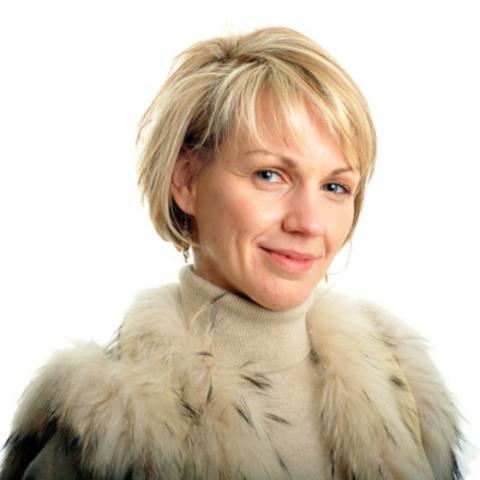
Returning for this year's MBCT Seminar Series is Dr. Alla Karpova from Janelia Research Campus — talk details to be announced
Join our mailing list for MBCT Seminar announcements and updates about future events
Abstract
The rapid rise of artificial intelligence has raised concerns that offloading cognition onto powerful external aids may erode human reasoning abilities. Recent psychophysical work has sharpened this concern, posing the question of whether external cognitive assistance fundamentally reshapes the building blocks of thought. We are addressing this question in rats, using an experimental framework that engages iterative compositional construction, a complex cognitive capacity, in an open-ended setting with very sparse feedback. We have recently demonstrated that in this setting, rats can infer, unguided, the core components of a latent action sequence discovery task, and then naturally utilize hierarchical composition to turn previously discovered solutions into building blocks for constructing action sequences that would have been difficult to discover from scratch. This self-guided compositional reasoning capacity is supported by highly structured prefrontal representations that are geometrically identical across animals. We are now leveraging this experimental system to demonstrate that the structure of the building blocks of compositional thought, and, consequently, the cognitive capability itself, change in the presence of external assistance for sequence discovery.
Meet the Speaker
Alla Karpova, Senior Group Leader, Janelia Research Campus
Hosted by Liz Jun (Nuyujukian Lab)
I grew up in a society where "broken brains" was both taboo and inescapably present, since caregiving always fell to the family. That experience drove me toward biology, with the goal of eventually developing effective therapies to restore cognitive capacity in aging brains and brains damaged by disease. I trained first as a molecular biologist, working in the far more mature field of cancer research, since any therapeutic intervention ultimately has to act on cells and their signaling pathways. I then trained in circuit-based approaches to brain function, because I believed effective brain therapies would ultimately have to permit circuit specificity. I turned down standard faculty offers to join the newly opened Janelia instead, drawn by its mandate to "identify important biological problems." There, I have been privileged to work with a small but incredibly talented group to develop a model system designed to do two things at once: probe foundational cognitive capacities and provide tractability for working out circuit-level therapeutics. This system has revealed a surprising degree of structuring in neural representations underpinning reasoning and agency, providing us with a framework for investigating whether sculpting activity with BCI approach might offer a therapeutic avenue for repairing "broken brains".
Continue the conversation: All attendees are invited to digest the seminar with a complimentary dinner with the speaker in the Theory Center after the seminar.