
Ana Maria Cuervo - Selective autophagy: keeping the aging brain working one protein at a time
Join the speaker for coffee, cookies, and conversation before the talk, starting at 11:45am.
Selective autophagy: keeping the aging brain working one protein at a time
Cells maintain proteostasis and organelle integrity through sophisticated surveillance and quality-control pathways that identify and eliminate damaged cellular components. The progressive deterioration of these systems during aging is a major contributor to the onset and progression of numerous age-associated disorders including neurodegenerative conditions.
Our studies have demonstrated that chaperone-mediated autophagy (CMA), a highly selective form of autophagy, undergoes a marked decline with advancing age. Molecular dissection of the CMA machinery, together with the generation of transgenic mouse models in which CMA activity can be experimentally suppressed or augmented, has provided important insights into its role in preserving cellular homeostasis and healthy brain aging.
In this presentation, I will highlight recent advances in our understanding of CMA regulation, emerging CMA functions in normal brain physiology, and the consequences of its dysfunction during aging. I will also discuss current approaches to restore CMA activity in vivo as a therapeutic avenue for prevention and treatment of age-related neurodegenerative diseases.
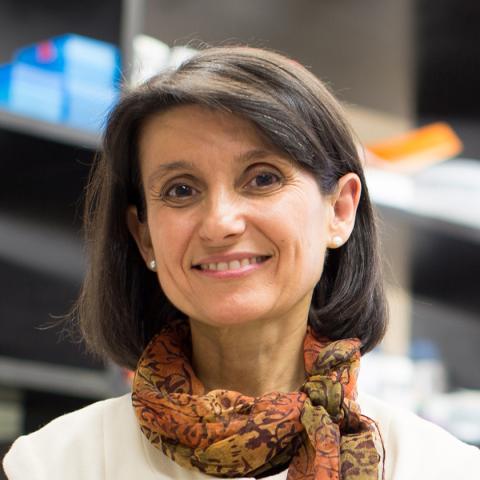
Ana Maria Cuervo, PhD
Distinguished Professor and Co-director of Institute for Geroscience, Albert Einstein College of Medicine
Dr. Ana Maria Cuervo is the Robert and Renee Belfer Chair for the Study of Neurodegenerative Diseases, Distinguished Professor in the Departments of Developmental and Molecular Biology and of Medicine of the Albert Einstein College of Medicine and co-director of the Institute for Geroscience. She earned her M.D. and Ph.D. in Biochemistry and Molecular Biology from the University of Valencia, Spain, and an honorary degree from the University of Buenos Aires, Argentina. After postdoctoral training at Tufts University, she established her laboratory at Einstein in 2001.
Dr. Cuervo’s research examines how cells use lysosomal degradation (autophagy) to remove altered proteins and how age-related autophagy dysfunction contributes to neurodegenerative and metabolic diseases.
Her honors include the P. Benson, Keith Porter, Nathan Shock, Vincent Cristofalo, Bennett J. Cohen, Marshall Horwitz, Saul Korey, Negrin, and Ricketts prizes, as well as the Change Maker Spirit and Hipatia awards. She has delivered distinguished lectures, including the NIH Director’s, Roy Walford, Feodor Lynen, Margaret Pittman, and Harvey lectures. She served as co-editor-in-chief of Aging Cell for 14 years and is currently an editor of PNAS. Her service includes the NIA Scientific Council, NIH Council of Councils, NIA Board of Scientific Counselors, and the Advisory Committee to the NIH Deputy Director.
Dr. Cuervo is elected member of the National Academy of Sciences, the American Academy of Arts and Sciences, the Valencian Royal Academy of Medicine, the Spanish Royal Academy of Sciences, the Spanish Royal Academy of Pharmacy.
Hosted by Michael Schoof (Wyss-Coray Lab)
About the Wu Tsai Neurosciences Seminar Series
The Wu Tsai Neurosciences Institute seminar series brings together the Stanford neuroscience community to discuss cutting-edge, cross-disciplinary brain research, from biochemistry to behavior and beyond.
Topics include new discoveries in fundamental neurobiology; advances in human and translational neuroscience; insights from computational and theoretical neuroscience; and the development of novel research technologies and neuro-engineering breakthroughs.
Unless otherwise noted, seminars are held Thursdays at 12:00 noon PT.