
CNDS Symposium 2027: Neural data science across disciplines
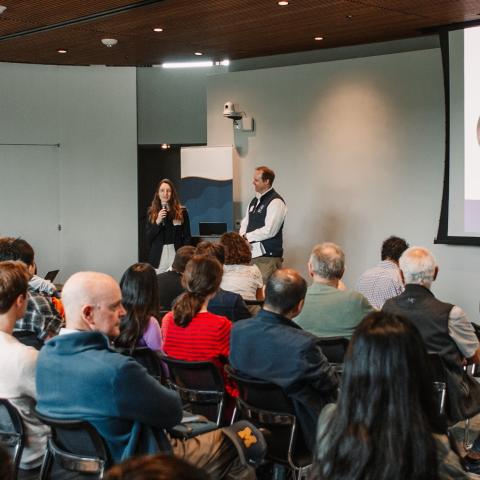
Join us to explore how data science is advancing our understanding of the brain, and how researchers across disciplines can learn from one another. Be part of a growing community brought together by curiosity about neural systems and what data science makes possible.
Neural data science brings together the concepts, methods, and approaches from neuroscience, computer science, medicine, and engineering to build a better understanding of biological and artificial neural processing systems. Inherently interdisciplinary, it connects the study of perception and cognition with investigations of neural circuits and translational work in health and disease.
The Stanford Center for Neural Data Science (CNDS) Symposium, organized by co-directors Laura Gwilliams, Leila Wehbe, and Scott Linderman, will showcase the cutting-edge ways researchers are using data science across these areas. Speakers will address foundational questions in vision and audition, approaches to understanding neural circuits, and AI systems designed to advance discovery, diagnosis, and care in neurodegenerative disease. Through talks and discussion, we will consider how these questions and approaches can inform one another, spark new ideas, and open opportunities for collaboration.
Registration is free and required. Open to Stanford affiliates and others who are interested in neural data science. Registered attendees are invited to lunch before the symposium and to a reception afterward.
| Speaker | Affiliation | Talk Title |
|---|---|---|
Associate Professor, University of Pennsylvania | To be announced | |
Associate Professor, Johns Hopkins University | To be announced | |
Assistant Professor, UC San Francisco | To be announced | |
| Samuel V. Norman-Haignere | Associate Professor, University of Rochester | To be announced |
Sign up to receive future updates about the symposium and additional events

The Stanford Center for Neural Data Science (CNDS) is a joint center of Wu Tsai Neurosciences Institute and the Stanford Institute for Human-Centered AI (HAI).