
Naoshige Uchida | The core neural circuit for learning to predict
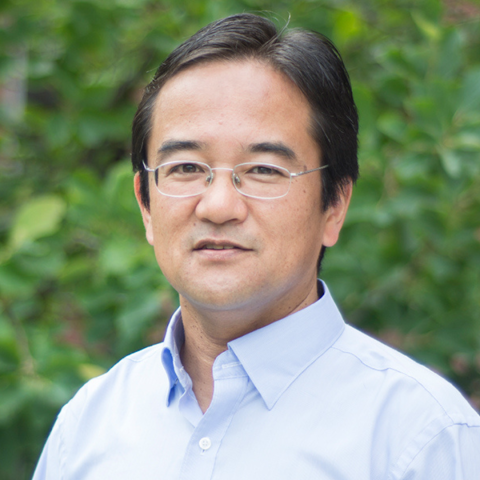
Kicking off the 2026–2027 MBCT Seminar Series is Dr. Naoshige Uchida from Harvard University.
Join our mailing list for MBCT Seminar announcements and updates about future events
Abstract
The ability to predict future outcomes is a fundamental basis of flexible behavior. In the brain, the neuromodulator dopamine is thought to play a central role in learning to predict future rewards. A large body of evidence suggests that dopamine supports this predictive learning by signaling a moment-by-moment prediction error, called a temporal difference (TD) error, analogous to those used in reinforcement learning algorithms. However, whether reinforcement learning algorithms are truly implemented in the brain, and if so how, remains unclear. In this talk, I will present our recent work addressing two key issues: (1) how dopamine signals are computed, and (2) how core parameters of reinforcement learning models may be instantiated within neural circuits.
Continue the conversation: All attendees are invited to digest the seminar with a complimentary dinner with the speaker in the Theory Center after the seminar.
Meet the Speaker
Naoshige Uchida, Jeff C. Tarr Professor of Molecular and Cellular Biology, Harvard University
Hosted by Hannah Lee (Linderman Lab)
Naoshige Uchida is a Jeff C. Tarr Professor and Chair of Department of Molecular and Cellular Biology at Harvard University. He received his Ph.D. from Kyoto University in Japan, where he worked on the molecular mechanism of synaptic adhesions in Masatoshi Takeichi’s laboratory. He studied olfactory coding in Kensaku Mori’s laboratory at the RIKEN Center for Brain Science in Japan. He then joined Zachary F. Mainen’s laboratory at Cold Spring Harbor Laboratory, where he developed psychophysical olfactory decision tasks in rodents. He started his laboratory at Harvard University in 2006. Uchida’s current research focuses on the neurobiology of decision-making and learning. In particular, his laboratory has studied the midbrain dopamine system using computational modeling with reinforcement learning theories.