
Building a framework for oversight of neural organoid and assembloid research
In Brief
- Scientists have developed tools to grow clusters of human brain cells, called neural organoids and assembloids, in the lab in order to model nervous system development, function, and disease.
- The potential of these tools to lead to new treatments for brain diseases is enormous, and the fast-growing field has raised questions about how to balance the clinical promise with potential ethical concerns.
- Last Autumn, dozens of scientists, ethicists, and civil society representatives convened at the historic Asilomar Conference Grounds to discuss these challenges and develop recommendations for ethical guidelines and oversight.
- Organizers have now released a report summarizing the meeting and outlining recommendations for developing a global neural organoid and assembloid ethics infrastructure.
Over the past two decades, there’s been an explosion of research drawing on lab-grown brain cells to better understand brain development and disease.
Now, the time has come to build an international framework to help manage the field’s ethical implications, according to a newly released report on a 2025 conference supported by the Wu Tsai Neurosciences Institute and the Dana Foundation.
Human neural organoids and assembloids are millimeter-scale clusters of brain cells that can be grown from stem cells in the lab to model the development of human brain circuits and the origins of brain disease.
Pioneered by Sergiu Pasca, the Kenneth T. Norris, Jr., Professor of Psychiatry and Behavioral Sciences at Stanford Medicine, among others, these laboratory models can be grown from samples of tissue from people with brain diseases to understand their origins in brain development, intentionally given targeted mutations to study their effects, or used to screen for potential interventions to repair disordered brain circuits.
These techniques have been taken up by hundreds of research labs around the world, who use the methods for drug discovery, disease modeling, evolutionary biology, biocomputing, and – because organoids retain the genetic imprints of their donors – personalized medicine.
But the fast pace and expanding scope of neural organoid and assembloid research has raised tough questions: Who owns assembloids derived from human tissue? Under what circumstances should they be transplanted into animals or humans, either for research or as a potential treatment for disease? Could they ever develop complex emergent properties such as the sensation of pain? And how should these questions be weighed against the clear and urgent needs of patients with complex neurodevelopmental disorders and their families, for whom these technologies may represent the best hope for developing new treatments?
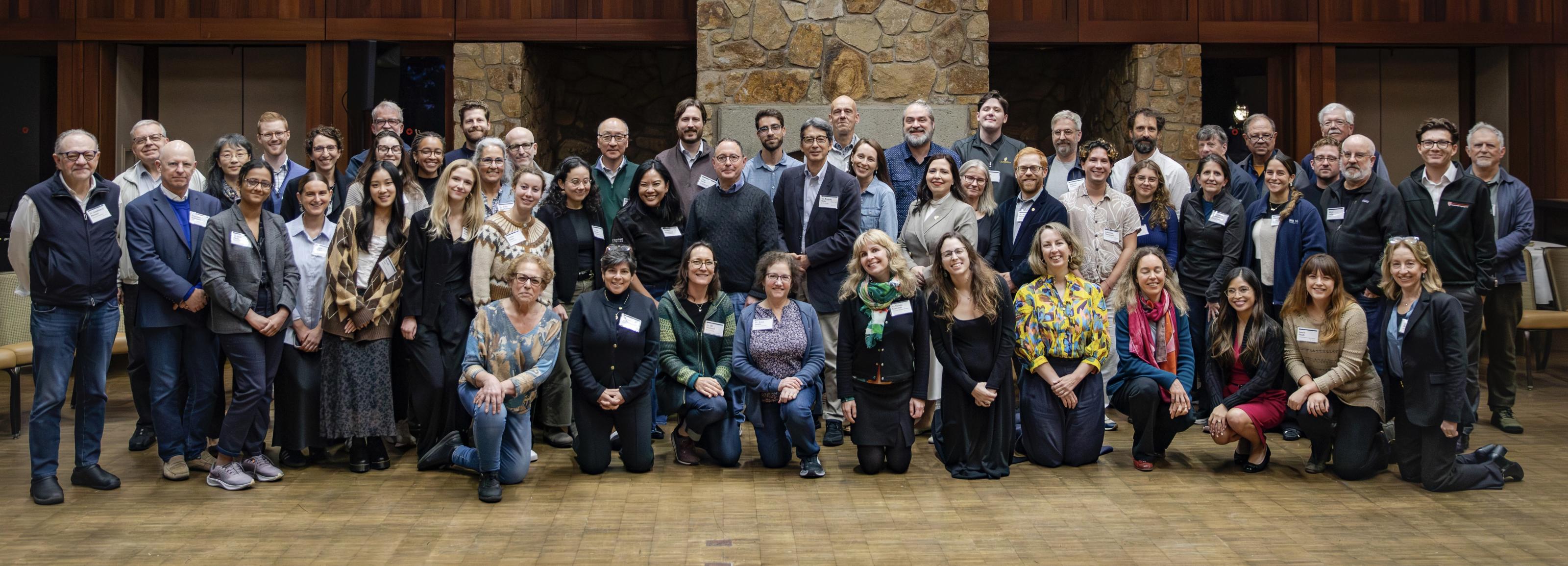
Last Autumn, six dozen scientists, ethicists, patient advocates, journalists, and other representatives of civil society gathered at the historic Asilomar Conference Grounds to discuss these issues and make recommendations for oversight of the field.
“Our field is moving forward quickly, and with great excitement for the potential to develop new understanding and new interventions for brain disorders ranging from autism and epilepsy to neuroimmune and degenerative disorders of the nervous system,” said Pasca, who helped organize the Asilomar conference. “But this research does raise important ethical questions which the research community cannot and should not answer on its own. These are questions that require consideration, deliberation and oversight by a broad spectrum of legal and science experts as well as civil society.”
The new report summarizes discussions, deliberations, and recommendations of the community on how to design and build the oversight frameworks that will guide researchers through potential quandaries before they become acute.
“We wanted to produce something more than vague principles; people need concrete advice on real and immediate issues they confront in the lab, on institutional review boards, in patient organizations, and so on,” said conference co-organizer Hank Greely, the Deane F. and Kate Edelman Johnson Professor of Law at Stanford and a leading expert in bioethics who directs Stanford’s Center for Law and the Biosciences. “This report points the way to the systems we need to provide that clarity going forward."
A call to action
Pasca and Greely have been collaborating on stem cell neuroscience ethics since 2018, when they came together as part of the Stanford Brain Organogenesis Program, a Big Ideas in Neuroscience initiative from the Wu Tsai Neurosciences Institute which aimed to advance organoid technology and disseminate it to researchers around the world, while in parallel considering the ethical questions the research raises.
That year, Pasca, Greely and colleagues from around the country first called for guidelines for brain organoid research in the journal Nature.
The matter has only become more pressing as the scope and volume of the work has grown. In 2021, the National Academies of Science, Engineering, and Medicine released a consensus report on the topic, supported by the Dana Foundation and the National Institutes of Health. The International Society for Stem Cell Research has also released guidance and ethical benchmarks for organoid research in recent years.
But the field has been moving so quickly that attempts to issue specific guidelines have struggled to keep pace with new scientific developments and applications. What the field still needed, argued Pasca, Greely, and 15 expert co-authors in a 2025 article in Science, was an ongoing global framework for neural organoid and assembloid ethics that could keep up with the pace of the science.
There was “a crucial need,” the authors argued, “for a continuing international process to watch, and to guide, the progress of this field,” one that would need to include many scientific and societal stakeholders to define ethical guardrails and establish clear mechanisms of oversight and accountability as the science advances.
Building the future
To begin to craft such an international, multi-stakeholder framework, Greely and Pasca convened more than 70 scientists, ethicists, patient advocates, journalists, and other civil society voices from across the globe in November, 2025, at the historic Asilomar Conference Grounds, the site of a similar meeting 50 years prior on recombinant DNA.
During the conference, which was sponsored by Wu Tsai Neuro and the Dana Foundation and co-designed, facilitated, and reported on by Worldview Studio, the intellectually and experientially diverse group discussed a wide range of issues, including differences in how scientists and different sectors of the public think about organoid research, how to balance potential risks with potentially life-changing treatments for neurological disorders, and the potential roles for research funders, scientific journals, professional societies, patient advocates, the media, and government in overseeing and guiding scientific progress.
The newly published report on the meeting summarizes those discussions and the recommendations that emerged on the final day of the conference.
Notably, the report highlights a broad feeling among meeting attendees that the pace of discovery in the field is currently so rapid that setting specific “bright lines” or prohibitions risks compromising the potentially transformative clinical benefits these technologies may spur. Instead, participants emphasized that now is the time to build the framework and oversight mechanisms that can raise flags and offer guidance when ethical concerns arise that may require action.
First, the group called for an international but decentralized effort to engage the scientific community – including scientists, academic journals, funders, professional societies – as well as patients and their advocates as partners in building and communicating research guidelines. The report also noted that those guidelines should respect cultural and regional differences rather than imposing one viewpoint on the entire global community.
The report also emphasized the need for an adaptable approach that would be able to provide clear, actionable, and nuanced guidance for scientists as the field develops. To do so, the field needs to build infrastructure to continuously monitor publications and other outputs to keep an eye out for applications of the technology that raise new ethical questions or possibilities not yet considered under current guidelines.
That infrastructure also needs to regularly convene stakeholders as part of ongoing ethics conversations, provide ethics training to universities’ institutional review boards, and actively engage the general public in the conversation, rather than simply communicate what’s been done.
Beyond calling for this infrastructure, the report laid out a multi-year plan to engage with experts in bioethics governance, learn from existing guidelines, and prototype a reporting process so that there are practical resources available from the start.
“Technology, in biology and elsewhere, is advancing at amazing speed – but the world needs more robust and flexible systems to track its progress, to understand it, and to use it to decrease human suffering while avoiding abuses,” said Greely. “We hope that our efforts in this field may be a useful model for other areas where more engagement between technologists and society is sorely needed.”


