
How do our brains stay healthy as we age?
Today on the show, we explore the complex biology underlying a seemingly straightforward question: How do our brains stay healthy – or not – as we age?
There seems to be a constant flow of new secrets to healthy brain aging – inflammation, estrogen levels, how the brain clears out its waste. We've talked about many of these explanations on the show, and it can be easy to think that whatever the latest one is, that's the one. At least until the next one comes along.
In reality, each of those things is probably part of a larger complex system that guides brain aging. But if that's the case, how do the parts fit together, and how do scientists figure out interventions that could slow or prevent neurodegeneration?
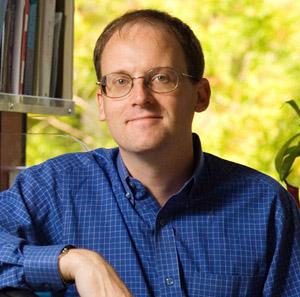
That's a tricky challenge to be sure, but it's that challenge we're going to dive into with today's guest, neurobiologist Tom Clandinin.
SUBSCRIBE on Apple Podcasts, Spotify, Amazon Music and more.
Learn More
- Clandinin Lab
- Qiu Lab
- Allen Lab
- Big Ideas in Neuroscience tackle brain science of everyday life and more (Wu Tsai Neurosciences Institute, 2026)
- Convergence of biological and artificial networks (Current Biology, 2021)
- Coupling of activity, metabolism and behaviour across the Drosophila brain (Nature, 2021)
- Drosophila Connectomics: Mapping the Larval Eye’s Mind (Current Biology, 2017)
- Flies and humans share a motion estimation strategy that exploits natural scene statistics (Nature Neuroscience, 2014)
Episode credits
This episode was produced by Michael Osborne at 14th Street Studios, with sound design by Mark Bell. Social media strategy is by Julia Diaz, and additional editing by Nathan Collins. Our logo is by Aimee Garza. The show is hosted by Nicholas Weiler at Stanford's Wu Tsai Neurosciences Institute and supported in part by the Knight Initiative for Brain Resilience.
Share the show:
If you're enjoying our show, please take a moment to give us a review on your podcast app of choice and share this episode with your friends. That's how we grow as a show and bring the stories of the frontiers of neuroscience to a wider audience.
Get in touch:
We want to hear from YOUR neurons! Email us if you'd be willing to help out with some listener research, and we'll be in touch with some follow-up questions.
Transcript
Nicholas Weiler (00:10):
This is From Our Neurons to Yours, a podcast from the Wu Tsai Neurosciences Institute at Stanford University, bringing you to the frontiers of brain science. I'm your host, Nicholas Weiler. Today on the show, the complex biology behind a seemingly simple question, how do our brains stay healthy as we age? It seems like we're always hearing about a new secret to healthy aging or a new root cause of dementia and neurodegeneration, inflammation, estrogen levels, how brain cells clear out their own waste. We've covered a lot of these stories ourselves on the show, and each one can feel like, yes, that's the answer, until the next one comes along. Honestly, this is sort of the nature of science. Scientists tend to try to reduce complicated systems into simpler questions that can be answered one at a time. But presumably, all of these different factors are at work at the same time, all contributing to the aging process.
(01:11):
So, this raises a harder question. When you've got a complex system involving dozens of different components, how do you figure out where to point the most effective intervention? This is a trickier question for scientists to wrap their heads around, but it's exactly the challenge we're going to talk about with today's guest, neurobiologist, Tom Clandinin. Tom is probably best known for decades of fundamental science, unlocking the genetic systems that wire up the visual system of the fruit fly, which has helped us understand the visual system in all organisms, including humans. In recent years, Tom has turned his sights beyond the visual system. He's become fascinated by the question of the genetic systems that keep brain cells alive for years or decades, much longer than most of the cells in our bodies, and definitely longer than a fruit fly. Understanding how these systems fail is crucial to understanding dementia and neurodegeneration, and it could also tell us how we could strengthen these systems to help us live healthier, longer.
(02:12):
Now, Tom is working with computational biologist, Xiaojie Qiu, and neuroscientist, Will Allen, to achieve this vision. Together, they're launching a major initiative to address these questions backed by Wu Tsai Neuro's Big Ideas in Neuroscience Program and the Knight Initiative for Brain Resilience. The team plans to use AI models and new genetic techniques to build a comprehensive portrait of the genetic networks responsible for maintaining our brain health. They'll ask how these complex interconnected systems break down as we age and where we can find tractable leverage to enhance their resilience. Since thinking about all these genetic systems can be a bit of a brain twister, I started by asking Tom for an analogy that might help us picture the challenge he's setting out to solve.
Tom Clandinin (03:01):
Maybe a view or a way to look at it is to think of it as an ecosystem. You don't view a species in isolation, you view it as part of a larger structure that if you manipulate one species or one species begins to suffer in some part of the ecosystem, it's going to have rippling effects across the ecosystem that are hard for us to predict. You can't a priori know how adding wolves into Yellowstone is going to affect everything. I think about our absence of understanding of these really higher level organizations is really kind of a shocking gap.
(03:38):
And I think, as you highlight, many scientists, including myself, begin from kind of a reductionist perspective that tends to break problems down into small pieces and go, "Okay, this is a part I can understand," the Big Ideas Project is really, and this kind of non-reductionist perspective is really pioneered, I think by Will Allen and Xiaojie Qiu, the two collaborators on this project, because Will really emphasized the point that while you're ultimately going to manipulate single genes in single cells, you need to understand both the consequences of those manipulations across many dimensions, as well as capture how cells with different perturbations interact and how those perturbations interact with physiological perturbations of the animal.
(04:27):
And you really need a computational framework to put that together because I think, as reductionists, we're ill-equipped to think about these very high dimensional spaces, these large interactions. And that's where Xiaojie's perspective really makes it possible to use these models to make predictions and to understand interactions in a way that are difficult for reductionists to hold in their heads. And so that's, I think, the exciting opportunity of this big idea.
Nicholas Weiler (05:00):
Well, frame the big idea for us without necessarily getting into the hows of exactly what you're going to do. What is the big idea question that this project intends to tackle?
Tom Clandinin (05:14):
Right. So, the overall question is, what are the mechanisms that makes the brain resilient? And I think the kind of underlying challenge of that is that the brain, in many ways, is really unique in terms of its challenges. Obviously, the neurons you have early in life are going to be all the neurons you'll have to first approximation, and they have to survive for your entire life. That's a very long time, and the challenge of how any cell maintains itself across a lifetime of decades is a problem we don't know that much about. We're very, again, coming back to experimentalists with a reductionist perspective, we're good at measuring cell biological and molecular processes over seconds, minutes, hours maybe, but decades is not a timescale that you could view as a really tractable problem.
(06:12):
And so, the overarching question and the goal of this project is to really take some new approaches to tackling this question, try to identify what the stressors are that neurons and glia experience that are influential over a lifetime, to develop new methods for probing genetic interactions with those stressors, and then to build a model that puts together these data and makes a model of the brain in which you can think about how the different cells within the brain interact with each other and how within different cell types different perturbations play out, and what are the cascading consequences as this brain ages that would allow us to get at these sorts of homeostatic mechanisms that can survive for such a long time and keep the brain functioning over such a long lifespan.
Nicholas Weiler (07:11):
This is a thing that I keep having to remind myself because it's a thing that it's easy to forget, that one of the reasons that we tend to get this sort of multi-system ecosystem collapse type failure that we see in the brain, in the aging brain, where the energy systems are failing and the molecular recycling systems are failing and all these different things are happening at the end, which is one of the reasons why it's so hard to pinpoint what is causing something like neurodegeneration or Alzheimer's and what is a side effect and what is just sort of like ... Anyway, it's a whole system collapsing and it comes down to what you said, which is we are born with all the neurons we will ever have. And I'll put an asterisk there because this is slightly controversial.
(07:58):
There are places in animals where there is some neuron rebirth. It is controversial whether this happens in humans, but I think we can say at least the consensus is most of the brain does not regenerate. You are not making new cells as you go. Mostly you're stuck with the cells you've got and you got to keep them healthy. And so, it's kind of amazing how resilient the brain already is.
Tom Clandinin (08:20):
Absolutely. And if you think about any given process, any mechanism that we know a lot about, synaptic transmission, how one neuron might communicate with another, we understand the dynamics of that process extremely well over milliseconds and seconds. But for that process to continue to run over decades requires that every component part of it run essentially flawlessly over these very fine timescales.
Nicholas Weiler (08:51):
Right. You can't really have any error because that error will build up very quickly.
Tom Clandinin (08:54):
The error will accumulate. It's challenging to measure errors that are that small, even if they're really significant. And it's challenging, I think, to understand even the logic by which you might have a mechanism that could be perfect, that could be effectively perfect. And that's, I think, a big mystery. And coming back to your overarching question, what's interesting about neurodegeneration is our largest risk factor for neurodegeneration is age. Clearly, aging is a multifactorial thing. There's a lot of beautiful work happening in this field on many levels, but how these cumulative errors influence the trajectory of aging in the brain is something I find really interesting.
Nicholas Weiler (09:46):
Yeah. I did a little research into this because I just find it so fascinating. You compare this to other kinds of cells, our intestinal lining is turning over every three to five days. Our skin turns over every month or so. Our red blood cells, about four months. Liver, a few years. Fat tissue and bone and skeleton, closer to a decade. Muscle, a little longer than that. There's basically the brain and maybe part of the heart that you need to keep going your whole life. And the brain is also, brain cells are super highly metabolic. They're consuming energy all the time. No offense to bone cells, but they're not doing the same level of activity as the brain. And it's sort of like, you can imagine a tortoise taking the slow path to a long life by being slow, by being relatively metabolically low activity.
(10:41):
But we're talking about like a hundred-year-old hummingbird here with brain cells. They're really high energy and somehow there are all of these little mechanisms in place, all these little checks and balances to make sure that everything keeps functioning really, really well and it gets us to 80, 90 years old, hopefully, if things go well. And so, I just wanted to emphasize that because I love the thing about one of the things about your project is that it is about what are these mechanisms that keep our cells healthy? How can we understand how our cells are trying to stay healthy and trying to stay resilient to the slings and arrows of time? And maybe that will give us insight into how to keep them healthier and stop those mechanisms from breaking down. It's not just what causes disease, but it's how can we strengthen the systems that are already there to keep these cells healthy?
Tom Clandinin (11:37):
Absolutely. And I think, just to come back to your point about energy usage in the brain, so this is something that I'm deeply interested in and we're studying it in the lab. The brain uses as much energy per unit tissue as your heart. And I can easily describe how your heart expends energy. I know, or at least I can imagine what the heart's doing with all that ATP. We don't know fundamentally how the brain is using all that energy.
Nicholas Weiler (12:05):
Interesting.
Tom Clandinin (12:06):
And that means, we have a lot of suggestions. We know that there are different parts that use energy, but as a holistic question of how the brain distributes its energy usage, how it does that differently when you might be aroused and excited or sleepy, how it does it in different cells or even different parts of cells, these are largely open questions. And as a result, energy metabolism has been pointed at as one of the failure modes of neurodegenerative disease. And certainly, it produces reactive oxygen species when you're using your mitochondria a lot to generate ATP. Understanding how the brain can survive so long in a highly functional state while using so much energy and dynamically adjusting it, this is a really fundamental question. And I do believe that just as it is for any other system, energy is ultimately a fundamental constraint and that has to apply to the brain somehow, and how that energy is used in these resilience mechanisms I think is really a deep and interesting question.
Nicholas Weiler (13:17):
I love this. I feel like I've been hearing this a few times on the show now with different guests. It seems like we are starting to be ready for a more holistic neuroscience. It's going to take a long time. It's not going to be easy, but we have enough of a basis in understanding that we can start to say, "Okay, let's try to put all these puzzle pieces together. Let's use what we know from computation, from machine learning. Let's use all these new tools that are now available to look at lots of different things at the same time in the same animal or even non-invasively in people and start to build a picture of the whole thing. What is the big picture of what's going on?"
(14:05):
Well, let's get into your project. You're part of this new Big Ideas and Neuroscience Initiative that we've mentioned, supported by the Knight Initiative for Brain Resilience for obvious reasons, this is all about brain resilience, that's targeting this systems level understanding of how brain cells stay healthy for so long and where they might fall apart in neurodegeneration. First, I wanted to say, you called this the first causal atlas of brain resilience in your proposal. And I'd love to hear you say, what exactly does that mean? What would a causal atlas of brain resilience be?
Tom Clandinin (14:36):
Yeah. I think, maybe a way to think about it, so causality in our view comes from genetic and physiological perturbations. And so, what you're trying to do is perturb many genes and explore what they do in terms of brain resilience, but to look at them not in isolation and not with neurometrics, but to look at them holistically across all the network of molecular and cellular interactions that maintain the resilient brain. And so, the idea would be, if you could assemble an atlas in which you understood if this gene changes here in this subset of cells, it cascades through that cell through these other to interact and affect these other cells, there are molecular changes that happen in them, and then you begin to reveal the cascade of things, you can begin to discern the structure, make a map of how these events unfold.
(15:37):
And I think that's really ... unfold in different animals, so we're comparing between flies and mice. And as I said, from that kind of dynamic picture, kind of spatially rich and molecularly rich picture, you need to have a holistic model that puts it together and makes predictions about interactions that then you can test. And so, there's the first order, we're going to perturb a large number of genes, we're going to explore physiological perturbations that informs a model that can then make predictions about interactions that can then be tested in the animal downstream. You use the model to generate hypotheses and you build platforms for perturbations that can happen at scale that allow you to test predictions from the model. And then, you can inform or revise or update the parameters of the model so that the predictions get better and better. And then, the idea is that you could ultimately query the model for predictions that are accurate about what would happen if X perturbation takes place in Y cells for Z time.
Nicholas Weiler (16:55):
I just want to hold on this for a sec. I guess, why is it ... I want to lead into the experimental approach that you and the team are taking, which is pretty unusual, pretty different from the way that we usually approach these kinds of genetic questions. And maybe the way I want to get into that is, why can't we build that model right now? We've been studying these genes, many of these genes for a long time. We have the human genome. We've been doing a lot. There's been molecular tools for some time now to study many of these different genes. Why can't you put all of those into a model and understand this big picture?
Tom Clandinin (17:37):
Yeah, I think there are really two or three reasons. One reason is simply the scale of genetic screens. The traditional approach is I mutate one gene in one animal. I study what happens with some varying level of precision in the measurements. I could use some subset of measurements. And that simply does not scale well to a problem that's going to engage a few thousand genes where there are lots of different processes that are changing with age and that are interacting with each other. And so, the first is that fundamental technical limit. The other, I would say, really leans on the emerging technologies that are possible with these models and deep learning strategies. And that is, until very recently, we haven't had a computational tool that could take in rich biological data sets of this form and compare them both within cells, but more broadly across circuits and larger sections of the brain and to make models that would be able to compare across animals.
(18:44):
And I guess the third piece is, you might think about why doesn't one just study one animal? I think, a logical choice would be study the mouse. That's a good answer. We think these kinds of resilience problems or these kinds of resilience mechanisms are going to tie into evolutionarily ancient processes. All species age all over different timescales holistically have a similar arc.
Nicholas Weiler (19:18):
So, even if you live for a couple of days, like a fruit fly or however long a fruit fly lives, or you live 80 years like a human, many of the same failures happen on different timescales.
Tom Clandinin (19:29):
Absolutely.
Nicholas Weiler (19:29):
That's very fascinating.
Tom Clandinin (19:31):
Absolutely. The challenge is we don't know. We know that there are a lot of similar perturbations that can extend lifespan. For example, calorie restriction will extend the lifespan of a fruit fly just as it will extend the lifespan of a mouse. So, there are clearly some conserved mechanisms. It's also clear that the molecular machinery that we know a lot about in terms of synaptic transmission or what happens in the lysosome or what happens in the stress response to unfolded proteins, these are all evolutionarily ancient things that are clearly mechanisms that evolve to maintain cellular health in the brain, even if it's not built to last for decades. And so, by comparing across systems and doing parallel perturbations in multiple systems and building a model that encompasses multiple systems, we think we can really get at the interactions that are the ancient ones that are maybe pointing us toward the underlying causes in a different way.
Nicholas Weiler (20:42):
And maybe you can even get at why is the fruit fly lifespan so much shorter than the mouse? How are these maintenance mechanisms set differently based on or even to cause the different longevity that those two species have? That would be very interesting.
Tom Clandinin (21:00):
Absolutely. And there's clearly an evolutionary component to how long a species lives. It's an overall selected strategy. Fruit flies live for a couple of months and that's a selected feature of the niche they occupy as a species. A mouse in the lab lives for a couple of years. That's a different strategy for having offspring and multiplying. Humans live much longer than that. And again, that's a different evolutionarily selected strategy that extended our lifespan. It didn't extend it to the level we've gotten to now, but that's an interesting question in its own right.
Nicholas Weiler (21:45):
Okay. I've been saving this, I've been holding off on this to establish a lot of this background. I hope I'm not frustrating listeners too much who are like, "Tell me what you're doing." So, tell us what you're doing. I'd love to hear how you plan to build this. We talked a little bit about the traditional strategy for doing these kinds of genetic experiments. What's different about your approach? Walk us through it, if you would.
Tom Clandinin (22:08):
You're asking, what exactly are we doing, is maybe a different framing. The first is, we're developing a new set of genetic tools that can be applied in both flies and mice. The goal is to scale up the numbers of genes that we can screen in individual animals. In the context of mice, Will Allen's work is focusing on getting to a few thousand gene scale or even every gene that's expressed in the brain, so maybe a 10,000 gene scale for making perturbations and measuring what those perturbations do. In flies, our aspirational goal is to increase the number of genes we can screen per fly by more like 10 or a hundred fold and to leverage the fact that it's easy for us to generate lots of flies to get to the same kind of coverage. And so, there's a technical component of this that involves building a new set of tools, they will be useful to us in our project, but also broadly useful to the community that uses mice and fruit flies to probe a lot of different biology questions.
Nicholas Weiler (23:16):
So, these are tools that let you change hundreds or thousands of different genes at the same time in the same animal and monitor their activity as well, I assume?
Tom Clandinin (23:24):
Yes. Well, to monitor the consequences of those perturbations at scale. That kind of strategy, we're applying it to questions of brain resilience, but the overarching advantage of having this kind of tool is simply you could screen more genes for whatever process is interesting to you. People use fruit flies and mice to study all kinds of different problems. We believe these tools will be widely applicable. That's one piece of our effort, so there's a technical development piece and that's fundamentally where Will and I have started working in our own labs. On the machine learning front, we need to develop a model that can handle interactions between cells with the richness of a brain. It's amazing to think about how quickly these models have started to shape science, but it's just been over the last few years that people have made really rich models of single cells.
(24:34):
This is a rapidly evolving area, but there aren't models that exist that can capture a spatially organized network of cells at any scale related to the brain. This is the work of Xiaojie and building the computational infrastructure for modeling these kinds of genetic perturbations at scale is really another kind of technical development that will feed into, of course, biological discovery.
Nicholas Weiler (25:09):
Is this going to be more like a large genetics model, or is it going to actually be built on a language corpus, a language training set, like the chatbots that we're familiar with?
Tom Clandinin (25:19):
Oh, no. Yes, it's going to be an underlying genetic model that has a structure, and this crosses into areas that I'm only learning about, so I shouldn't speak too glibly about them. But I would say, the underlying structure of them captures, if I manipulate gene X, there will be changes in genes A through Z that follow some pattern. And if I've done that, if I train on these kinds of rich data sets where I've made a lot of perturbations, you can start to examine the interaction network between genes in the same way that you might think of words in a sentence having a syntax that your model could learn. The goal would be to capture that syntax both at the single cell level for different kinds of neurons, but also across networks of neurons and glia that will be interacting together.
Nicholas Weiler (26:15):
Yeah, absolutely. Yeah, I think it's funny. We don't typically, unless you're in the field I think, think of these large language model chatbots as a model of the English language. It represents the relationships between words and concepts that it has learned from studying all of the texts that it has studied. It is fundamentally a model of relationships in English or whatever language it's trained on. This is going to be a model of relationships in the genetics of brain resilience based on the data that you're planning to collect, so it's very interesting. It is the same kind of architecture as these chatbots, but fundamentally modeling a different thing and letting you predict what happens if this goes up and this goes down and so on.
(27:00):
Can you tell us a little bit about the data you're going to collect? You're building these techniques to be able to manipulate hundreds or thousands, you could tell me the exact number of genes in a single animal at the same time and measure what the outcomes are, what happens. You're developing these foundation models of genetic relationships to map out the results of your experiments, but what are those experiments?
Tom Clandinin (27:26):
You can think about different kinds of measures of cellular behavior. One kind of measurement that's going to be fundamental to this is to look at how perturbation of gene X is going to change the expression of a large library of genes in that cell and broadly across the network. It's a molecular phenotyping strategy that takes advantage of the scale of measurements that are possible by deep sequencing and spatial transcriptomics, these methods for measuring gene expression at scale to get a really deep fingerprint of phenotypes.
(28:02):
The other piece though is to connect to neuronal function in a deeper way. You could think about asking if we've made a perturbation, how does it change the computational performance of a cell or the behavioral performance of the animal? Defining behavioral tasks that can be measured quantitatively and circuit level measures of, let's say, changes in neuronal activity that might be introduced or induced by a stimulus or a behavior and quantifying those changes with these genetic and physiological perturbations is something that we're setting up to do as well. Those will be the other kinds of data that contribute to our understanding of what cells do and what these genetic perturbations affect.
Nicholas Weiler (28:58):
I think you called this strategy, and you can correct me if I'm misapplying this term, mosaic perturbation. It almost seems like you're trying to create maximum variability, change as many things as you can in as many animals as you can in order to understand which of those variations, which of those relationships, if this goes up and this goes down, what happens? If this other thing goes up and something else goes down, you're trying to change almost everything all at once. Is that the idea? You want to get as much variability in the data as you can to understand the relationships between those variables.
Tom Clandinin (29:35):
I guess I think of it slightly differently. The mosaic approach is absolutely what we're trying for. You're trying to make multiple perturbations at the same time in the same animal, and you're leveraging the fact that there are many neurons or glia of the same type in the brain, so you could take advantage of them as independent experiments you can run in parallel. But as you say, they're not truly independent. They're part of the same structure, and so you have the opportunity to discover how they interact as well. Is there a perturbation in gene A that when adjacent to a perturbation of gene B produces a different phenotype than you would see if you did A or B independently in separate animals? There's an opportunity to leverage this kind of mosaicism to capture these interactions in a way that hasn't been done before.
(30:34):
I guess that also falls under the category of variation and you're trying to change everything everywhere all at once. But that's, I think the more tangible version is maybe first to look for pairwise interactions that can be extracted by virtue of the fact you're making the same perturbations, you're making multiple perturbations in the same animal.
Nicholas Weiler (30:55):
That makes sense. Yeah, I guess you can never see the relationship between two perturbations if they're done in different animals. You want to see how does changing these two things in the same brain lead to a difference? And you're doing that at scale by changing, I don't know, hundreds or thousands of things in the same drain.
Tom Clandinin (31:14):
Right.
Nicholas Weiler (31:15):
And it seems like that would have been impossible to even begin to interpret until we had these foundation model tools that could ingest all this data and find the subtle patterns there. Is that where you're relying on the foundation models as a way of taking this extremely complex data, and then what do you hope to extract from that?
Tom Clandinin (31:42):
I do think that we run up against the boundaries of what humans can hold in their heads. Of course, you could still interpret phenotypes in the classically reductionist approach and that would be valuable. There's no doubt that that teaches us many things and has over decades. But there's a real opportunity to leverage the large scale model to capture not just subtler things, but things that are simply patterns that are difficult to detect when you're looking at many output measures at once. If you're looking at the change in gene expression over thousands of genes that are induced by one perturbation, a human can go, "Okay, I know this group of genes and I'm going to study them." But assessing the whole pattern is actually something that I think is really going to be a strength of the large scale model. And so, rather than having the lens of a single human, you'll have a broader picture of what happens when you manipulate each gene and read out the effect on a very rich cellular phenotype that you're describing molecularly or physiologically.
Nicholas Weiler (33:22):
Let's take this back to the problem that we raised at the top of the conversation. I'd like to paint a picture now of the future state. You're developing all these tools, you're going to be conducting all these experiments, let's say we have this foundation model. Help me connect that back to how we think about Alzheimer's disease or age-related cognitive decline. How do we then use this to get us out of the limitations of looking at one thing at a time?
Tom Clandinin (33:51):
I have to say, I come to this field as an outsider, but if you think about what we take as the assessment of Alzheimer's disease, there's a definition of dementia, you can describe it and quantify it and there are emerging molecular markers that predict it. It strikes me there are limits to that level of description and it's likely that the functions of neurons in the brain of a person who is diagnosed with Alzheimer's began to change long before they would be diagnosed as having dementia. We need to understand what those early changes are in order to have the possibility of an intervention.
(34:39):
I think, or it would certainly open a lot of new possibilities for interventions if we can detect changes in neurons that emerged much earlier than the final phenotype of having substantial cognitive decline. I think our hope is that by getting this molecular and cellular phenotype that characterizes how does neuronal function go awry or how does glial function go awry early in life, you'll have a lot of new opportunities to intervene that we didn't have before and to develop tests and markers for changes that we didn't know happened that we currently don't know are an important part of the process. I see that as really like an opportunity to set this on a new trajectory and give us the opportunity of an intervention much earlier.
Nicholas Weiler (35:39):
Coming back to our metaphor about an ecosystem, I was just thinking about what you would get with a model like this. In the normal way of seeing things, you can see a few charismatic keystone species, you can see what the wolves are doing, you can see what maybe the deer are doing, but you're limited in not seeing the whole picture and all the relationships between them. This is almost like, if you had a model of the whole system, maybe you could pinpoint the common factor across a bunch of these things is there's this invasive species here that's affecting something that we never would have realized it had this cascade. And so, if you think of it sort of as a network with nodes and interactions, you can start to see what are the nodes, what are the most powerful places to have those interventions, as you were saying. I'm trying to model this systems level, what does that look like? What does that network look like? That seems like the power that you get with this systems level approach.
Tom Clandinin (36:44):
Absolutely. I really like how you framed it. If a keynote species disappears, which is what we can measure now, the natural focus given that observation is you focus on the keynote species. But you actually don't know about all the other things that changed, all the other parts of the ecosystem that changed that led up to the loss of that one keynote species. Those are really important if you want to think about restoration. You can't just transplant the animal back in without fixing or understanding a little bit more about what happened that led to its loss. That's what I see as the trajectory that we'd like to, or the pieces we'd like to add.
Nicholas Weiler (37:30):
That could be a fantastic place to end, but I do want to ask you one more question, which is you mentioned this a little bit earlier that you're coming into this field from a different perspective. You have a unique perspective on this as someone who built your career in genetic studies of how the fly visual system wires itself up. And then, over the past decade or so, you've moved into this much more systems level approach and computational level approach to what is the brain doing? How does it work at a network or circuit level? I'd love to hear you just talk for a moment as we close out about what you see as the possibilities that come from uniting fields like this, uniting genetics and systems level neuroscience and foundation models? I'm going to make a strange metaphor here. Just like these different puzzle pieces of genetics are more than the sum of their parts, how do we move neuroscience forward by bringing together these different approaches to thinking about the brain?
Tom Clandinin (38:32):
I think that's a great question. And I think, for example, Will's trajectory, I think of as a lot like mine. He trained as a systems neuroscientist, as a graduate student, and then became a person interested in molecular neuroscience and focused on molecular neuroscience as a postdoc and in his own lab now. What shocked me coming into neuroscience as a field early on is how there really were distinct communities of folks who study molecules and try to understand brain wiring or neuronal cell biology that lived apart from a whole community that thinks about how the brain functions. To use a different slightly strained analogy, there's a community that looks at the transistors on a chip and tries to understand how the transistor maintains itself and builds itself and wires into the chip, and there's a community of people for whom the transistor is actually an element whose biological basis is maybe not the most interesting thing. They want to understand the overarching performance of the chip and you don't need to maybe understand how each individual element functions or is built in order to understand how the chip works.
(39:51):
And I think the challenge in neuroscience in the future is really you want to bring these two perspectives together because, of course, Alzheimer's disease is defined in functional terms. You've lost the capacity to remember things or to perform certain cognitive tasks. That's a systems neuroscience question. But the path by which those phenotypes emerged are molecular and cellular changes that took place in individual neurons and circuits that led to that functional outcome. I don't think there's any way you can connect those two without being willing to stand on both sides of the street to be able to grapple with molecular mechanisms and understand them at a cell biological standpoint, but then translate that into a systems level understanding of, if this cell biological mechanism is going awry, how does that change the function of the cell in the context of the computation it performs?
(40:57):
And so, I think coming in as an outsider, like me or like Will, you have the opportunity really to make that synthesis. As I said, I think bringing in the expertise of Xiaojie and thinking about ways in which you can bridge these two kinds of data is really an exciting opportunity and it does seem like it's well-suited to these machine learning strategies and we're really excited about seeing how we can do that.
Nicholas Weiler (41:27):
Well, I look forward to having you back on the show and letting us know how it's all going and what we are discovering about the systems level view of brain aging and resilience. Tom Clandinin, thank you so much for coming on From Our Neurons to Yours.
Tom Clandinin (41:40):
Thank you very much, Nick.
Nicholas Weiler (41:43):
Thanks again so much to our guest, Tom Clandinin. He's the Shooter Family Professor at Wu Tsai Neuro and a Professor of Neurobiology at Stanford Medicine. To read more about his work and the new Big Ideas Initiative, check out the links in the show notes. If you enjoyed this episode, please be sure to subscribe for more conversations from the frontiers of brain science. We also love hearing from you. If you have thoughts about the show or questions about the brain you'd like to hear us discuss in a future episode, send us an email. We're at neuronspodcast@stanford.edu or leave us a comment on your favorite podcast platform. While you're at it, please give us a rating and share the show with your friends. Might seem like a small thing, but it is tremendously valuable for us to be able to bring more listeners to the frontiers of neuroscience.
(42:27):
From Our Neurons to Yours is produced by Michael Osborne at 14th Street Studios with sound designed by Mark Bell. Our social media strategy is by Julia Diaz. Additional editing by Nathan Collins. Our logo was designed by Amy Garza. I'm Nicholas Weiler, until next time.
