
Takaki Komiyama - A cell-type-specific cortical circuit for maintenance of value representations
Join the speaker for coffee, cookies, and conversation before the talk, starting at 11:45am.
A cell-type-specific cortical circuit for maintenance of value representations
Abstract
Our decisions are shaped by the history of our choices and their outcomes. To guide future behavior, the brain must maintain information about past experience, update it as new outcomes are encountered, and use it when selecting subsequent actions. How neural circuits accomplish these computations remains poorly understood.
We study the neural mechanisms underlying history-dependent decision-making in mice performing value-based behavior. Using longitudinal imaging and circuit manipulations, our work has identified the retrosplenial cortex as an important site for maintaining information about the value of behavioral options across trials. More recent experiments investigate how distinct neuronal populations and local and long-range circuit interactions contribute to the maintenance and use of this information.
I will discuss these findings and their implications for how cortical circuits maintain internal variables over time and transform past experience into future actions.
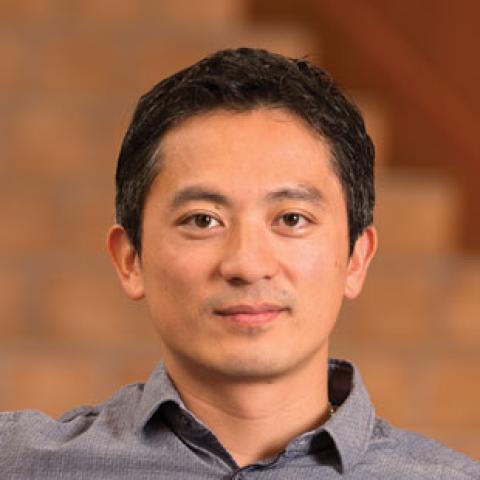
Takaki Komiyama
Professor of Neurobiology and Neurosciences, University of California, San Diego
Takaki Komiyama is a Professor of Neurobiology and Neurosciences at the University of California, San Diego. His research seeks to understand how neural circuits enable learning and adaptive behavior, with a particular focus on how experience modifies cortical circuits. His laboratory combines advanced optical imaging, electrophysiology, circuit manipulation, behavioral approaches, and computational analysis to study the neural mechanisms underlying motor learning, decision-making, and perceptual learning.
Dr. Komiyama received his B.A. from the University of Tokyo and Ph.D. from Stanford University, where he studied neural circuit development. He subsequently conducted postdoctoral research at the Janelia Research Campus, developing approaches to examine the activity and plasticity of cortical circuits during learning. He joined the faculty at UC San Diego in 2010.
His work has revealed principles by which neural activity and synaptic connectivity are reorganized through learning and how these processes are altered by aging and neurological disease.
Hosted by Joyce Woo and Jun Ding (Ding Lab)
Sign up for Speaker Meet-ups
Engagement with our seminar speakers extends beyond the lecture. On seminar days, invited speakers meet one-on-one with faculty members, have lunch with a small group of trainees, and enjoy dinner with a small group of faculty and the speaker's host.
If you’re a Stanford faculty member or trainee interested in participating in these Speaker Meet-up opportunities, click the button below to express your interest. Depending on availability, you may be invited to join the speaker for one of these enriching experiences.
Speaker Meet-ups Interest Form
About the Wu Tsai Neurosciences Seminar Series
The Wu Tsai Neurosciences Institute seminar series brings together the Stanford neuroscience community to discuss cutting-edge, cross-disciplinary brain research, from biochemistry to behavior and beyond.
Topics include new discoveries in fundamental neurobiology; advances in human and translational neuroscience; insights from computational and theoretical neuroscience; and the development of novel research technologies and neuro-engineering breakthroughs.
Unless otherwise noted, seminars are held Thursdays at 12:00 noon PT.