
Juan Gallego | More is different in neural populations
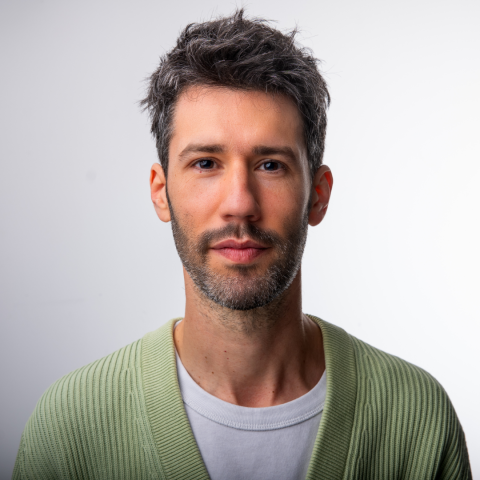
Dr. Juan Gallego from the Champalimaud Foundation returns for the 2026–2027 MBCT Seminar Series
Join our mailing list for MBCT Seminar announcements and updates about future events
Abstract
Behaviour arises from interactions among regions and nuclei across the brain, each composed of a large number of interacting cells whose behaviour depends on complex interactions at the molecular level, and so on. The concept of emergence —“more is different”— says that new properties can arise from interactions among constituent parts that do not themselves have these properties. This most certainly applies to interactions among many brain regions, neurons, or molecules. Thus, the question arises: what level should we focus on if we want to understand how the brain generates behaviour?
In this talk, I will propose that the level of neural populations is appropriate to link specific brain functions to behavioural output. First, I will discuss evidence that studying the emergent properties of interacting neural populations leads to qualitatively new descriptions of brain function that are elusive when aggregating the individualistic behaviour of constituent neurons. Then, I will summarize evidence that the properties of this collective neural behaviour are not mere mathematical abstractions, but real patterns grounded in the biological substrates of the brain. I will end by discussing challenges and opportunities to further our understanding of brain function using this framework.
Continue the conversation: All attendees are invited to digest the seminar with a complimentary dinner with the speaker in the Theory Center after the seminar.
Meet the Speaker
Juan Gallego, Principal Investigator, Champalimaud Foundation
Hosted by Yiqi Jiang (Schnitzer Lab & Linderman Lab)
Dr. Juan Gallego is a Principal Investigator at the Champalimaud Foundation, which he joined in October 2025. Prior to that, he was an Associate Professor at Imperial College London (since 2020), and held Postdoctoral Fellowships at the Spanish National Research Council (CSIC) and Northwestern University. He was awarded a PhD from CSIC and University Carlos III in 2013.
Dr. Gallego’s research focuses on understanding how animals including humans acquire, execute and adapt their movements. To this end, his lab combines behavioural experiments in mice and humans, large-scale neural recordings, closed-loop manipulations, data analysis techniques, and computational models. He is also interested in applying his lab’s findings to advance neurotechnologies to restore function to people with movement disorders. During his career, he has published around fourty journal articles on these topics. His research has been funded by the EU Commission, the UK Research Institutes, ARIA, and the ERC.