
Q&A: The brain in full
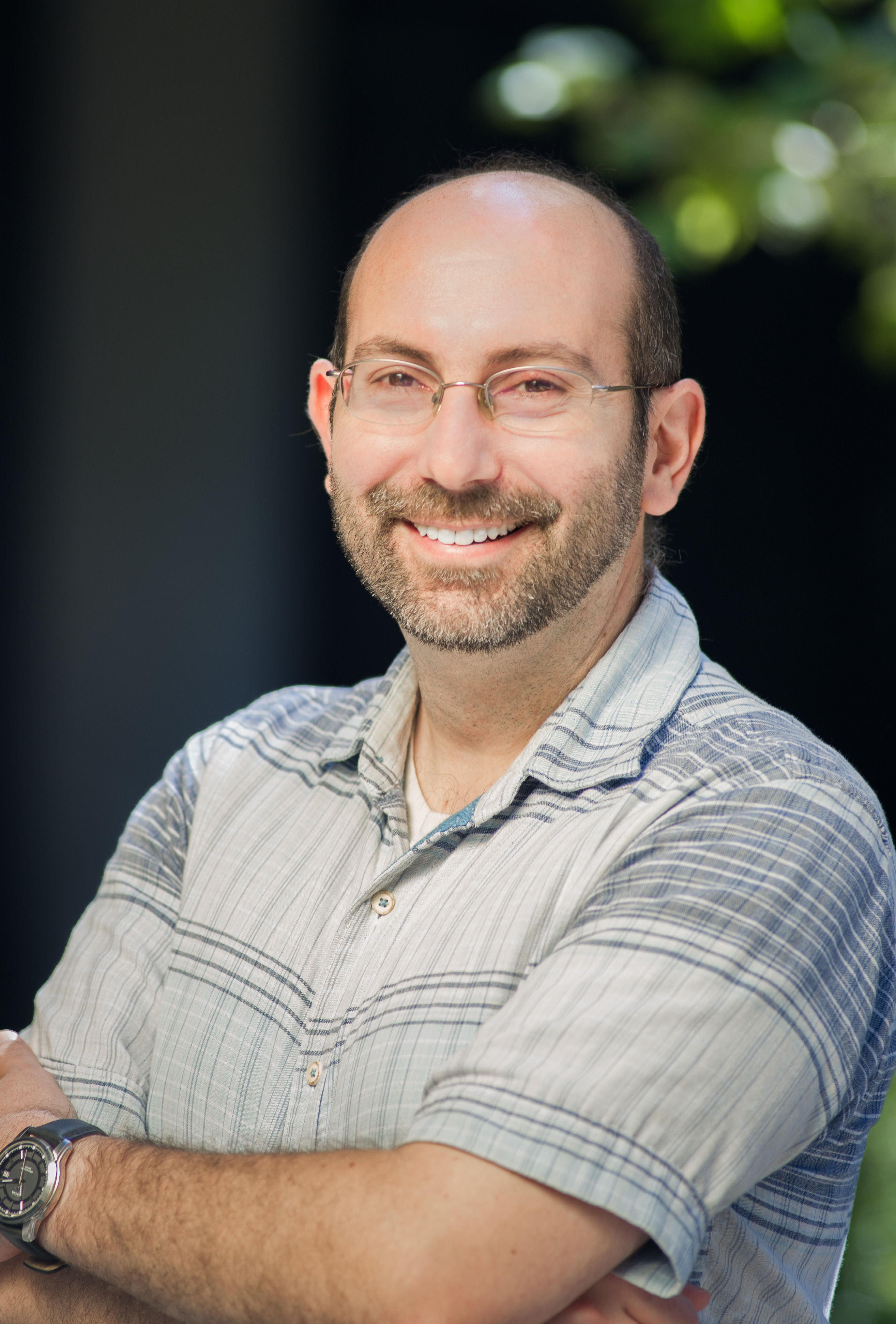
Paul Nuyujukian remembers the birthday present as a turning point in his life: a Radio Shack 130-in-1 electronics kit his father bought for his birthday in 3rd grade. The set was replete with resistors, capacitors, transistors – and a photo diode, a device that converts light into electricity. Nuyujukian wired that device up to a speaker, blocked and unblocked light with his hand, and listened in awe to the sound it made.
“That was almost a lightning bolt in my trajectory,” Nuyujukian said. “To me, that coupling of the physical world into the electrical world was mind-blowing. With my own hands, I could wire something together and influence the physical world in a way that gave me access to it.”
Today, Nuyujukian is a faculty scholar at the Wu Tsai Neurosciences Institute and an assistant professor of bioengineering and of neurosurgery at Stanford Engineering and Stanford Medicine, where he and his lab investigate the neural circuits underpinning movement – and how they might be harnessed to design brain-computer interfaces (BCIs) for people with neurological disorders such as stroke.
He is also one of the rare researchers who finds himself equally at home in a lab as he is in the world of applied mathematics or electrical engineering – and he is still chasing that feeling of understanding and accessing the hidden worlds around him.
We talked to Nuyujukian about how his childhood love of electronics and computers led him to think in terms of systems – how individual parts work together to make a whole – and how that philosophy shapes his approach to neuroscience today.
You were one of those kids who took stuff apart, weren’t you?
I really was. My dad was a mechanical engineer, and he would build remote-controlled racing cars, and he was working on a small plane. I loved going to the garage and opening up the thing. I would play with the remote controller, and then I'd flip it over and it had a bunch of capacitors. I remember one of the times, I snapped off one of the capacitors.
Oh no!
I was terrified that I had permanently broken this thing, because from previous experience I knew that as you mess with some of these circuits, pieces or elements of it will no longer work. It was this example of how complicated and how fragile these systems are, and that all of them come together to be this extremely messy, sophisticated piece of equipment.
How that system works was definitely beyond my third or fourth grade comprehension, but the appreciation for the complexity was there. I understood that it's not enough to just look at one piece and say, “I'm going to study this one piece in perpetuity and argue that this will help me explain the system.”
It sounds like you could have been a systems engineer – someone who thinks about how all the pieces fit together.
I feel like I actually am. Now people don't always know what that means, so I say, "Oh, I'm a neuroscientist or a systems neuroscientist or a neuroengineer." Those labels are more tangible, but if you want the heart of what I am, I'm a systems engineer.
The other thing is, when I think of kids taking apart electronics – famously, Richard Feynman did that – a lot of them end up in less biologically oriented fields. How did you get interested in studying the brain?
I wanted to major in physics, honestly, but at the same time I loved physiology. I loved biology. I would read every type of book I could get that would teach me about not just physics, but also about physiology and biology and the way the body worked. To me, that was just the most complicated, fascinating system that I could see. The fact that these things could go from sensing the physical world, just like my little photo diode did in my kit, to then acting on that information – I was obsessed.
Speaking of systems, you went to UCLA and majored in systems biology, which emphasizes how all the different parts of a living thing fit together, rather than looking at them separately. You took math, biochemistry, all sorts of things, and then you got exposed to bioengineering.
I took a seminar course and one of the speakers was Jack Judy in electrical engineering. He’s one of the pioneers of biomedical engineering and neuroengineering – designing devices to record or stimulate the brain, for example. He was sitting there showing us slides about the tiny things he was building and nano fabrication and the applications in biology and biological engineering and some neuro stuff. My jaw was on the floor. I was like, "This exists?" I lost my mind. I wrote to him and asked, “How do I learn more?”
I ended up paired with a grad student who was trying to build this neural interface into rodents. I ended up publishing two or three papers out of that experience.
That work on neural interfaces for rodents led to work here at Stanford with Krishna Shenoy and Jaimie Henderson, developing brain-machine interfaces (BMIs) for people with movement disorders. What was it that appealed to you about those devices?
The motor BMI space was this fascinating intersection where all of the things I knew and loved about systems and computers met very front and center with everything I loved about the brain and the nervous system and the translation from information to action. It was a beautiful intersection, and from there, you could see how that would then explode out into all the things that we now do.
Now that you have your own lab here, what’s important to you? What are the key things you’re working on?
My lab, the Brain Interfacing Lab, is really focused on a couple things. One, we want to understand how cortical dynamics – neurons firing and all that – leads to behavior. That’s foundational. How do you get from neurons firing to your arm reaching for something – to motor control, preparation, and learning? There are key basic science questions to unravel here.
We’re also working on clinical translation. We have a stroke model, for example, that we want to translate into clinical trials in people. We’ve discovered some potential neuromarkers for humans with recent strokes, and the first step is to validate those and then use them to guide the development of therapies that incorporate neurofeedback, through a BMI, that help with stroke recovery.
We’re also working on realtime seizure detection, localization, and prediction.
Tell me more about that. Your student Lisa Yamada had an exciting paper on that topic last year, didn’t she?
That was really fun. It’s this beautiful and deceptively simple idea. Right now epilepsy doctors detect seizures basically by hand – by looking at electroencephalograms, EEG recordings – and saying, “that’s a seizure, that’s not a seizure.” And that is only possible after the seizure has already happened and it is being reviewed hours or days later.
Well, we wanted to see if we could find a faster, more quantitative, more consistent way to detect seizures. And what Lisa found was that you can detect seizures using a piece of software that everyone has on their laptops – modified a little bit to suit our needs, but basically everybody has it.
On their laptops?
Yes.
Please continue.
So this is compression software, and you’ve used it but maybe you didn’t realize it. When you download software, it’s often a “.zip” file. It’s got all the information you need in it, but it’s zipped up so it’s smaller and faster to download. You can do the same thing with pictures or any other file or any other kind of data if you need to save some space. When you want to use those files again, you uncompress them and turn them back into an image or what have you.
But the important thing for us is that when you compress a file, complex files compress down much less than simple files. Take a raw image file of a blank white wall – the compressed file is going to be much smaller compared to an image of a wall with lots of random things hanging on it.
So what does that have to do epilepsy? We know that brain activity changes dramatically right before, during, and after a seizure. We thought maybe we could quantify those changes by measuring how complicated the brain activity is during each stage. And in order to quantify that complexity, we realized maybe we could use these file compression algorithms.
So basically you’re going to think of brain activity as a file on your laptop, and you’re going to measure how complicated it is – whether it’s more like the blank wall or the busy wall covered up with art and things – using this compression software?
That’s right. The more we could compress a slice of the data, the simpler it is.
What did you find out?
So Lisa compressed our EEG data and plotted the size of that compressed data over time. We could see that it went up and up – and then dropped. We asked, “is that the seizure?” And Lisa checked, and that spot where it went up and then dropped, that was a seizure.
What's happening is that just as the seizure is coming on, you have normal brain activity plus a growing seizure. The data is becoming more complicated and therefore less compressible. But once the seizure grows and spreads , the complexity of the information is actually below normal. Full-on seizure activity is actually much simpler than normal brain activity, and you can detect that in how much the data will compress.
So not only does data compression detect the seizure, it actually tracks its evolution as it's kindling and becoming brain-wide. You can see the information complexity growing, growing, growing, then peaking and dropping off.
And there it is, right? Systems engineering and interdisciplinary thinking becomes this fascinating application of quantitative methods focused into really unexpected medical applications.
That systems engineering idea – it seems like that motivates you to work on a pretty wide variety of projects. Actually I think people would be surprised by the range of things you’re working on.
We just had a paper come out on covert strokes led by Kenji Marshall, which are ten times more common than symptomatic strokes but are much less obvious, even though they can still do a lot of damage over time. We developed some new methods to study those in the lab, and we showed that we can detect them in neural activity even when there aren’t any behavioral symptoms.
And then we have another paper that’s been accepted, which was led by Muhammad Abdulla. This has to do with this subtle idea of representational drift. So an individual neuron in the brain might be linked to a particular behavior or a particular stimulus, and over a handful of hours that mapping – from neurons to behavior or perception — appears relatively consistent. But if you come back the next day, it’ll change a little bit, and the day after that it'll change a little more. So the mapping is not consistent over time. And this is happening for all the different neurons linked to this stimulus or this behavior.
And that presents a problem: How does the brain consistently do things, like move an arm in a consistent way time and time again, if there’s this drift, if the neurons actually representing that movement are changing over time? Muhammad looked at the data and has a simple and elegant explanation of how this may be happening. This is part of a collection of papers we’re working on where we’re trying to connect what’s happening with behavior all the way down to the neural circuit level and understand what these circuits are doing and what their activity represents.
As someone who’s ultimately interested in using BMIs to help people with stroke or epilepsy, what motivates you to study these more fundamental questions?
We have computational models that fit the data very well that can decode behavior very well. They’re extremely useful, but they’re not mechanistic, and we should pursue that. Partly, there’s the scientist in me that just wants to know how it works. And I also still believe that the more you understand the actual inner mechanisms, the inner circuitry, the inner physiology, the actual way the brain works, the better you will be able to treat disease. Many of the advances in medicine come from better understanding the underlying functions.
And it's part of why neuroscience is so exciting. Even just glimpses into the brain here and there can transform the way we treat neurological disease – not just paralysis or stroke but Parkinson’s, Alzheimer’s, epilepsy, dementia, and on and on.


