
Could computer vision help spot dementia early?
One of the things that’s so insidious about dementia is how slowly it can develop. Someone might seem fine for a long time – living independently, or in a senior center, managing their affairs, socializing. Then one day they get lost, fall victim to a scam, or take a bad tumble, and only then does anyone realize something is wrong. And even after a diagnosis, clinicians don’t have great tools to track how someone is doing over time.
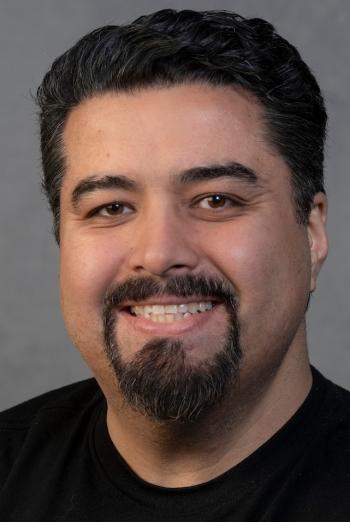
Stanford psychiatry professor Ehsan Adeli is trying to change that. Adeli runs the Stanford Translational AI Lab, where his team has been working on computer vision technologies that could help clinicians spot people at risk of Alzheimer’s or other neurodegenerative disorders by looking at changes in their movement and behavior.
Adeli recently launched a major NIH–funded center here at Stanford to advance this kind of approach – what he calls ambient intelligence, or AI systems that can help monitor our brain health by drawing on data from the cameras, sensors, and voice assistants that are now all around us. Complementing this “outside-in” approach to brain health, Adeli is also involved in the new Stanford Digital Brain Project, which aims to better understand brain disorders by modeling the brain’s inner workings.
Today on the show, he talks about this vision, how it could be extended to mental health disorders, the obvious privacy concerns of AI monitoring, and what it would take to actually implement some of these technologies.
SUBSCRIBE on Apple Podcasts, Spotify, Amazon Music and more.
Learn More
- Ehsan Adeli
- Stanford Translational AI Lab
- Stanford University Artificial Intelligence and Technology Collaboratory (SU-AITC) for Precision Health and Interventions in Aging and AD/ADRD
- New Stanford University center will use AI to tailor dementia treatments and aging interventions (Stanford Medicine, 2026)
- Stanford Digital Brain Project to measure and model the human brain (Wu Tsai Neurosciences Institute, 2026)
- Ambient Intelligence, Human Impact (Stanford HAI, 2025)
- Going beyond ‘how often do you feel blue?’ (Stanford Medicine Magazine, 2025)
- Stanford Psychiatry's Ehsan Adeli Awarded Grant Examining Neural Mechanisms of Gait Disturbances (Stanford Medicine, 2024)
- Data-driven discovery of movement-linked heterogeneity in neurodegenerative diseases (Nature Machine Intelligence, 2024)
- Training confounder-free deep learning models for medical applications (Nature Communications, 2020)
Episode credits
This episode was produced by Michael Osborne at 14th Street Studios, with sound design by Mark Bell. Social media strategy is by Julia Diaz, and additional editing by Nathan Collins. Our logo is by Aimee Garza. The show is hosted by Nicholas Weiler at Stanford's Wu Tsai Neurosciences Institute and supported in part by the Knight Initiative for Brain Resilience.
Share the show:
If you're enjoying our show, please take a moment to give us a review on your podcast app of choice and share this episode with your friends. That's how we grow as a show and bring the stories of the frontiers of neuroscience to a wider audience.
Get in touch:
We want to hear from YOUR neurons! Email us if you'd be willing to help out with some listener research, and we'll be in touch with some follow-up questions.
Transcript
Nicholas Weiler (00:10):
This is From Our Neurons to Yours, a podcast from the Wu Tsai Neurosciences Institute at Stanford University, bringing you to the frontiers of brain science. I'm your host, Nicholas Weiler.
(00:25):
One of the things that's so insidious about dementia is how slowly it can develop. Someone can seem fine for a long time living independently or in a senior center, managing their affairs, socializing, and it can take a real scare, like getting lost or falling victim to a scam or a bad fall before people realize there's something really wrong. And even once there is a diagnosis, clinicians don't always have great tools to track how someone is doing over time. Are they stable or are things getting worse? Are interventions working?
(01:00):
Today on the show, we're talking with Stanford psychiatry professor Ehsan Adeli. Ehsan runs the Stanford Translational AI Lab where his team has been working on computer vision technologies that could help clinicians spot people with Alzheimer's or other neurodegenerative disorders by looking at changes in their body language and behavior. Has their walking gait changed? Are they using more hand gestures? Do they seem agitated or have they maybe not moved from the TV for hours?
(01:26):
Ehsan has recently launched a major NIH-funded center here at Stanford to advance what he calls ambient intelligence, AI systems that can help monitor our brain health by drawing on data from the cameras, sensors, and voice assistants that are now all around us. Ehsan's vision for this ambient intelligence technology actually goes beyond dementia and cognitive decline. He believes the same technologies could be used to help identify neurological and mental health disorders more broadly, ALS, anxiety, or depression.
(01:57):
In our conversation, we talk about this vision and discuss the obvious privacy concerns that pervasive AI monitoring might raise and what it would take to actually implement some of these technologies in the clinic. At the beginning of our conversation, we started by talking about one of the experiments that kicked off this line of work in which Ehsan and his colleagues set up a series of small RGB color video cameras in a senior living center in Yuma, Arizona.
(02:22):
I asked him what the vision for this original experiment was, which has since been adopted in centers nationwide.
Ehsan Adeli (02:35):
So the basic idea is around the use of computer vision or machine vision that uses AI methods to see and interpret human behavior. The thing is that we humans naturally do this. We recognize gait difficulty, tremor, changes in facial expression, agitation, or withdrawal just by watching someone. Right?
(03:03):
So having this technology already built and developed in our lab, we used it to detect what we call neuropsychiatric symptoms or NPS. NPS are changes in behavior, mood or thinking such as apathy, irritability, depression, agitation or wandering and so on. And these can precede or accompany generally cognitive decline and they are often pretty much missed because they develop gradually happen outside the clinic and can carry also stigma.
(03:44):
So just to summarize, NPS consists of changes in behavior affect or thinking and these types of symptoms may proceed or co-occur with neurodegeneration, which is basically the same, another word for cognitive decline let's say and other diseases related to aging.
(04:08):
So through this monitoring and observing of behavior, what we've done for this started in Yuma was looking at behavior for extended periods of time to see if we can find any signals of changes and correlate those with cognitive measures that we had from the same groups or same population of older adults that we've been observing.
Nicholas Weiler (04:40):
What does this setup actually look like? So you've got a camera in this senior living center and you're using this to collect video recordings just of people going about their everyday lives?
Ehsan Adeli (04:53):
Exactly. So the main signal that we are interested in, as I mentioned, is behavior. And for monitoring that, we used cameras, RGB signals and cameras are set up in their daily living environments, living rooms mainly of these seniors individual apartments. And the data collected was all recorded on a SD card in that same camera. Nothing was live-streamed, and then the individuals did have control over the data themselves. And we used those recordings for turning those into behavioral signals.
Nicholas Weiler (05:40):
So when you talk about behavioral signals, I think, so you said that one of the big things you're interested in doing is understanding or helping to flag people who are at risk of developing neurodegenerative disorders, for example. And it seems like one of the most straightforward examples here might be Parkinson's disease, right? Parkinson's disease is a movement disorder. You could imagine identifying symptoms. What are some of the specific things that can get picked up by having this video footage of seniors going about their everyday lives?
Ehsan Adeli (06:16):
Yes, great question. So our AI methods first detect more objective behaviors, as you said, like walking, sitting, eating, interacting with objects, social interactions in home environments. And before getting into this, maybe I should say, as you said, we've been first looking into Parkinson's patients because it is a movement disorder and through these videos we've been able to detect tremor, gait difficulties, posture stability, and even some psychiatric symptoms and psychiatric related measures. But after building those Parkinson's disease marker detection systems, we stepped into detecting more nuanced patterns of behavior and behavioral changes.
(07:09):
So the patterns of walking, sitting, eating, interacting, and social interactions in home environments basically gave us the power to observe these patterns over time and how they actually relate to measures that in the study we are calling them neuropsychiatric symptoms, as I mentioned earlier, even though they're not direct movement linked symptoms like tremor or postural instability, but those patterns, repeated patterns, they exhibit some psychiatric symptoms.
(07:51):
And in our study, we've always shown that basically video and RGB signals are especially powerful because it captures the context. Basically increased movement could mean exercise pacing, searching for something or agitation. So those are all clinically relevant and different that we do capture.
Nicholas Weiler (08:15):
So that's interesting. So the things that immediately come to mind, as I said, would be tremor, slowness of walking, things like that that would be associated classically with Parkinson's disease. But what you're saying is you can also start seeing things that might be symptoms of agitation, like pacing or the speed with which people are moving, or maybe someone's not moving very much and that might start getting at something broader than just these specific movement disorders. So is that where this comes into things like looking at symptoms in Alzheimer's disease, looking at other symptoms of cognitive decline?
Ehsan Adeli (08:51):
Yes, absolutely. So some of these measurements, some of these types of symptoms are known to be early indicators of cognitive decline, early Alzheimer's disease, mild cognitive impairment. There's a lot of studies around this topic. We haven't had much information. We didn't have a window in people's lives to be able to really study these types of symptoms, and now AI and these types of computer vision, machine vision algorithms are giving us that possibility.
Nicholas Weiler (09:26):
What can the AI approach detect? What is it capturing that, for example, human caretakers at these facilities might not be able to capture effectively?
Ehsan Adeli (09:38):
Right. Maybe one important thing is that, and I start with that, is we are not framing any form of diagnostic accuracy here for any of these cognitive decline diseases. And maybe specifically about this study itself was basically the first phase was establishing the feasibility where we studied 21 older adults over 13,000 hours of videos, and all of those were actually highly engaged with us and with the study.
(10:13):
And to answer your question, through analyzing this data, we've been able to build and validate behavioral AI models where we could actually spot some of these symptoms that are often visible in individuals' daily lives. But people often, due to a couple of different reasons, often either do not report those types of symptoms because people living with individuals often do not spot changes, very gradual changes in symptoms.
Nicholas Weiler (10:53):
Yeah.
Ehsan Adeli (10:53):
And that goes very much unreported because these symptoms emerge over multiple years, years of life, the same way that, for example, if you don't see somebody for five, 10 years and suddenly you say this person got old, very old, but those who are living with them over that period of time, they don't very much recognize that, realize that. And it's the same story here.
(11:20):
Other than that, these types of symptoms are also a little bit stigmatized because they are associated with aging and they often in most cases go unreported even by the individuals themselves because even also family members, because they do associate this with aging, like granddad is getting older and becoming more angry, much angrier than before. So there are multiple reasons for this, but ultimately these AI systems can not only detect those, also monitor their changes over time. It's not about the symptoms themselves, like one episode of time that is important, it's the changes over time that we care about.
(12:11):
So basically just to summarize, what this adds to caregivers and neurologists is not just better judgment or better human judgment, it's just the continuous observation. A physician often sees someone for say 20, 30 minutes, even nurses in senior living facilities, few minutes a day or physicians few minutes every few month or even once a year in the annual visits. But this technology can characterize subtle changes occurring over weeks or month in real life.
Nicholas Weiler (12:50):
So you started this with these 21 residents in Yuma, and you've expanded this nationwide to many different facilities, many more patients. Can you give us a capsule summary of some of the takeaways from this experiment so far? What are some of the things that give you optimism that this approach is going to be effective at helping flag people who might need more evaluation?
Ehsan Adeli (13:18):
Yes, that's a great question. So with the new AR algorithms, and we validated those on these over 13,000 hours of videos in this pilot study, we've been able to spot some behavioral changes, nocturnal activities, and many other types of apathy and many other types of movement and cognitive symptoms that we've also seen they are all unreported in the questionnaires that we had from the same population. We have a number of clinical questionnaires that are often used in annual visits, but then annual clinic visits, when we look at the individual questions, answers to those questions, we do see that some of the symptoms that are visible in videos are not reported.
(14:11):
So this is actually a big promise of these AI models and algorithms that can turn some of these more subjective measures, subjective ways of gathering this information into more objective settings. The promise is that it's actually able to detect behavior and behavioral changes, behavioral say impairments, and really the AI algorithms together with some statistical analysis can relate those to some of the cognitive and clinical measures that we have from these individuals.
Nicholas Weiler (14:54):
It strikes me that one of the challenges that neuroscience has always had is getting a look at how do we get a better look at what's going on inside there? This has come up a lot on the show. How do we see what's going on in the brain? How do we understand these early, detect these disorders early, figure out what's going wrong?
(15:15):
And one of the things I find so interesting about the approach that you're taking and that you're developing is that you're sort of flipping the script and saying, "Well, maybe there's more to observe from the outside so that we don't necessarily have to see exactly what's going on inside the brain all the time." There's useful information.
(15:34):
And I think what's interesting is we've been talking about this as sort of analyzing video footage, but the concept goes beyond that. You're thinking about lots of different sensors, and you've actually built this whole lab here at Stanford in the Psychiatry Department, this living lab or living room lab maybe to test this approach, which I think you've been calling ambient intelligence.
(15:59):
So I wonder if you could tell us a little bit about that lab you've set up, what you have there, what are some of the sensors you're testing out, and how it gets at this idea of ambient intelligence and how it could be used to advance this approach with seniors to understand what's going wrong in the brain as we get older?
Ehsan Adeli (16:19):
Yes, absolutely. Yeah. So yes, my lab builds what do you call a living lab? It's basically a living room, ordinary living room that we've built in the Department of Psychiatry here at Stanford, but it includes an experimental environment with more than say 20 different types of contactless sensors we are examining in a set of different type of projects that we are exploring right now. Generally, the major challenge with these types of ideas, projects that we want to measure behavior is that we don't have years of synchronizing sensory data from thousands of homes to build these AI algorithms.
Nicholas Weiler (17:09):
AIs need data, right? They're all about the training.
Ehsan Adeli (17:11):
Yes, AI needs data, exactly. So we've created this area which we call it living lab, and actually we are collaborating with a number of other centers and groups across Stanford and also beyond and created similar type of setup in other areas of campus, in other parts of campus as well. And this lets us recreate everyday activities, simulate the actions, build data sets, build training platforms, frameworks for models, and evaluate those and understand how people generally interact with their environments and eventually how those interactions change with aging and cognitive decline.
(18:03):
I should say that we deliberately made this multimodal. I talked about video and RGB signals and cameras and so on, but we are studying audios, audio variable signals, say mattress sensors for sleep, vibration sensors on the floors so we can capture gait and movement difficulties as well, other environmental sensors, motion, ambient temperature and so on. And we also include some several user interfaces to be actually able to interact with the individual, like smart speakers, smart screens, and so on.
(18:52):
So that's basically what really ambient intelligence means to me, intelligence embedded into the environment that can understand what is happening without constantly requiring the person to actively interact with the device, or even if it's just even variable, you don't have to keep that charged and have it on all the time. So constant review of everyday activities.
Nicholas Weiler (19:20):
Yeah, and we increasingly live in a world of ambient intelligence where there are all these devices around us. There are many things that are recordings and cameras and our AI assistants and so on. So it's interesting to think how could that ambient intelligence be used to help monitor our health and things?
(19:41):
And it seems like that's an idea that's been out there. And what I'm hearing from you in talking about these sort of living laboratories is how can we make that more consistent? How can we get more data in a sort of controlled, consistent way across different institutions and lots of different research participants to say, what exactly can we learn? What is the most effective way to use this to help people?
(20:04):
This all makes a lot of sense in the context of aging and neurodegenerative disorders that we've been talking about. You could imagine these sensors and these technologies being incorporated into senior living facilities or hospitals or even just people's homes where maybe a family is concerned about someone as they age or the person that wants to make sure that if something is going wrong, they know about it as soon as possible. But you're also interested in broadening this to neuropsychiatric mental health contexts more broadly.
(21:04):
And that seems like that poses some more complex challenges. What kinds of behavioral symptoms can you detect? What are some of the issues around whether someone would have these sensors attuned to their behavior if they're not in a senior living facility? Can you talk a little bit about how you're thinking about this? What are the differences in how you have to think about this if you're thinking about mental health more broadly? And then maybe we can get into some of the specifics about how you'd set this up.
Ehsan Adeli (21:38):
Yeah, exactly. But one of the things that maybe I should mention this before getting more broadly into mental health itself is the fact that these types of systems are trying to somehow give us a window into the brain through body language. And I actually love this phrase because it is and how it is actually characterized because we use body language every day and we've all experienced this as someone may tell you just that I'm fine, but their posture, facial expression, movement, eye contact or level of engagement may tell you something completely different.
(22:28):
So behavior is an external manifestation of the internal state, internal state of the mind. And back to your question, this is very much beyond dementia. So gait and movement, as we talked about, it can reveal Parkinsonian changes. Sleep and activity can basically reflect neurological diseases and changes in expressiveness, social engagement or daily routines can tell us something about depression and other types of psychiatric conditions.
(23:08):
So the key is turning that language of the body into something measurable. And we call these measurements digital biomarkers. It's something that we are studying. We've recently published a paper on this in nature reviews bioengineering where we called these types of detections, digital biomarkers, which are basically objective quantifiable measures of health or disease that are captured through digital technologies. We talked about this.
(23:43):
So the idea is that the body has always been giving us the signal, and the AI here is giving us a way, a new way to measure them continuously and objectively. And we take the language of body, turn it into something measurable, longitudinal, clinically meaningful. And with respect to psychiatry itself and neuropsychiatric symptoms and neuropsychiatric disorders, it's even much harder in many ways it's multidimensional because symptoms are extremely heterogeneous. Even among people with the same type of diagnosis, many important symptoms simply do not appear during a short clinic visit or even extended periods of time of visiting say in a mental health clinic.
(24:38):
So depression, for example, might reveal itself over weeks through changes in the sleep, social interaction, activity, speech, motivation, and many other things. This means that we need longitudinal multimodal signals, and one especially powerful modality in psychiatry is also language.
(25:02):
So I want to stress that the need for the multimodal models looking at behavior and body language from many different aspects and taking different lenses, using different lenses. So I mentioned language because language itself is an incredibly rich cognitive process. It reflects how we think, organize ideas, describe emotion and interact socially. And actually there is a reason that there are decades of research and work in psychiatric assessment and psychotherapy, which actually happens all through conversation.
(25:45):
So one of the major challenges with psychiatry is all of this, just to summarize, the heterogeneity of symptoms. And on the other hand, in order to capture all of these different types of symptoms, we need highly multimodal data analysis. And that's what we've been doing in my lab. We did focus a little bit on language itself. We built something that we called it a TherapyGym. It's a TherapyGym, but it stands for [inaudible 00:26:18] if you're interested, where instead of asking whether an AI chatbot simply sounds empathetic or can provide wellbeing feedback, we actually evaluated and trained chatbots to build clinically meaningful support for cognitive behavioral therapy through several measures of clinical fidelity and safety.
(26:48):
But I also want to mention that language alone is actually not enough, and again, the opportunity to combine language with other behavior, signal behavior, physiology, movements and expression and so on is what we are exploring right now. The future is multimodal.
Nicholas Weiler (27:08):
Right. Bringing all of these different kinds of measurements together, what can we learn? And I want to push a little bit more on how you imagine this actually being implemented in the real world eventually. You're doing a lot of the research level now, understanding what can we learn from the combination of video, other sensors, language, posture, body language. I love that idea of body language because you're right. We all can read a lot into other people's mental states through their body language and their language language.
(27:41):
But I can imagine that listeners might have some questions about this. There's been this growing backlash against this kind of ambient intelligence approach, not as applied to health necessarily, but people have been raising concerns for years now about all the monitoring that happens of our speech and digital personas online. People are very upset about these Flock cameras that police departments are installing in cities for crime and traffic violations.
(28:12):
And this is obviously a very different kind of context. We're talking about how do we keep people healthy? How do we improve our ability to treat mental health? But I do see there being some potential privacy concerns and issues, particularly in something like mental health where you're not necessarily talking about an older person in a senior living center where you know you need to monitor them for mental health and they're agreeing to this.
(28:35):
So there's a lot of issues I just raised and I'd just love to hear how you think about these privacy concerns and how this could be implemented in a way that would be valuable for people without crossing some of these lines that I think people are worried about.
Ehsan Adeli (28:50):
Yeah, this is important. This is absolutely critical, and that's what we spend a lot of time in our lab doing research, building the technology that is actually getting us where you are pointing.
(29:04):
I don't think the future should be one where video from inside someone's home is continuously uploaded to the cloud. My view is that ultimately the raw data should not leave, does not need to leave the person's home at all. So that's where I think one area of why research comes in, AI at the edge. So that becomes very important.
(29:33):
Edge AI simply means running the AI models locally on the camera or on a small AI enabled device inside people's homes. And those devices will need to have AI chips inside them tiny without the need for transferring any data outside that environment, that home environment. The same way that we have, for example, processors inside a blood pressure monitor to extract data and give us only the measurements, the signal at the end.
(30:11):
Such a system will analyze the video locally and send out only the derived information that is actually important. For example, a change in activity, sleep, gait, or behavior. And in fact, that's the direction laid out in our NPS project, what I explained earlier, and ultimately the raw video can be processed on a device.
(30:41):
So I do believe that the privacy has to be designed in the system from the beginning, user control, the ability to turn sensors off, careful camera placement, encryption, no live-streaming, and many other things. This is actually a topic of a methods paper that we are putting out that's right now under review, implementing these types of technologies for clinical applications.
Nicholas Weiler (31:06):
I love what you're saying about these needs to be local, this can be local on your own camera and so on. And I could imagine a few ways that that might work. Maybe you just have your digital assistant or your AI assistant, which everyone talks about having in the future, and it's just like, "Hey, are you okay? I've noticed you've been on the couch for a few days. Do you need anything? You want to talk about it?" Or there could be other ways.
(31:31):
I'm interested to know how you see this actually getting applied in the real world, given these privacy protections and things you've been talking about and that you're clearly thinking carefully about. So what's your vision for the world that this brings us into? In a world where we've got all these sensors and AIs and things, how does this build this ambient intelligence world that you're envisioning?
Ehsan Adeli (31:55):
Great. My vision actually is just very simple. I want to build what I call a vital science monitor for human behavior. For physical health, we've routinely measured heart rate, blood pressure, temperature, and oxygen saturation and everything in home environments. But for behavioral and mental health, we still rely on occasional conversations and questioners.
(32:28):
For example, I have the best way of measuring some of the physical health aspects at home, but whenever I see a therapist or I talk to my psychiatrist, the best question that I'm often getting is, "How have you been feeling lately?" And that's very subjective.
(32:48):
So these types of technologies, building these vital science monitor of human behavior is something that ambient intelligence can provide. It can provide contactless, continuous monitor, learning what is normal for an individual and identifying meaningful changes over time. So my goal is not for AI to diagnose someone on its own, but it is to give clinicians a longitudinal view they never had before and basically move mental healthcare from episodic and reactive to continuous objective and proactive.
Nicholas Weiler (33:36):
That's a beautiful vision, Ehsan. I appreciate that. So the last question I want to ask you is about where this goes from here. What are the next steps in building towards this vision? And I'm hoping maybe you can talk about a couple of different efforts that you're involved in, bringing AI to the frontiers of mental health.
(33:57):
So one is you're in the process of launching this new multi-center collaborative initiative that's supported by the NIH to advance the very kind of work we've been talking about, AI and neurodegeneration and mental health care. And you're also a member of this new Stanford Digital Brain Project. We just had a conversation with Dan Yamins on the show telling us all about this. But basically I think it's interesting in contrast because we've been talking about measuring what we can measure from the outside to gain insights about mental health or neurodegeneration.
(34:33):
The Digital Brain Project is taking what you might call a more inside out approach where they're going to be collecting deep rich data about what's going on inside the brain to build a model of how our brain networks are interacting, partly so that we can better target how to fix those networks in people with brain diseases. So these are these two very distinctive approaches, at least in my mind, outside in and inside out. Can you tell me how do you see these initiatives you're involved in to being complimentary in working towards this vision of ambient intelligence that you just laid out for us?
Ehsan Adeli (35:12):
Yes, thank you. This is great. And this is actually where I think things become really exciting for me. As you said, we recently received NIH funding for what we named Stanford University Artificial Intelligence and Technology Center or SUAITC, which is an NIA funded initiative, which I lead with several colleagues here at Stanford.
(35:42):
The big idea is that detection is not enough. So we want to move from say, can I detect that somebody is declining in their cognitive health to can AI, can some of these new technologies help us define and determine the right intervention for the right person at the right time?
(36:11):
So this center is designed as a national hub, as you mentioned, combining AI, scalable digital biomarkers, which I talked a little bit about earlier, closed loop human machine interfaces and multimodal data and models together with intervention sciences, AI safety and translation into real clinical care to build intervention, brain health, mental health interventions for improving people's quality of lives, especially at the later stages of the life.
(36:53):
And as you also mentioned, at the same time, I'm also involved with this other big initiative within the Wu Tsai Neuroscience Institute at Stanford Digital Brain Project where with several colleagues, as you mentioned, Dr. Yamins. We are building what we call a digital brain, human brain. And my efforts are mostly on the computational side where we are building larger scale multimodal brain foundation models and also data and training pipelines here behind them all together within this group initiative by trying to integrate imaging, neural signals, cognition, behavior, and lots of clinical information.
(37:50):
I'd be happy to talk maybe about this project sometime in the future if there is any opportunity, but I'd like to think of these two, as you mentioned, two complementary directions. So basically the digital brain, as you said, is an inside out view, which means understanding how the brain gives rise to function and behavior. And our ambient intelligence and all of these digital biomarker type of work is the outside in counterpart, which starts with behavior in the real world and asks what it tells about the brain.
(38:33):
So if we can connect these two, somewhere in the middle, we get something much more powerful, a model that understands both what is happening inside the brain and how it manifests in someone's everyday life.
Nicholas Weiler (38:48):
And then presumably this then gives you the ability to really under... I mean, one of the things you brought up, and this has been a theme on the show over the last few months, is this idea of personalization and precision targeting so that we're not treating everyone who says that they're feeling sad or doesn't have the ability to get up off the couch the same way as if there's only one kind of depression or doesn't treat everyone who has some biomarker as the same type of Alzheimer's disease. There are going to be lots of different ways of treating different people and we want to be treating people as individuals and having these models where we can make predictions and say, "Okay, I think for you, the thing that is going to be most helpful is this."
Ehsan Adeli (39:37):
Absolutely. You're spot on. What I'm personally interested in and my research group is interested in is this aspect of personalization because when we have a digital model of the brain and we can understand behavior at the same time, these two can actually help us identify baselines of the individuals, what type of interventions this person requires to improve their health with respect to any form of brain health, brain disorder, mental health or other types of neurological disorders. But you exactly mentioned that very well, the personalization aspect is there are these types of monitoring, constant, continuous window into people's everyday lives together with a digital model of the brain, their brains could actually bring.
Nicholas Weiler (40:37):
Wonderful. Well, Ehsan, that's all the time we have today, but thank you so much for coming on From Our Neurons to Yours. This has been fascinating.
Ehsan Adeli (40:44):
Thank you very much. It was a great conversation.
Nicholas Weiler (40:47):
Thanks again so much to our guest, Ehsan Adeli. Ehsan is an assistant professor of psychiatry and behavioral sciences, director of the Stanford Translational AI Lab in Medicine and Mental Health, and co-director of the Stanford University AI and Technology Collaboratory and the Stanford Initiative on AI for Mental Health. To read more about his work, check out the links in the show notes.
(41:09):
And if you enjoyed the episode, please be sure to subscribe for more conversations from the frontiers of brain science. We also love hearing from you. If you have thoughts about the show or questions about the brain you'd like to hear us discuss in a future episode, send us an email at neuronspodcast@stanford.edu, or leave us a comment on your favorite podcast platform. While you're at it, please give us a rating and share the show with your friends. Might seem like a small thing, but it is tremendously valuable for us to be able to bring more listeners to the frontiers of neuroscience.
(41:42):
Coming up on From Our Neurons to Yours.
Speaker 3 (41:47):
A famous scientist in 1952 proposed that the entire brain emerged from a single type for gender cell in development called the neural epiderm. Actually, the huge surprise is when we looked at that cell, we actually found that there wasn't one kind of those cells, but two that coexisted at the same time. And that's kind of how the mystery began.
Nicholas Weiler (42:10):
From Our Neurons to Yours is produced by Michael Osborne at 14th Street Studios with sound design by Mark Bell. Our social media strategy is by Julia Diaz. Additional editing by Nathan Collins. Our logo was designed by Aimee Garza. I'm Nicholas Weiler. Until next time.

