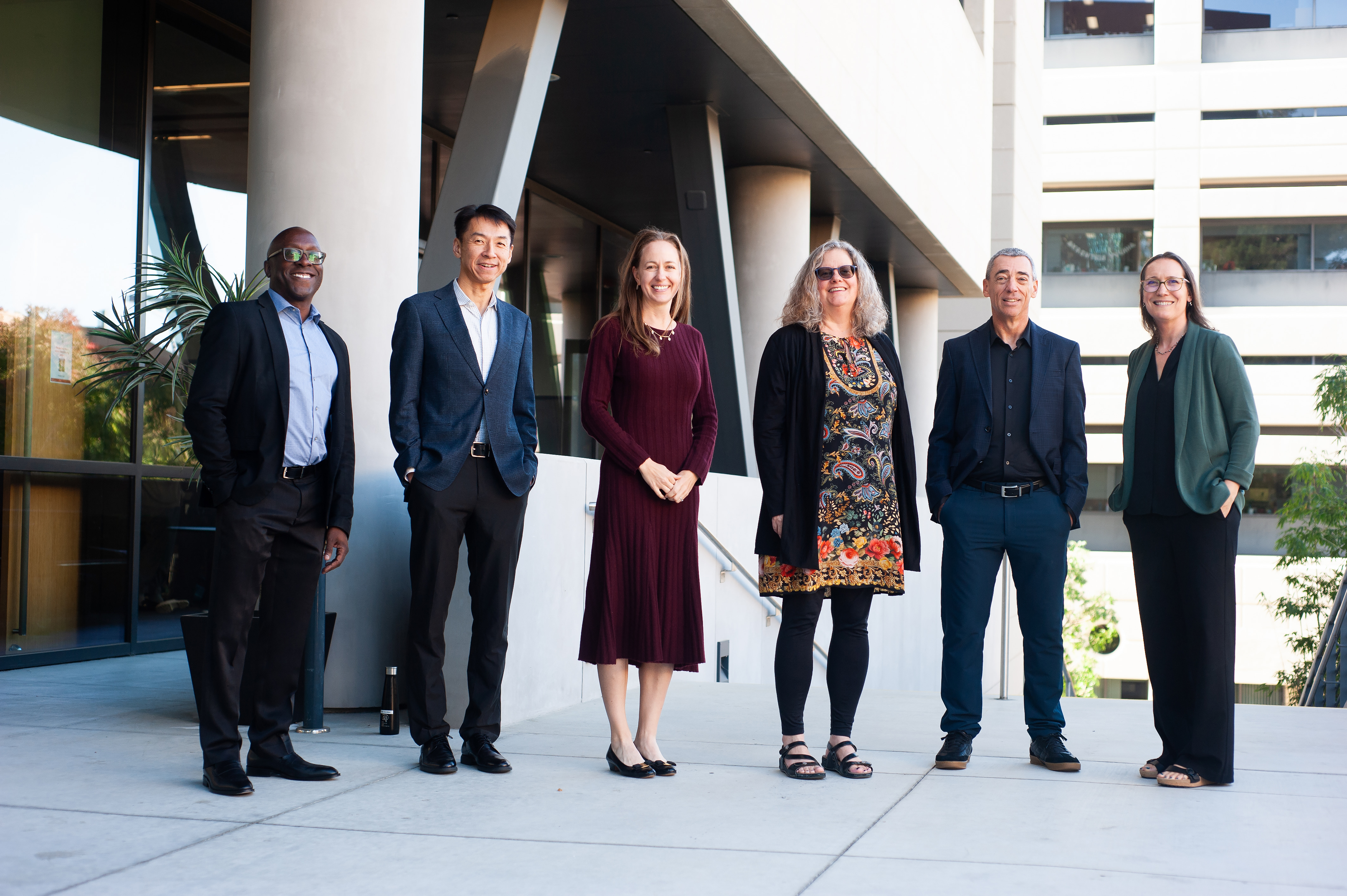
Happy New Year from Vincent V.C. Woo Director Kang Shen
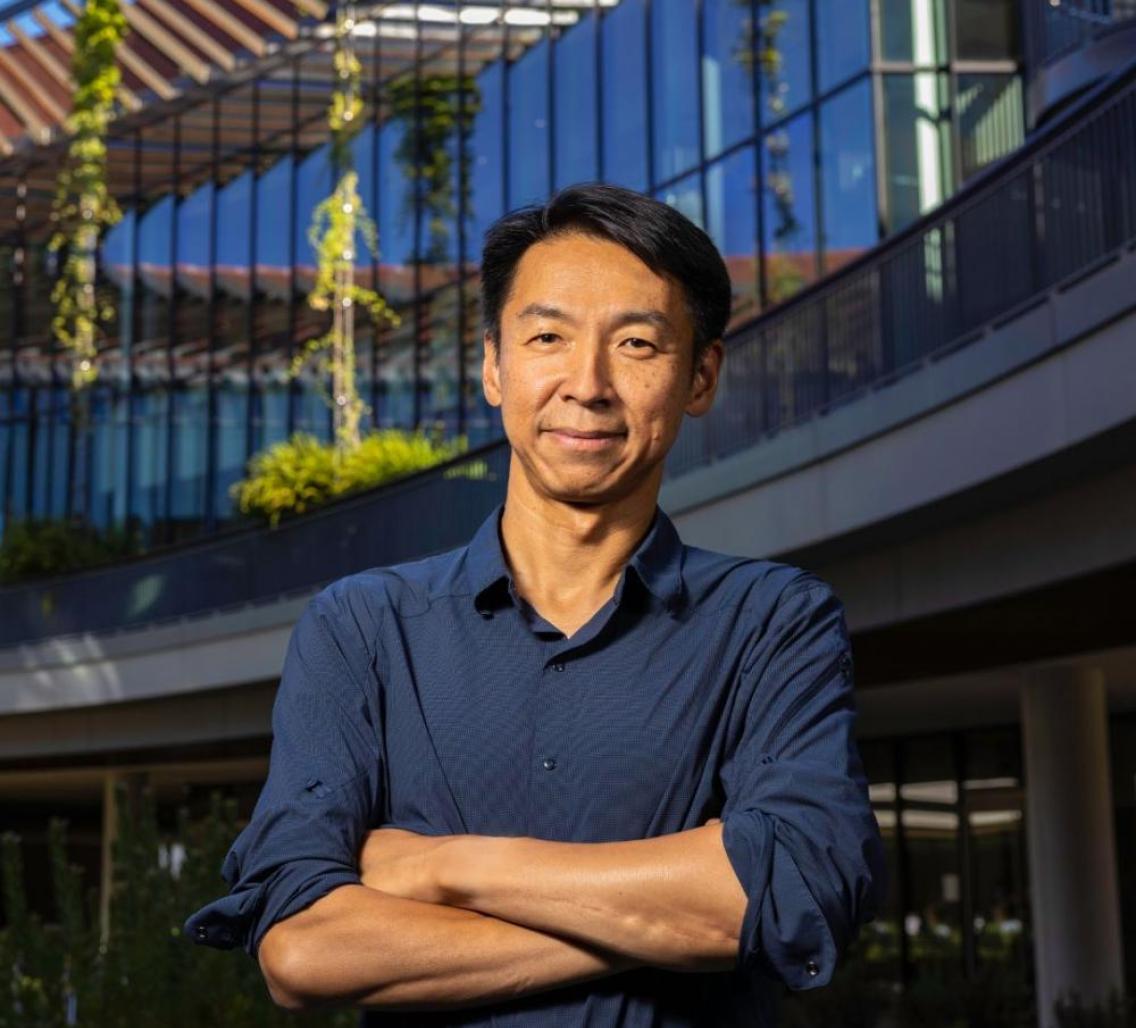
Dear Neuroscience Community,
Welcome to 2026!
As I reflect on the past year and look forward to what lies ahead for our community, I find myself in tension between two fundamental feelings.
On the one hand, 2025 was a difficult year for many of us. The upheaval in our national politics and the uncertainty we’ve all faced about the future of science in this country has been dismaying, to say the least. And these challenges remain.
At the same time, I am fundamentally optimistic about the year to come. This community has already demonstrated its ability to rally in the face of adversity; to support one another as colleagues and collaborators; and to continue to deepen our understanding of the brain and the applications of our knowledge to human health and well-being, even when the winds are against us.
I’m confident that whatever 2026 brings in the wider world, our community will continue to advance this fundamental mission.
To highlight just a few of the many bright spots of the year gone by:
As an institute, we supported a dozen new and ongoing research partnerships with seed grants and Neuroscience:Translate awards from Wu Tsai Neuro and Catalyst Momentum Awards from the Knight Initiative for Brain Resilience. We welcomed 31 institute-supported postdocs, graduate students, and undergraduate researchers to our community, trainees who are vital to the future of our field.
Our scientific community produced a flood of new insights, technologies, and applications that will reverberate through the field and reap benefits for society at large. This includes the critical work of the Knight Initiative, which for the past three years has been advancing new ideas about brain aging, resilience and treatments for neurodegenerative disease.
Many of these discoveries were covered on our institute podcast, From Our Neurons to Yours, which received multiple awards this year for its curiosity-driven conversations at the frontiers of neuroscience. Sharing these conversations with the broader public is a part of our mission that feels particularly vital these days.
In October, we gathered as a community for a dazzling annual symposium on The Gut–Brain Axis and Other Brain–Body Connections, where experts from around the world shared a flood of surprising new insights from this frontier of our field. I think we all learned something new about how the interplay between our brains and bodies influences our cognition, health, and behavior. My thanks to Wu Tsai Neuro Faculty Scholars Julia Kaltschmidt and Todd Coleman for organizing such an electrifying and thought-provoking event.
This fall we also launched Center for Neural Data Science, a collaborative hub created in partnership with Stanford Data Science and led by Wu Tsai Neuro Faculty Scholars Laura Gwilliams and Scott Linderman. The new center complements our longstanding Neurosciences Theory Center; our Data Best Practices program overseen by Faculty Scholar Paul Nuyujukian and institute Neural Data Architect Bryce Grier; and our ongoing partnership with the Stanford Institute for Human-Centered Artificial Intelligence. The convergence of neuroscience, AI, and data science holds tremendous promise, and I'm excited to see where these collaborations lead us in 2026 and beyond.
This winter, we began installation of our new, cutting edge MEG system (a Fieldline optically pumped magnetometer, for the aficionados) in our Koret Human Neurosciences Laboratory. This highly specialized system will complement Stanford's existing excellence in fMRI and EEG and open new possibilities for recording brain activity in human subjects. This is exactly the kind of capability our Neurosciences Community Laboratories are designed to provide as vital collaborative hubs and cutting-edge tools that accelerate discovery across our community.
Finally, we have selected five transformative research projects for the third round of our flagship Big Ideas in Neuroscience awards. I couldn’t be more excited for the team-based research projects being launched by these awards, which beautifully reflect both our field's evolution and our institute's mission: advancing fundamental science, creating innovative technologies, and producing insights with direct relevance to human health and wellbeing. With faculty from ten departments across Humanities and Sciences, Medicine, and Engineering, these teams exemplify the interdisciplinary breadth that defines Wu Tsai Neuro. I can’t wait to see what they will accomplish.
Looking back on all we’ve accomplished together is a powerful reminder of why the Wu Tsai Neurosciences Institute exists: Our mission is not only to advance our understanding of the mind and brain, but to do so by bringing together a broad community across disciplines and schools, fostering the connections and collaborations that can sustain us through challenging times.
As we enter the new year, I encourage you to continue to engage with our vibrant community through our regular seminars and many special events.
In particular, I hope you'll join us in May for our biannual Institute Retreat, which will bring our community of faculty, postdocs, and trainees together to share work, explore emerging themes, and spark new collaborations. Please expect an official invitation very soon.
Please also save the date for our next institute symposium on October 15th, which is being organized by institute affiliates Kalanit Grill-Spector and Ryann Fame. The event will focus on a subject near and dear to my heart: brain development. From tracing the molecular mechanisms of neural circuit assembly in animal models to the establishment of functional connectivity in the human brain during early life, understanding how this most complex of organs is built is essential for shaping our knowledge of its mature functions and for future treatments of neurodevelopmental conditions. I hope you'll join us for what promises to be a fascinating exploration of this critical area.
In times of uncertainty and change, these opportunities to connect—to share ideas, support one another's work, and reaffirm our shared mission—matter more than ever, and our commitment to rigorous inquiry, collaborative discovery, and translating knowledge into human benefit becomes even more essential.
I hope you find the same energy and sense of purpose in our shared mission that I do. Whatever we face, I am confident that this year will be a positive and transformative one for neuroscience at Stanford.
Thank you for being part of this remarkable community.
Wishing you all a very happy and productive new year,
Kang Shen
Vincent V.C. Woo Director,
Wu Tsai Neurosciences Institute