

Announcing the 2026 Neurosciences Postdoctoral Scholars
How do we advance our understanding of the mind and brain in aging, disease, and daily experience? How does sleep shape learning? Why is the brain resilient in some conditions but not others?
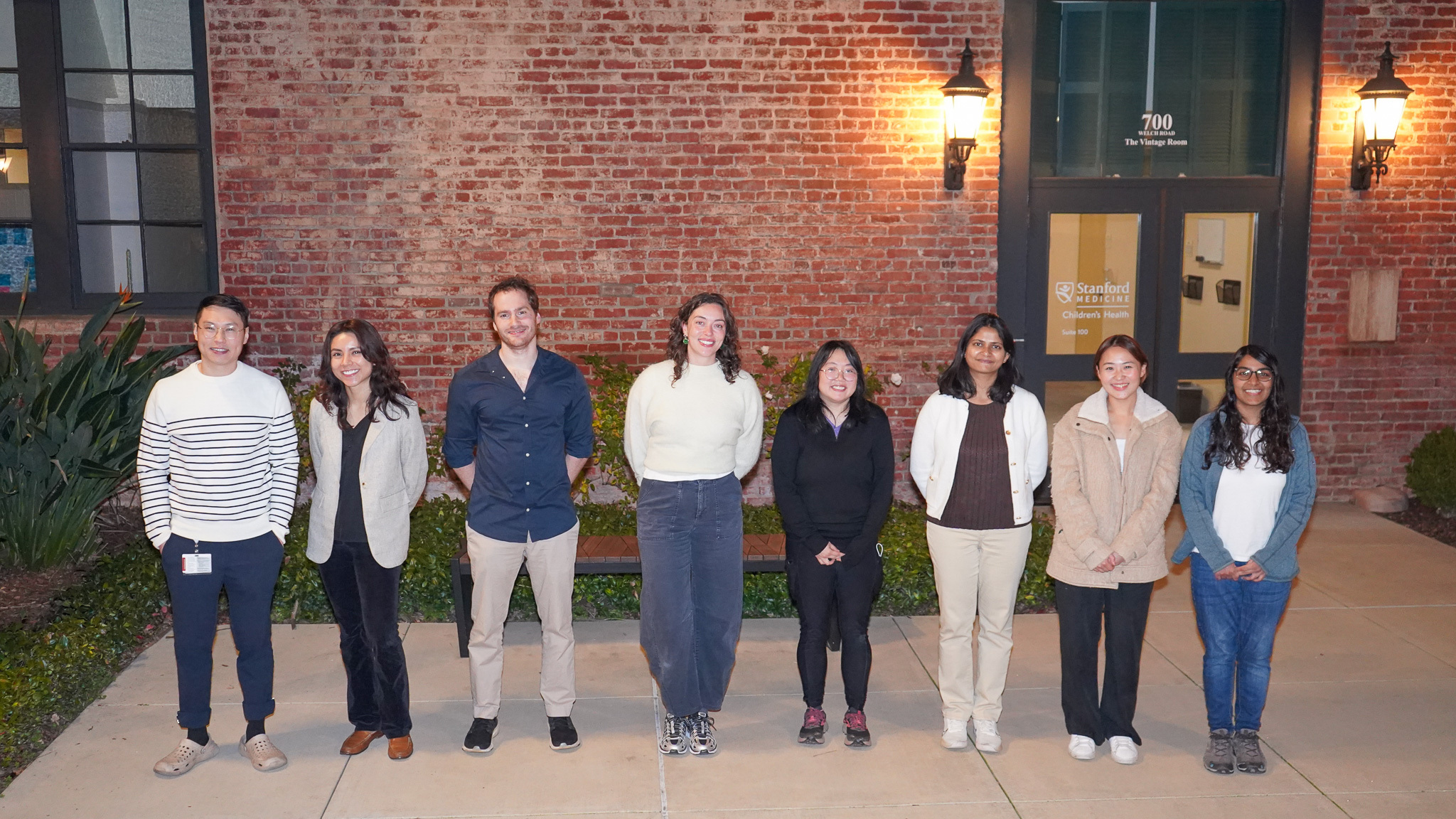
These are the kind of questions that will be tackled by the Wu Tsai Neurosciences Institute’s newest cohort of Neurosciences Postdoctoral Scholars.
These ten young scientists bring to bear wide-ranging expertise—spanning biology, chemistry, engineering, genetics, physiology, neuroscience, psychiatry, and radiology—on research projects across multiple scales of neuroscience. Some are examining molecular and cellular processes at the level of brain cells. Others are developing tools to study neural circuit structure and network activity in living systems. Together, their projects reflect the range of approaches needed to tackle complex problems in the field.
“Our scholars are remarkable scientists, identified for their innovative and interdisciplinary research plans and for their potential to elevate the creativity and success of their peers within a supportive intellectual community,” said Miriam Goodman, the program’s founding director, the Mrs. George A. Winzer Professor of Cell Biology, and Chair of the Department of Molecular and Cellular Physiology in the Stanford School of Medicine. Goodman directs the program with Stanford faculty members Bianxiao Cui, the Job and Gertrud Tamaki Professor of Chemistry in the Stanford School of Humanities and Sciences, and Paul George, an associate professor of Neurology and Neurological Sciences at Stanford Medicine.
The five postdocs selected for the program’s long-running Interdisciplinary Scholars track are performing cutting-edge research at the intersection of multiple fields. Projects include investigations of how sleep shapes learning, how chemical signals in the brain guide behavior, and how brain structure and activity intersect during neurosurgical planning. Other projects focus on developing new technologies—from creating advanced imaging methods to tissue-like neural interfaces—to study brain and gut activity under realistic conditions.
“I look forward to learning how diverse techniques are used across neuroscience and how those perspectives can help me approach my own research,” said Interdisciplinary Scholar Shwetha Srinivasan. “I hope my project will contribute to advancing knowledge in neuroscience by studying central nervous system proteins in their native state. My work aims to uncover molecular interactions and mechanisms that only emerge in real cellular environments.”
The scholars selected for the program’s Brain Resilience Scholars track, which is supported by the Knight Initiative for Brain Resilience at Wu Tsai Neuro, are engaged in innovative research focused on healthy brain aging and neurodegenerative disease. This year’s Brain Resilience Scholars are researching topics such as how the brain responds to aging, stress, and neurodegenerative disease and why those protective mechanisms sometimes break down. Their work includes research on sleep-related vulnerability in aging brains, interactions between the immune and nervous systems in Alzheimer’s disease, and molecular strategies to preserve or restore healthy brain function in aging and disease.
"My research focuses on understanding how genetic risk factors and aging can intersect to drive neurodegenerative disease, particularly in the neuroimmune space," said Brain Resilience Scholar Emmy Li. "I hope to identify key molecular players in aging that, in conjunction with genetic risk factors, can sensitize the brain to disease."
The scholars will form a tight-knit group, attending professional development sessions and getting to know one another and their work, reflecting the program’s broader goal of supporting early-career neuroscientists to build community and learn from peers across disciplines.
“I am most excited for the opportunity to grow alongside my peers, evolving into leaders in our fields as we advance our science by embracing the breadth of unique perspectives this community provides,” said Interdisciplinary Scholar David Au.
Meet the 2026 Neurosciences Postdoctoral Scholars
Interdisciplinary Scholars
Sleep-Dependent Modulation of Cortical Discriminability During Visual Learning
Advisors: Stephen A. Baccus (Neurobiology) and Luis de Lecea (Psychiatry and Behavioral Sciences)
Our brains are constantly interpreting the complex visual world around us, such as spotting a friend in a crowd or navigating a busy street. But surprisingly, conventional research on how we process visual information has been limited to simple shapes and images that don’t reflect the complexity of real life. Utilizing the Baccu Lab’s expertise in the neurobiology of vision and the de Lecea Lab’s expertise in sleep function, Au's research focuses on understanding how the brain learns to interpret rich, natural scenes and how sleep plays a crucial role in that process.
Projection-Specific Serotonin Signaling in Homeostatic and Motivated Behaviors
Advisors: Liqun Luo (Biology) and Scott Linderman (Statistics)
Animals regularly balance internal needs, such as hunger, with external conditions like danger or food availability. Yet researchers aren’t sure how the brain integrates this information to guide behavior. Focusing on foraging behavior in mice, Bair-Marshall is studying how different types of neurons that process rewards combine information about internal states and environmental cues to influence behavior.
An Integrated Structural and Functional Connectivity Atlas for Neurosurgical Targeting
Advisors: Jennifer A McNab (Radiology) and Josef Parvizi (Neurology and Neurological Sciences)
Neurosurgeons rely on both brain structure and brain activity when planning treatment. How these two perspectives fit together, however, is not well understood. Using epilepsy as a model system, Shailja is building a whole-brain atlas that links diffusion MRI measurements of structural connections with electrical signals recorded using stereo-EEG. If successful, this could help guide more precise neurosurgical targeting.
Visualizing CNS proteins: A Native-State Structural Biology Platform
Advisors: Merritt Maduke (Molecular and Cellular Physiology) and Wah Chiu (Photon Science Directorate, Bioengineering)
Ion channels are critical to brain cells’ ability to communicate electrically. However, most studies examine them outside the cellular membranes that shape how they work. Srinivasan is using cryo-electron microscopy to visualize brain ion channels in their native membrane environment. Offering a clearer view of molecular interactions in the brain, the work could lead to a new understanding of brain signaling and disease.
Developing stretchable and conformal neural interfaces for investigating the enteric nervous system
Advisors: Zhenan Bao (Chemical Engineering, Precourt Institute for Energy) and Julia Kaltschmidt (Neurosurgery)
The enteric nervous system is a network of neurons embedded in the gut that helps control digestion and communicates with the brain. However, studying its activity is difficult because the gut is constantly bending, stretching, and squeezing. Zhao is creating a flexible, tissue-like neural interface that conforms to the gut, aiming to record enteric neuron activity without interfering with normal function. This effort combines the Bao Lab's expertise in flexible electronics with the Kaltschmidt Lab's focus on enteric nervous system research.
Brain Resilience Scholars
Age-related vulnerability to sleep disruption-induced aggression
Advisor: Neir Eshel (Psychiatry)
A poor night’s sleep can make anyone irritable. With age, the brain may also have a harder time recovering from sleep disruption. Choi is comparing young and aged mice after mild sleep loss to study how serotonin and dopamine influence mood, social behavior, and aggression—and why these effects become more pronounced with age.
Advisor: Stanley Qi (Bioengineering)
Interactions between the immune system and nervous system increase as the brain ages, yet how these interactions contribute to neurodegenerative diseases like Alzheimer’s is not well understood. Using genetic interaction screens, Li is examining how aging and genetic risk factors alter immune cell behavior in the brain to identify molecular pathways that contribute to neurodegeneration and resilience.
Condensate-mediated organization of the gene expression machinery in healthy and diseased neurons
Advisor: Aaron Gitler (Genetics)
Neurons rely on specialized molecular assemblies called condensates to organize how genes are turned on or off. This process is often dysregulated during aging and neurodegeneration. Lyons is studying how TDP-43—a protein linked to amyotrophic lateral sclerosis (ALS)—regulates gene expression in healthy motor neurons. She aims to understand how malfunctions in this process make some neurons more vulnerable than others in neurodegenerative disease.
In vivo Perturb-seq to Study Brain Aging
Advisors: Anne Brunet (Genetics) and Will Allen (Developmental Biology)
While many genes change their activity as the brain ages, the genes that actually drive cellular aging or resilience are largely unknown. Rapport is developing a scalable system to quickly identify genes that cause cellular brain aging, with a particular focus on astrocytes—support cells that help maintain brain health. He hopes to leverage a combination of biological and machine-learning technologies to identify molecular drivers of astrocyte aging and brain resilience.
Targeted Protein Relocalization to Enhance Neuronal Resilience and Regeneration
Advisor: Steven Banik (Chemistry)
An emerging insight in neurodegeneration is that a protein in the wrong location within neurons can influence dysfunction. Ng is using specially designed molecules to guide misplaced proteins back to their proper cellular locations. She aims to uncover whether restoring protein position can protect neurons in disease and promote healthy brain aging.


